


What banking AI solutions cover
Aranv builds AI for banks and credit unions: member and customer service assistants, loan document collection and checking, procedure search and compliance review support. Each tool connects to your core, digital banking or loan origination system and arrives with the documentation your model risk and vendor management reviews expect.
Most institutions run a core processor, a digital banking platform, a loan origination system and document imaging, often from different vendors. Integration depends on what each vendor exposes, so we confirm APIs and data access with your IT team before design. Our fintech software development page covers custom portals and integrations for financial services.
Service is the usual first project: an AI chatbot on the website or inside online banking that answers from approved content and hands off to staff. Account opening uses the same document skills as lending, described on our AI KYC and onboarding page.
A consumer loan file, assembled with AI
How AI helps a loan processor
- 01 Checklist built for the loan The tool lists required documents by product, borrower type and income source.
- 02 Borrower uploads, AI sorts Pay stubs, tax returns and bank statements are classified and checked for dates.
- 03 Gaps go back quickly Missing pages or stale documents trigger a plain-language request to the borrower.
- 04 Processor reviews the file The processor confirms each item before the file moves to underwriting.
Credit decisions and adverse action notices stay with your underwriters and your lending policy.
Banking AI solutions we build
Community banks and credit unions carry much the same paperwork and service load as larger institutions, with smaller teams. These are the jobs where AI helps without touching lending decisions.
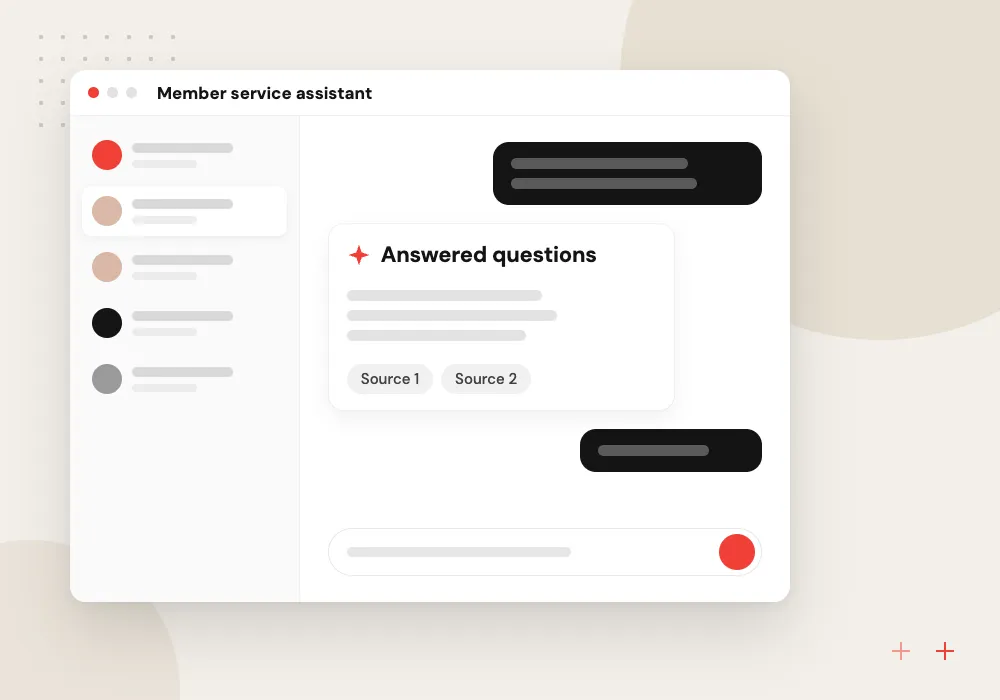
Member service assistant
Answers questions on hours, routing numbers, fees, card controls and loan payment options from approved content, and passes account-specific requests to a representative.
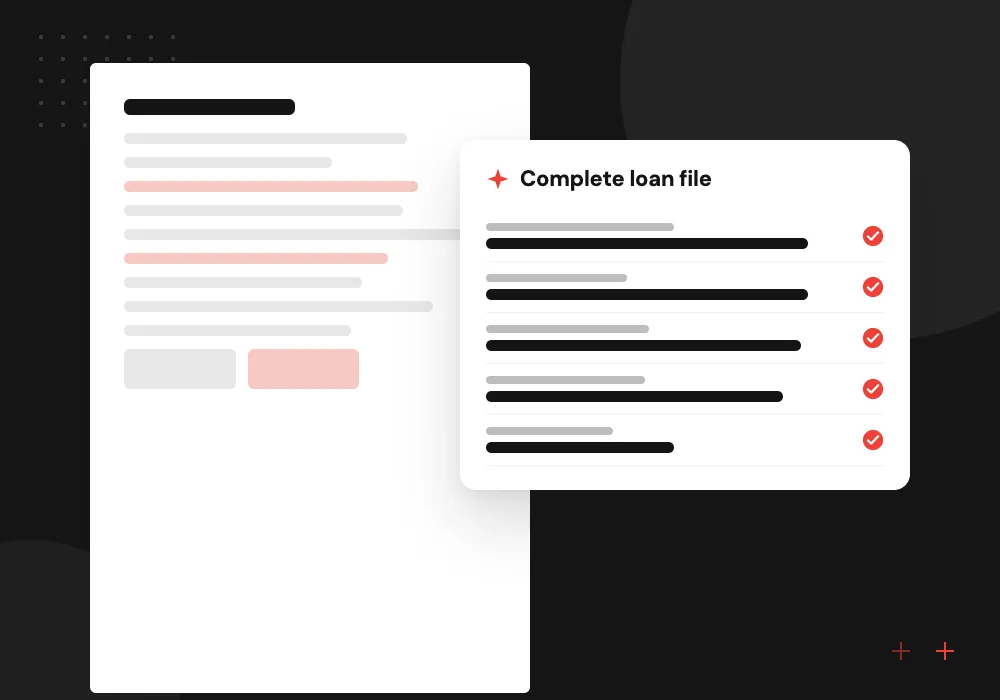
Loan document collection
Builds a checklist for each application, classifies uploads, checks names and dates against the file and asks the borrower for anything missing.
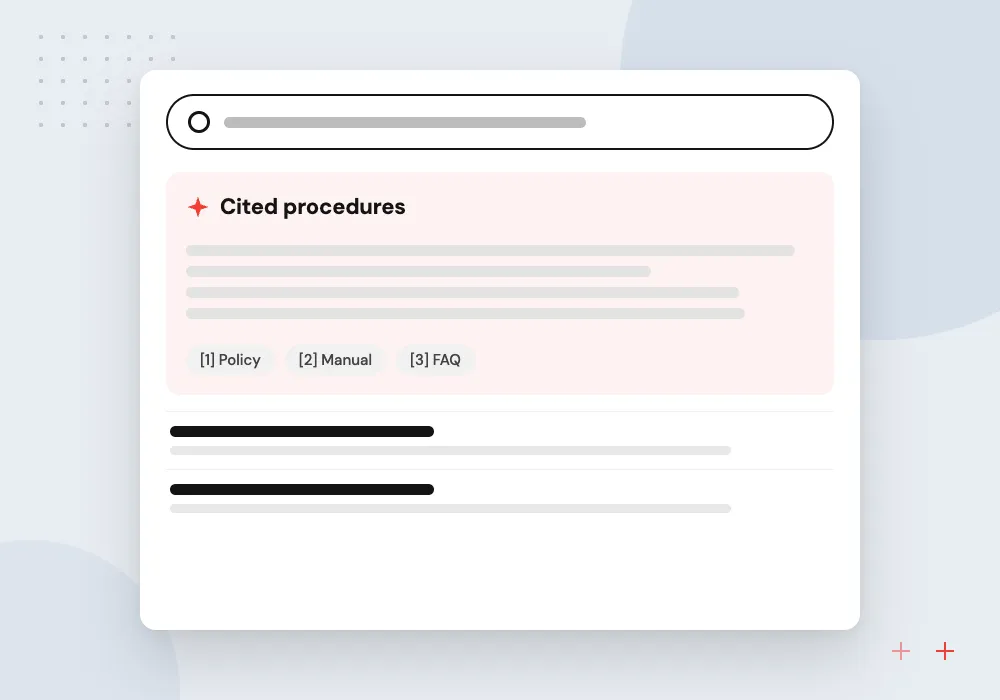
Procedure search for staff
Branch and back office staff ask how to handle a task, such as a deceased member’s account, and get the steps with the procedure linked.
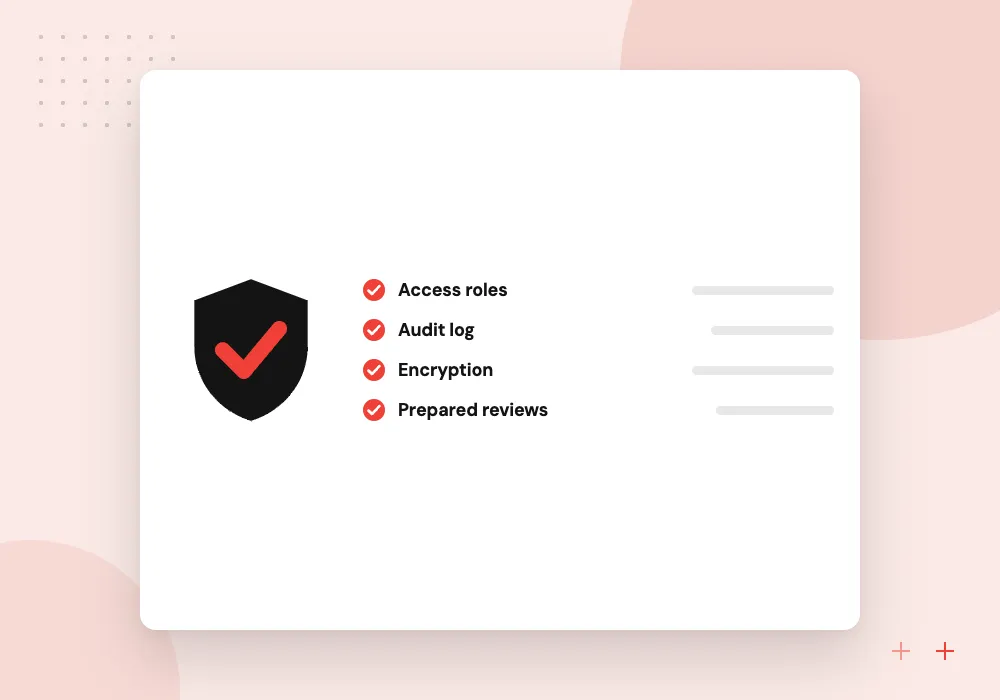
Compliance review support
Drafts first-pass reviews of marketing pieces, complaint categories and policy updates against your checklists, for the compliance officer to accept or change.
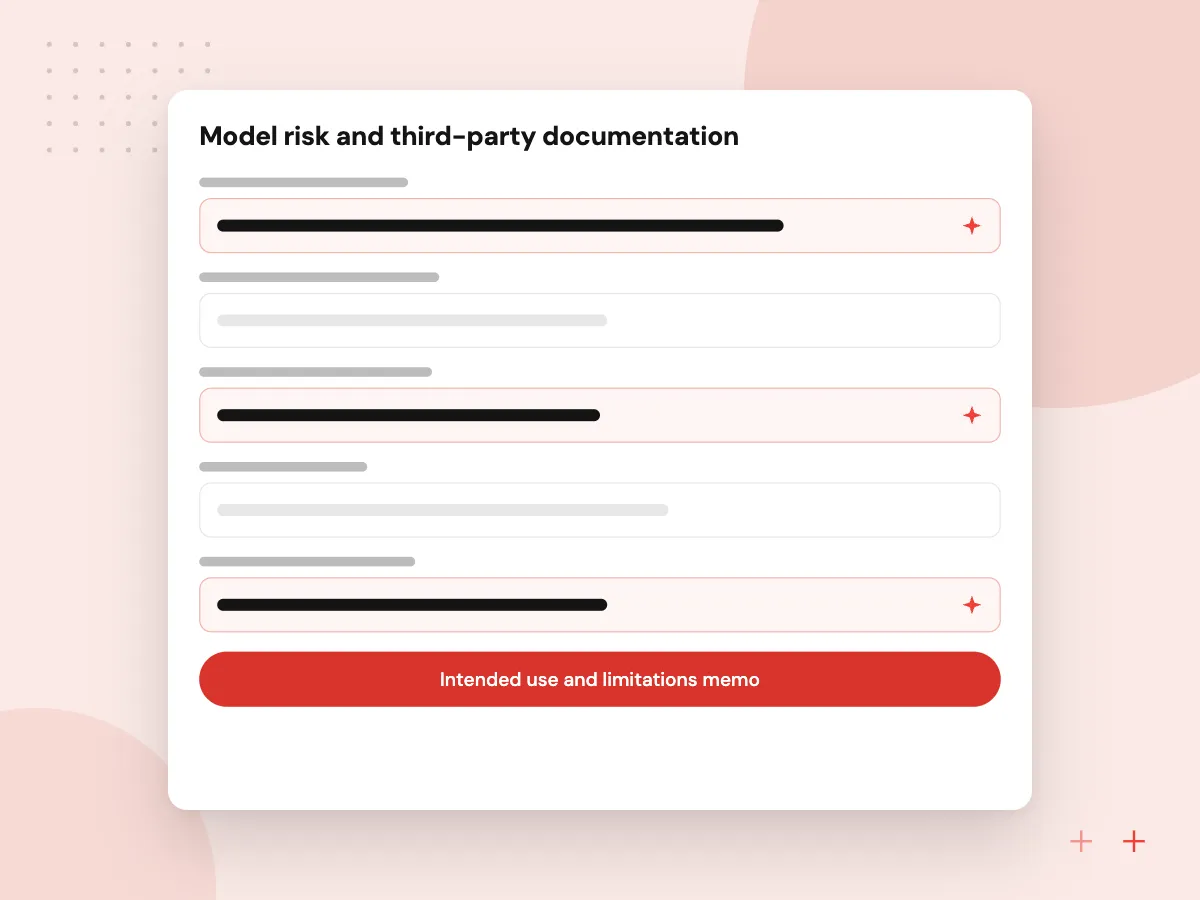
Model risk and third-party documentation
Examiners will ask how an AI tool was chosen, tested and monitored. The revised interagency model risk guidance from April 2026 places generative and agentic AI outside its scope, but says each banking organization’s own risk management should guide the controls for such tools. We supply the documentation that process needs.
What we do
- Intended use and limitations memo
- Test results on your own samples
- Ongoing monitoring plan
- Vendor due diligence package
- Change log for prompts and models
Member data stays inside your controls
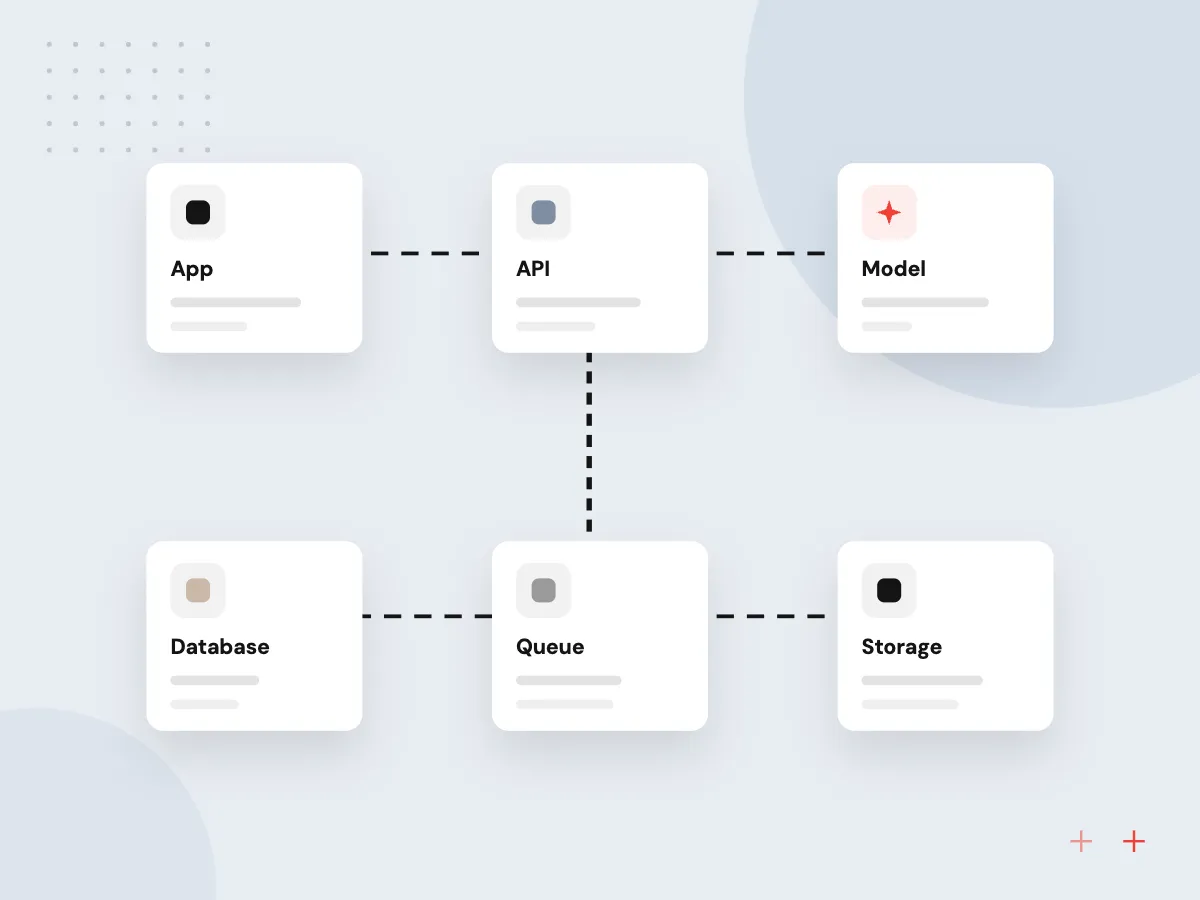
Account and loan data falls under GLBA privacy and safeguards requirements and your own information security program. We keep sensitive data in your environment or with vendors whose contracts bar training on it, mask account numbers before any model call where possible and log every request.
What we do
- Data flow reviewed with your security officer
- Account numbers masked in prompts
- Role-based access by department
- Logs kept per your retention policy
- Vendor data-use terms checked

How we approach a project
BSA and fraud teams can get help with alert review and case write-ups. AI fraud detection models score activity, and the analyst still decides what to escalate and file. Narrative drafting for suspicious activity work runs in a restricted space that only the BSA team can open.
The Federal Reserve’s SR 26-2 letter introduces the revised model risk guidance. For AI policy, inventory and review processes, see our AI governance consulting work.
How we work
- No AI credit decisions
- Answers drawn from approved content
- Documentation ready for examiners
Our Process
-

Pick one service or back-office queue
We start with a single queue, such as loan document follow-up, and agree success measures with its manager.
-

Run vendor and risk intake
Your risk, compliance and vendor management teams review the design, data flow and model vendors before the build.
-

Test on historical files
The tool runs against past applications or member questions with known answers, and the results are written up.
-

Launch with monitoring
After approval, a monitoring plan tracks accuracy, staff overrides and complaints, reported to the business owner monthly.
Why Aranv in community banking
Examiner-ready from day one
Documentation is written during the build, not after it, so your inventory, validation and vendor files are complete when the tool goes live.
Your approved content only
Service assistants answer from content your marketing and compliance teams have approved, with a link to the source page for each answer.
Vendor-aware integration
We work within the access your core and digital banking vendors allow, and tell you early when a feature depends on their roadmap.
Monitoring you can read
Monthly reports show answer accuracy, staff overrides and complaints linked to the tool, in plain language for your board or committee.
Planning AI for Banks and Credit Unions?
Book a 30-minute conversation with the team that would build it.
Banking AI FAQs
-
Will AI make lending decisions at our bank?
Not in what we build. The tools collect and check documents, summarize files and draft notes; underwriters decide, and your lending policy governs adverse action notices. Keeping credit decisions with people also keeps fair lending reviews simpler.
-
How does AI fit our model risk management program?
We treat each tool as an item for your inventory, with intended use, data, test results, limitations and a monitoring plan. Your second line decides how to classify and review it under your own policy.
-
Can a credit union use the same approach?
Yes. Credit unions are supervised by the NCUA rather than the federal banking agencies, but the same records of purpose, data, testing and vendor terms support their internal reviews and examinations.
-
Where is member and customer data processed?
We decide that with your information security officer. Options include model services inside your own cloud tenancy and commercial APIs under contracts that exclude training on your data, with account numbers masked before any request leaves your systems.
-
What does a banking AI project cost?
Cost depends on the queue chosen, the core and loan systems involved, vendor access fees, hosting choices and the depth of documentation your reviews require. We estimate in phases after discovery, beginning with one queue.

Let’s talk about your next step
Contact Aranv to discuss your workflow, current tools, and goals. Meet with our team or send an inquiry.
Book a meeting with our team
Choose an available date and time for a 30-minute conversation about your project.
Tell us about your project
Share a few details so we can discuss a useful next step.
Prefer email? sales@aranv.com