


What AI in life sciences document work covers
Aranv builds tools that put AI in life sciences document work for small and midsize pharma, biotech and contract research teams: SOP drafting and review, regulatory writing support, literature screening and quality record search. QA, regulatory and safety staff approve every output, and nothing touches clinical decisions.
The FDA’s January 2025 draft guidance on AI for regulatory decision-making addresses models that produce information about a drug’s safety, effectiveness or quality. It says it does not address AI used for operational efficiencies, such as drafting a regulatory submission, where patient safety, drug quality and study reliability are unaffected. Your quality system still governs that work.
Most of these tools rest on retrieval-augmented generation: the model answers from your effective SOPs, approved source documents and saved literature rather than from memory. Incoming paperwork such as supplier certificates is sorted first with AI document classification.
AI inside a controlled document process
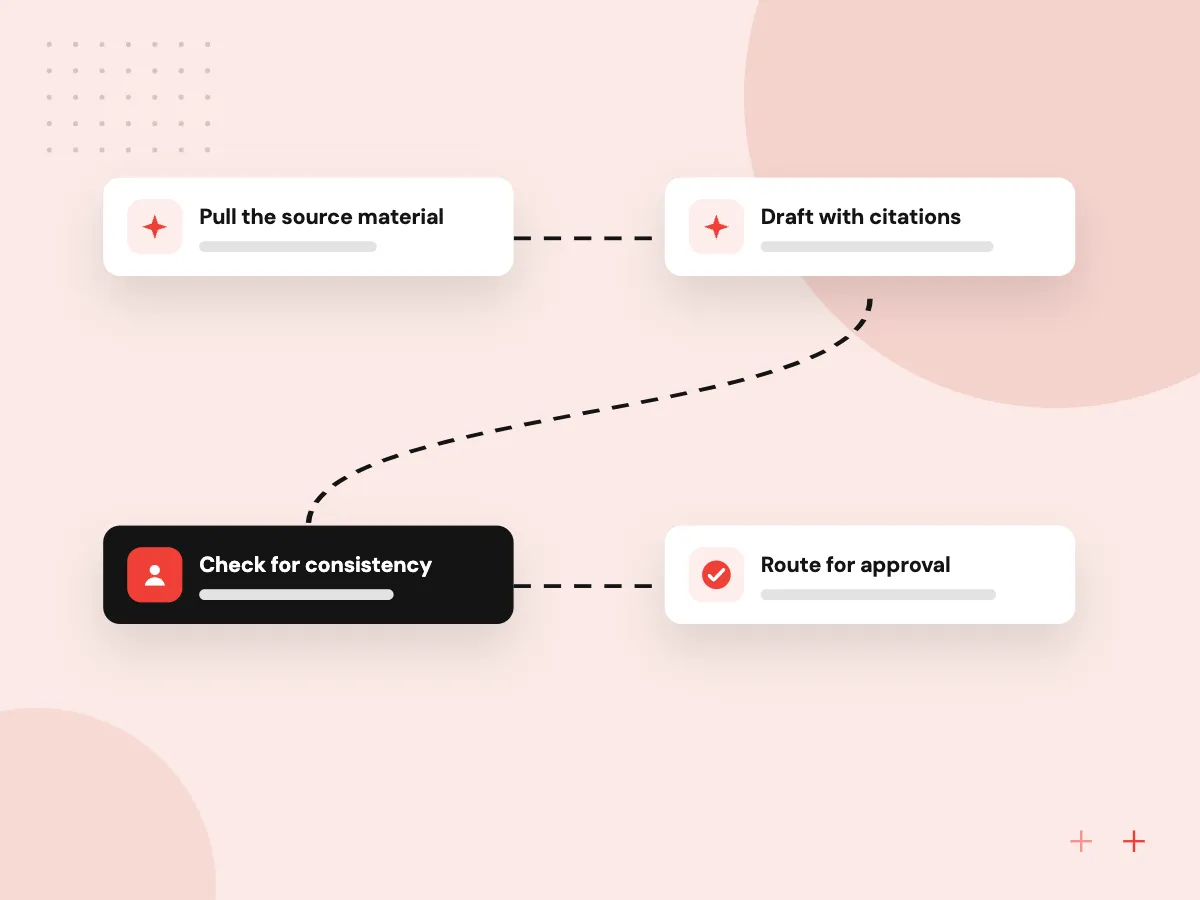
How a draft moves through quality control
- 01 Pull the source material Effective SOPs, data tables or saved literature searches are gathered from controlled locations.
- 02 Draft with citations The AI writes a first draft or redline, citing the source of each statement.
- 03 Check for consistency Numbers, terms and references are compared across documents and flagged where they differ.
- 04 Route for approval The draft enters your document control workflow for review and signature.
AI drafts are working files. Only documents approved in your quality system become records.
Pharma AI solutions for document-heavy teams
Regulatory, quality and medical affairs teams spend much of the week writing, checking and finding documents. These four jobs suit AI when the review steps are kept intact.
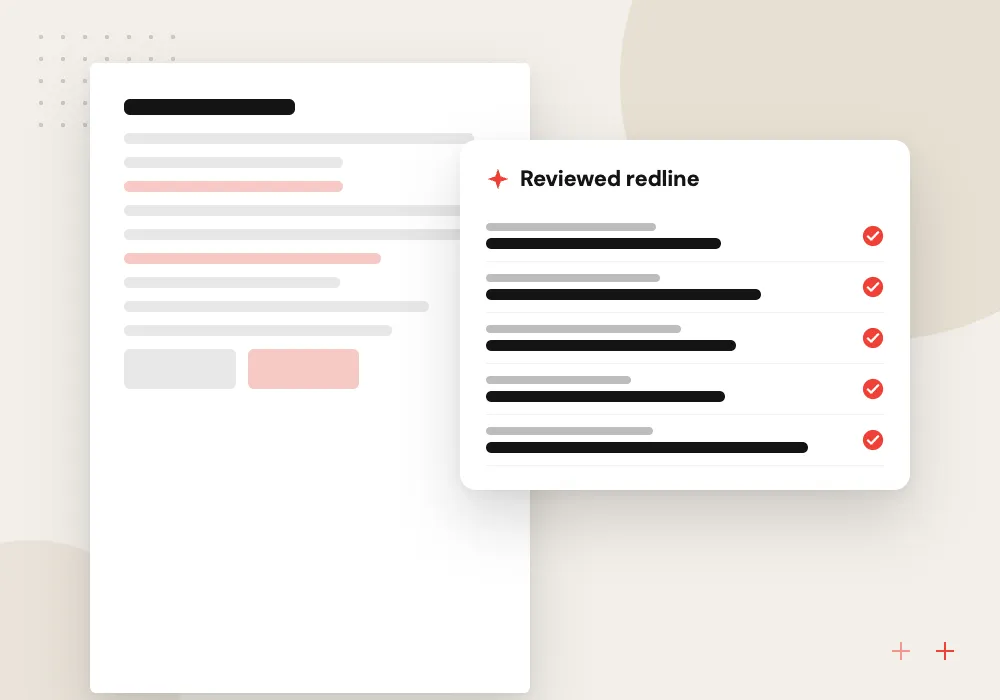
SOP drafting and review
Drafts new SOPs and redlines existing ones against an updated policy or regulation, with a change summary for the document owner and QA.
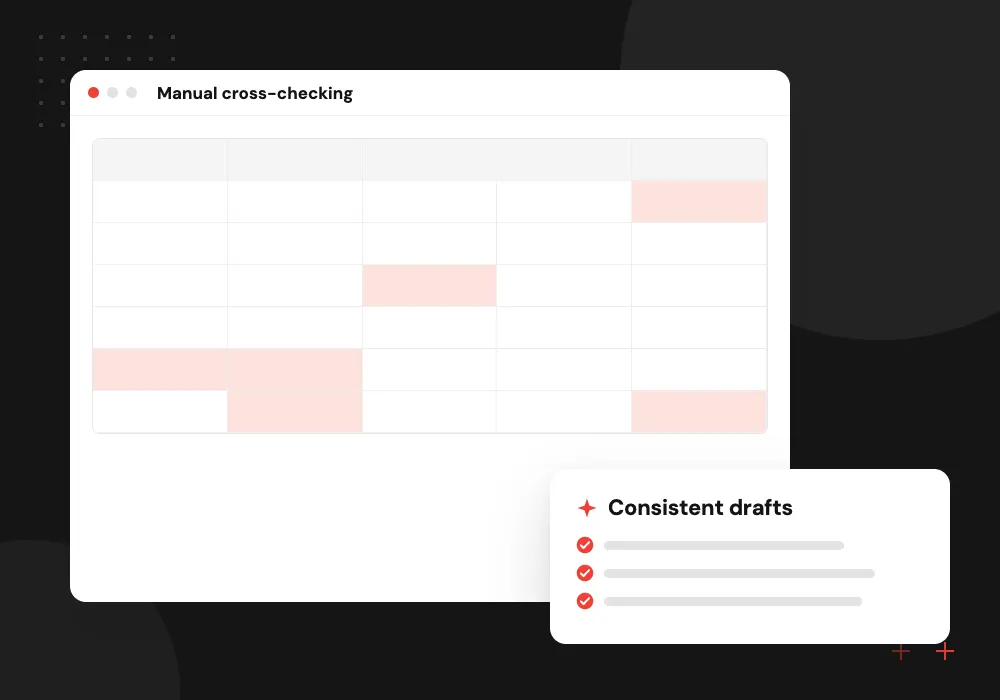
Regulatory writing support
First drafts of summary sections from approved source tables, plus checks that numbers and terms match across modules, reports and labeling.
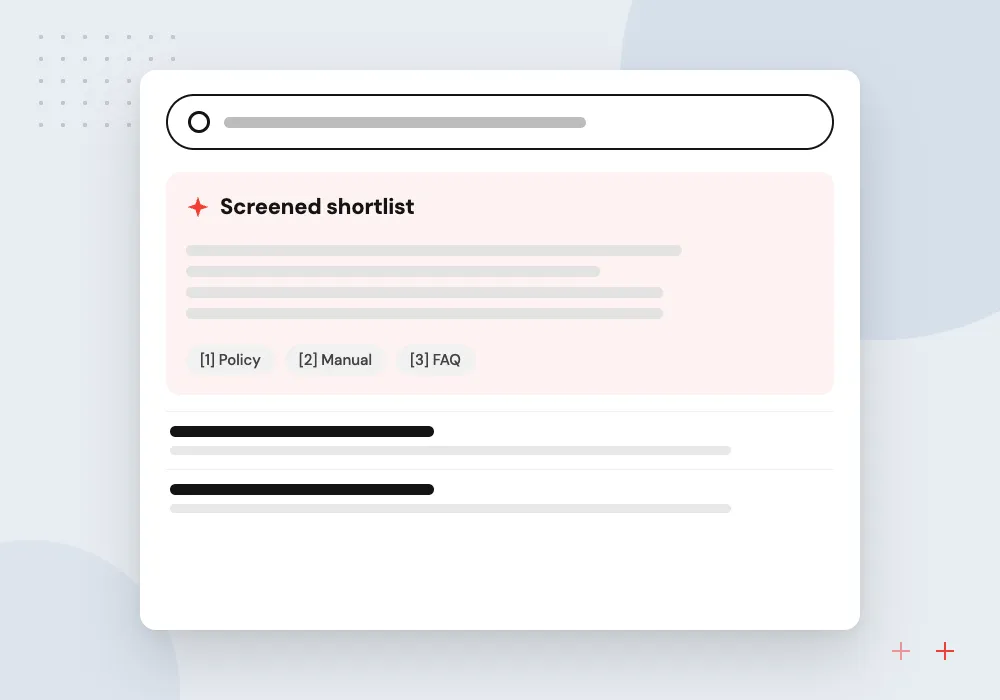
Literature screening
Runs your saved database searches on a schedule, screens abstracts against your criteria and flags possible adverse event mentions for a safety scientist.
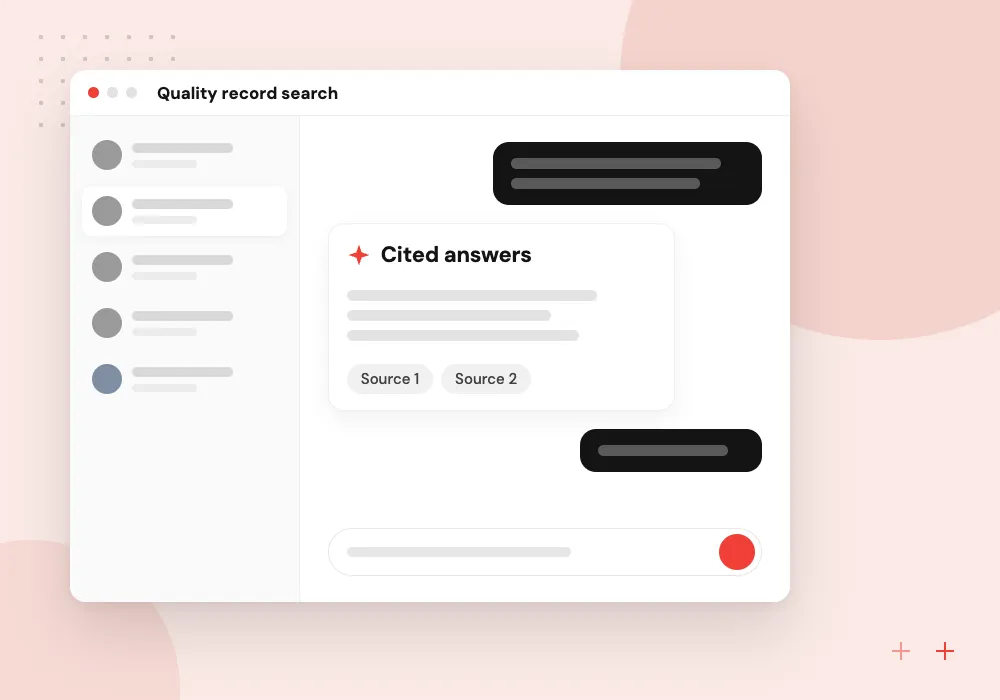
Quality record search
Staff ask which SOP covers a task, or find past deviations and CAPAs similar to the current one, with links to effective versions only.
Literature screening for safety and medical affairs
Safety and medical affairs teams review published literature on a fixed schedule. We build a pipeline that runs saved searches, removes duplicates, screens abstracts against your inclusion criteria and highlights sentences that may describe an adverse event. A qualified scientist decides what is reportable and what gets cited.
What we do
- Scheduled saved searches
- Duplicates removed across databases
- Screening against written criteria
- Possible adverse event highlights
- Decision log for each article
Validation, audit trails and data integrity
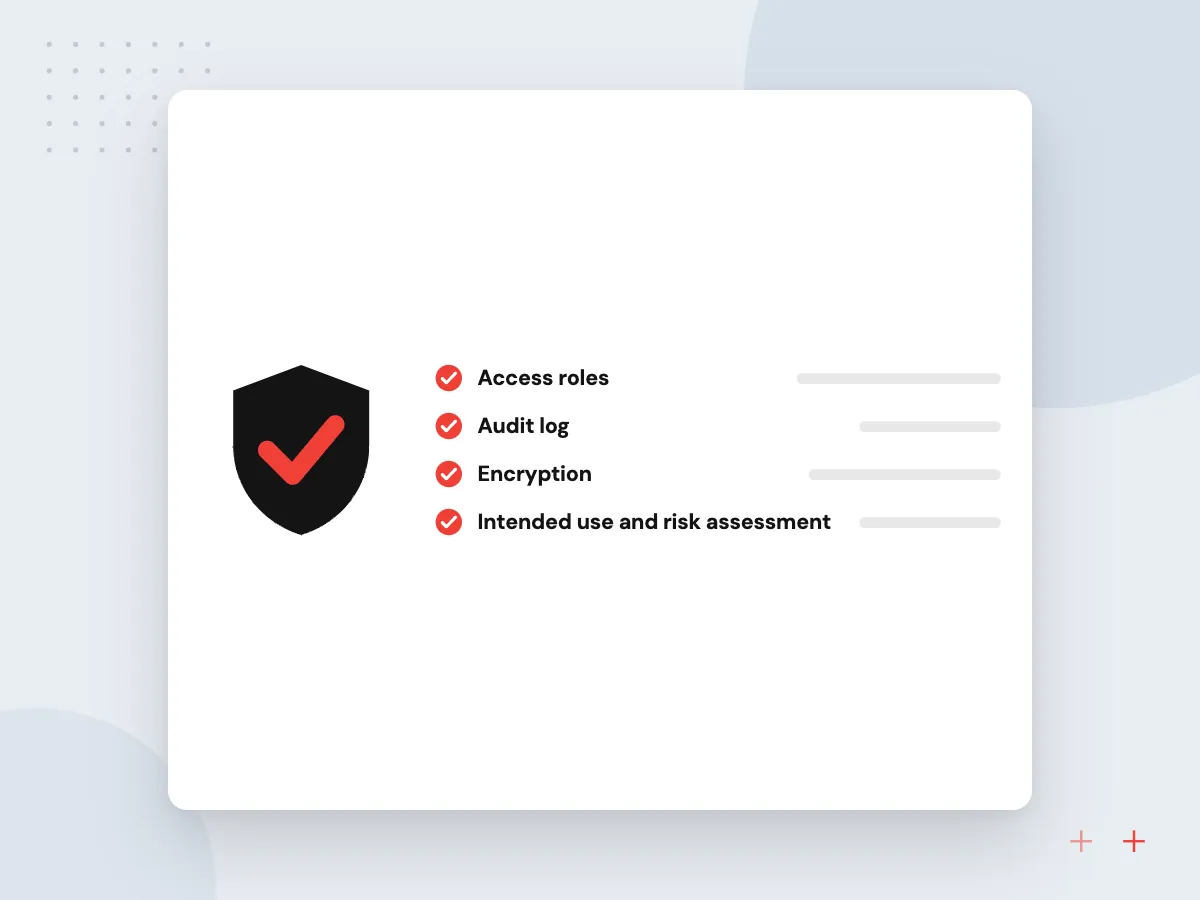
Tools that touch GxP work need evidence that they do what they claim. We document intended use, risks, test scripts and results so your QA team can validate the tool under your computerized system procedures. Records that FDA rules require stay in your systems with Part 11 controls such as audit trails and electronic signatures.
What we do
- Intended use and risk assessment
- Test scripts with expected results
- Pinned model and prompt versions
- Audit trail of drafts and approvals
- Change control for model updates

How we approach a project
When documents cannot leave your environment, we run models in your own cloud account through private LLM deployment. Software for labs, plants and distribution, from LIMS links to batch record tools, is covered on our pharmaceutical software development page.
Ongoing checks, such as SOPs overdue for periodic review or new regulator publications to assess, belong to AI compliance monitoring. When one document process is clearly costing your team the most, our contact page is where to arrange a 30-minute conversation about it.
How we work
- Every statement traced to a source
- Approval stays in document control
- No clinical or dosing advice
Our Process
-

Choose one document process
We pick a single process, such as SOP periodic review or weekly literature screening, with QA’s agreement.
-

Write intended use and risks
Together we document what the tool does, what it must never do and how errors would be caught.
-

Test against past documents
The tool runs on past material with known answers, and the results are recorded for QA review.
-

Release under change control
Your QA team approves release, and later model or prompt changes go through the same change control.
Why Aranv for life sciences AI
Built to be validated
We hand QA the intended use, risk assessment, test evidence and change history it needs, instead of a tool that has to be explained afterward.
Effective versions only
Search and drafting read from approved, effective documents, so a superseded SOP never becomes the basis for a new draft.
Citations on every line
Each drafted statement links to the source table, SOP section or article it came from, which keeps reviewer checks quick.
A clear clinical boundary
Our scope stops at documents and operations. Medical judgments, causality assessments and dosing questions stay with your qualified staff.
Planning AI in Life Sciences?
Book a 30-minute conversation with the team that would build it.
Life sciences AI FAQs
-
Can AI write our regulatory submissions?
It can produce first drafts of sections from approved source data and check consistency across documents. Regulatory writers and your regulatory lead own the content, edit every draft and decide what is submitted. We do not build tools that generate clinical conclusions.
-
Does AI-assisted document work need validation?
If a tool supports GxP activities, your computerized system procedures usually apply, scaled to the risk. We provide intended use statements, risk assessments, test scripts and results so QA can decide the level of validation.
-
Where does our data go?
We map that before choosing a model. Options range from a commercial API under terms that exclude training on your data to models hosted in your own cloud account. Confidential dossiers and unpublished results often push teams toward the second option.
-
Which systems do you connect to?
Usually your document management or eQMS platform, shared drives, the literature databases your team subscribes to and, where agreed, the safety database. Connection methods depend on each vendor’s API and on your IT and QA policies.
-
What does a life sciences AI project cost?
Cost depends on the document process chosen, the number of systems involved, hosting requirements and the depth of validation evidence QA needs. We start with one process and estimate it in phases after discovery.

Let’s talk about your next step
Contact Aranv to discuss your workflow, current tools, and goals. Meet with our team or send an inquiry.
Book a meeting with our team
Choose an available date and time for a 30-minute conversation about your project.
Tell us about your project
Share a few details so we can discuss a useful next step.
Prefer email? sales@aranv.com