


Shopify vs WooCommerce in more detail
Aranv’s answer on Shopify vs WooCommerce: pick Shopify when you want a hosted store your team can run without managing servers or updates, and pick WooCommerce when you want full control of code, hosting and data on WordPress and have a developer to look after it.
Running costs and upkeep. Shopify bundles hosting and platform updates into a monthly plan, and most stores add paid apps on top. WooCommerce itself is open-source software, so spending moves to hosting, premium extensions and the developer hours that keep WordPress, plugins and PHP current. Our eCommerce website cost guide lists each line to budget.
Content and search. WooCommerce lives inside WordPress, which suits stores that publish many articles and buying guides. Shopify has a built-in blog and covers the technical basics, though URL patterns such as the /products/ prefix are fixed.
The four questions that settle it
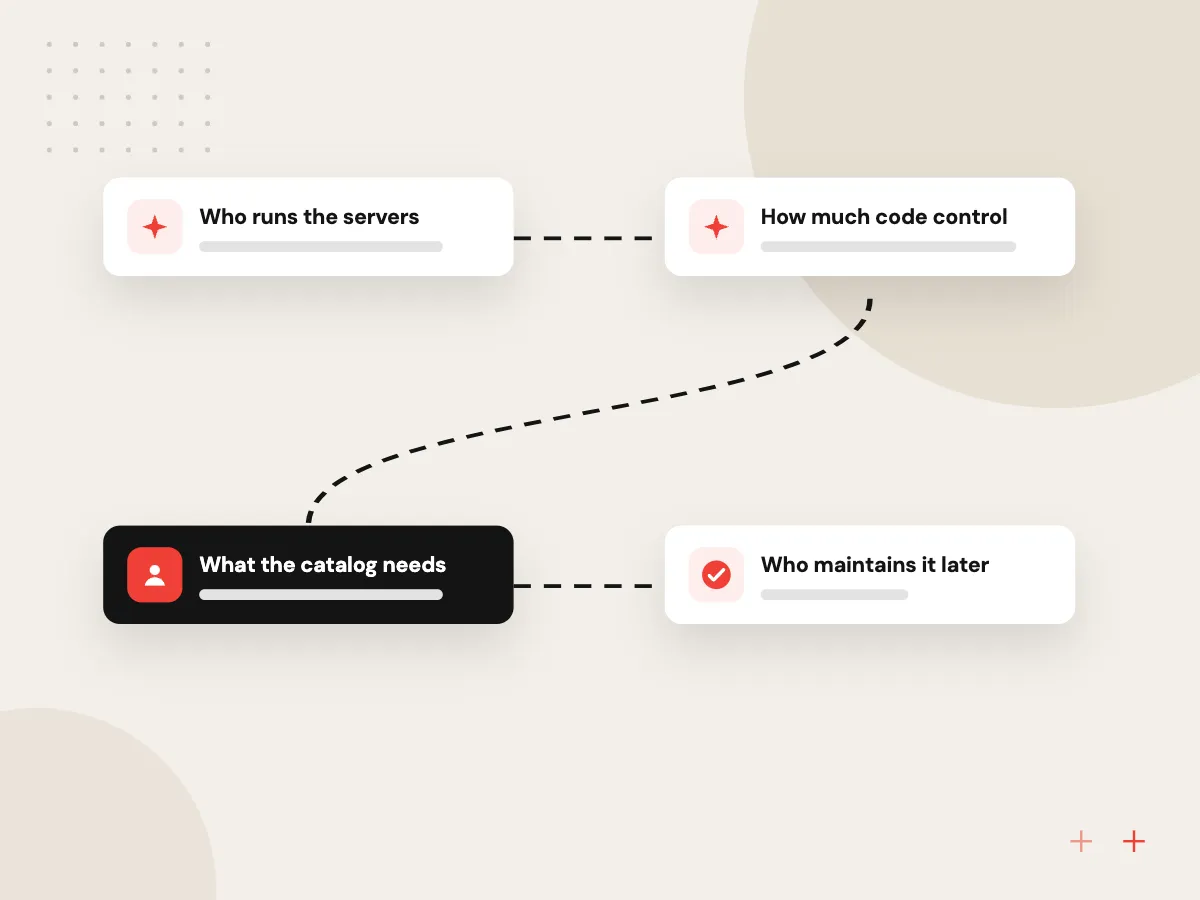
Shopify or WooCommerce in four checks
- 01 Who runs the servers Shopify hosts and patches the store; WooCommerce runs on hosting you pick.
- 02 How much code control WooCommerce opens every file to a developer; Shopify works through themes, apps and APIs.
- 03 What the catalog needs Variant counts, product options and trade pricing rules can tip the choice.
- 04 Who maintains it later With WooCommerce, plugin updates, backups and security fall to your side.
Neither platform wins in general; the better one depends on your team, your catalog and your other systems.
Shopify vs WooCommerce: four differences that matter
Both platforms run good stores of every size. These are the places where daily life on them differs.
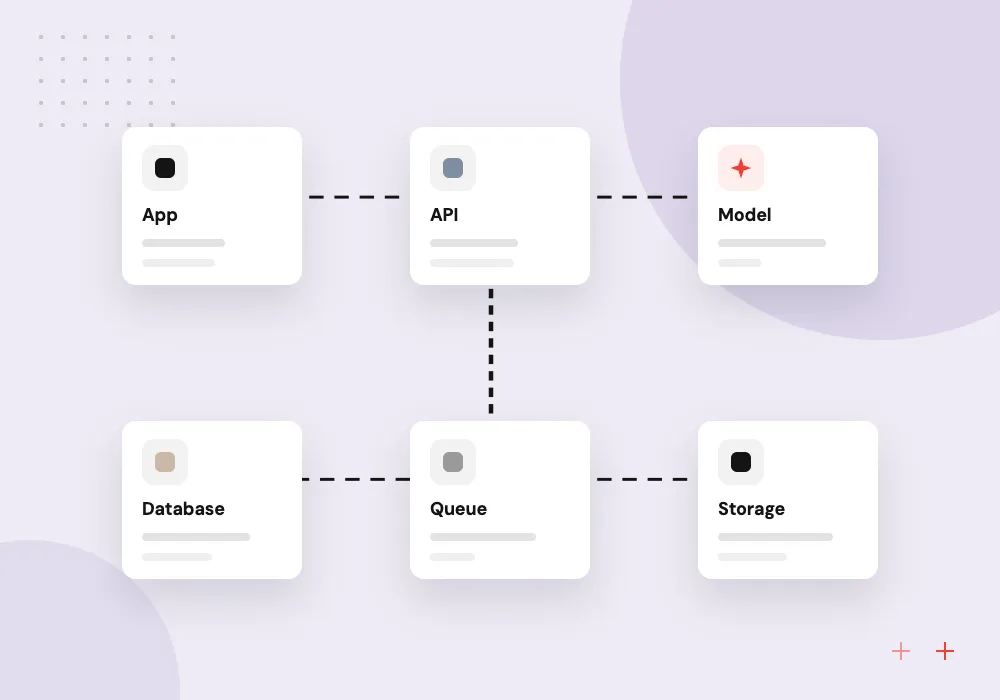
Hosting and security
Shopify runs the servers, SSL certificates and platform updates for you. With WooCommerce you choose the host and own patching, backups and uptime checks.
Depth of customization
WooCommerce lets a developer change any part of the store, checkout logic included. Shopify allows themes, apps and checkout extensions inside limits it sets.
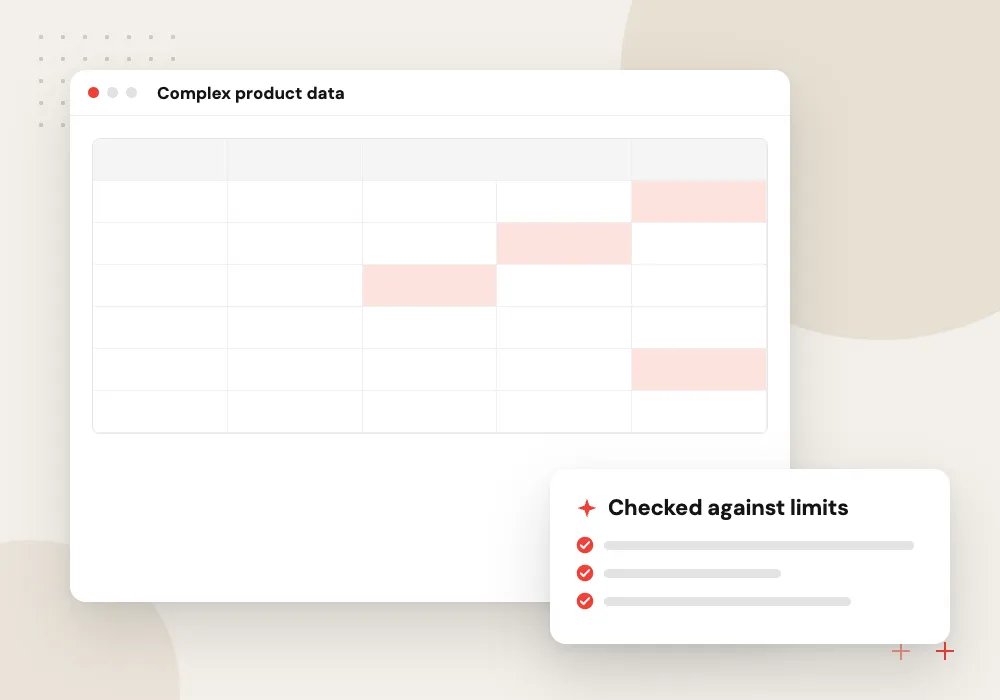
Catalog and wholesale rules
Shopify allows up to 2,048 variants and three options per product. Configurable products on either platform may need an app, an extension or custom code.

AI features
Both platforms expose product, order and customer data through APIs, so AI product copy, smarter search and a shopping assistant can be added to either one.
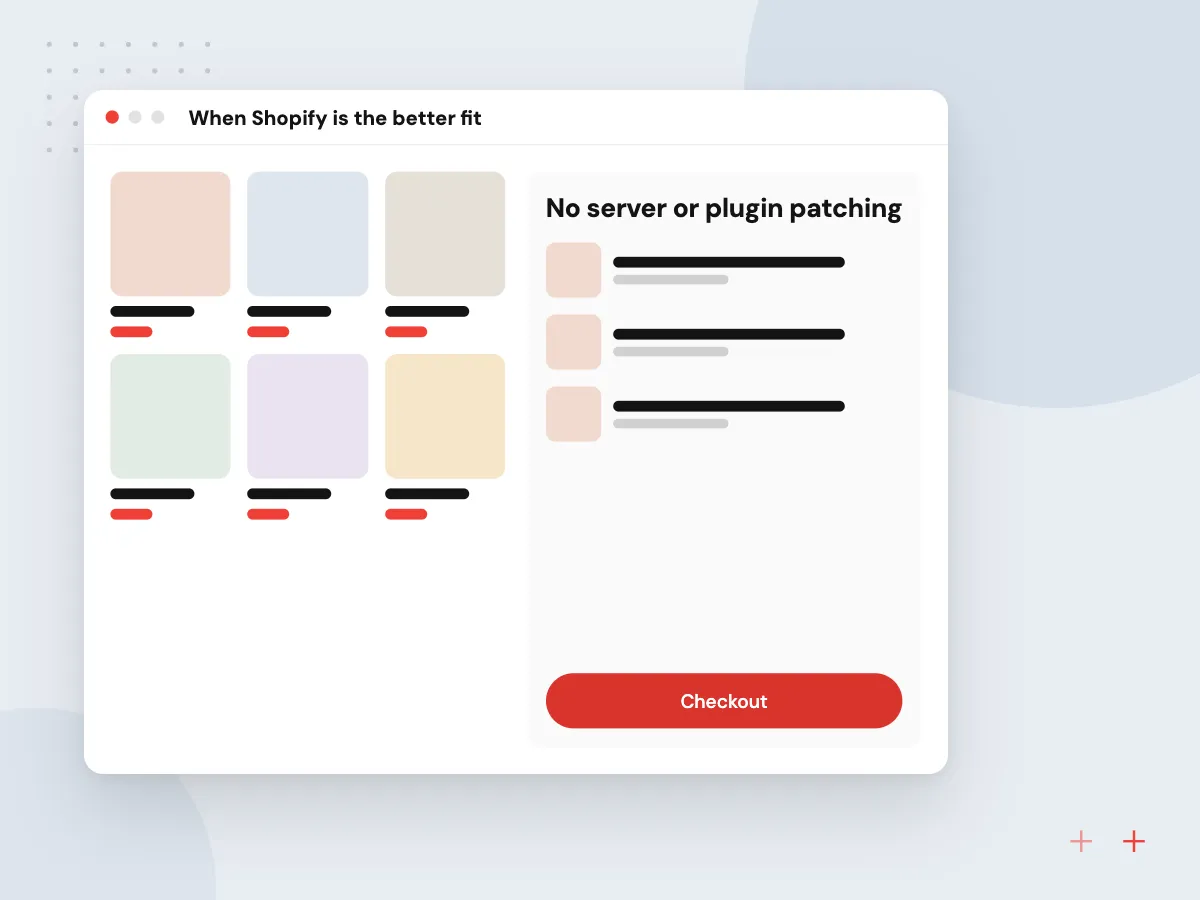
When Shopify is the better fit
Shopify suits stores that want to sell without hiring a developer for upkeep. Staff edit themes, products and discounts in one admin, and the platform takes care of hosting, checkout security and updates. The trade-off is working within the theme, app and checkout rules Shopify sets.
What we do
- No server or plugin patching
- Hosted checkout and payments
- App store for common features
- B2B tools on the main plans
- Theme editor staff can use
When WooCommerce is the better fit
WooCommerce suits businesses that already run WordPress, publish a lot of content or need custom logic that Shopify will not allow. You own the code and the database and decide where they live. The trade-off is that someone must keep hosting, WordPress, plugins and backups in good order.
What we do
- Full access to code and data
- Any host, any region
- Custom checkout and pricing logic
- Content and store in one site
- Large extension marketplace

How we approach a project
Integrations and growth. Both connect to ERPs, warehouses and accounting packages. Shopify apps are pinned to dated API versions that Shopify retires on a schedule, while WooCommerce integrations depend on the plugins and server you run. Brands that outgrow a theme on either platform can move to a headless front end.
Who builds it. We work on both, through our Shopify development and WooCommerce development teams, so we have no reason to push either one. The eCommerce development hub covers B2B portals and custom builds as well.
How we work
- Compare on your own catalog
- Count upkeep, not only launch
- Plan the exit before you enter
Our Process
-

List what the store must do
Write down products, variants, payment methods, shipping rules, trade terms and the systems the store must feed.
-

Name who will maintain it
Decide whether an in-house person, an agency or nobody will handle updates, backups and plugin conflicts.
-

Test your hardest product
Set up your most complex product and one realistic order on a trial store for each platform.
-

Cost three years, not one
Add plan or hosting fees, apps or extensions, payment fees and maintenance time for both options side by side.
How Aranv helps you decide
We build on both platforms
Because our teams deliver Shopify and WooCommerce projects, the recommendation follows your catalog and your staff, not a platform we happen to prefer.
A test with your products
We load your most complex products and a sample of real orders into trial stores, so limits show up before you commit to anything.
Integration check first
We confirm how each option connects to your ERP, warehouse, accounting and shipping tools, including which connectors exist and which need custom code.
A three-year running cost list
You get a side-by-side list of plan or hosting fees, apps, extensions, payment fees and maintenance hours, ready to fill with current vendor quotes.
Ready to act on this guide?
Ask our team in a 30-minute conversation.
Or see how we build it: Explore all services
Shopify vs WooCommerce FAQs
-
Is Shopify or WooCommerce better for a small business?
Shopify is usually easier for a small business without a developer, because hosting, security and updates are handled for you. WooCommerce suits owners who already run WordPress, want full control of code and data, and have someone to maintain it.
-
Is WooCommerce cheaper than Shopify?
Not automatically. WooCommerce has no platform subscription, but hosting, premium extensions and maintenance hours add up. Shopify’s plan includes hosting, while many apps carry their own fees. Compare the full three-year cost for your specific store, including staff time.
-
Can I move from WooCommerce to Shopify, or the other way?
Yes. Products, customers and orders can be exported and imported in either direction, and 301 redirects keep old links working. Customer passwords do not transfer, the theme is rebuilt, and some plugin features need an app or custom code on the new platform.
-
Which platform is better for SEO?
Both can rank well. WooCommerce gives more control over URLs and content through WordPress, while Shopify handles sitemaps, canonical tags and hosting speed with little setup. Product content and page speed matter more than the platform.
-
Which handles B2B and wholesale orders better?
Shopify includes B2B tools such as company accounts, catalogs and payment terms, with some features reserved for Shopify Plus. WooCommerce reaches the same result with extensions or custom code. The better fit depends on how complex your trade pricing and approval rules are.
-
Can AI features be added to Shopify or WooCommerce?
Yes, to both. Through each platform’s API we add tools that draft product descriptions for staff review, improve on-site search and answer shopper questions from your catalog and policies. Shopify also ships some built-in AI tools, so we check what you already have first.

Let’s talk about your next step
Contact Aranv to discuss your workflow, current tools, and goals. Meet with our team or send an inquiry.
Book a meeting with our team
Choose an available date and time for a 30-minute conversation about your project.
Tell us about your project
Share a few details so we can discuss a useful next step.
Prefer email? sales@aranv.com