


Pricing models for software projects in practice
Aranv’s answer on fixed price vs time and materials: use a fixed price when the scope can be written down in detail before work starts, and use time and materials when requirements will change as users react. Many software projects combine both, phase by phase.
What a fixed price really includes. A vendor quoting a fixed price adds a margin for risk, and every change after signing goes through a written change request. That works when requirements are stable and poorly when the product is still taking shape. A short software discovery phase is what makes a fixed price realistic.
Keeping time and materials under control. Ask for a monthly ceiling, weekly hours against named tasks and a demo at the end of each sprint, so you can stop, cut or reorder work at any point. A dedicated development team is a related model where you reserve people instead of buying hours.
How each model shares the risk
Two contract models, one decision
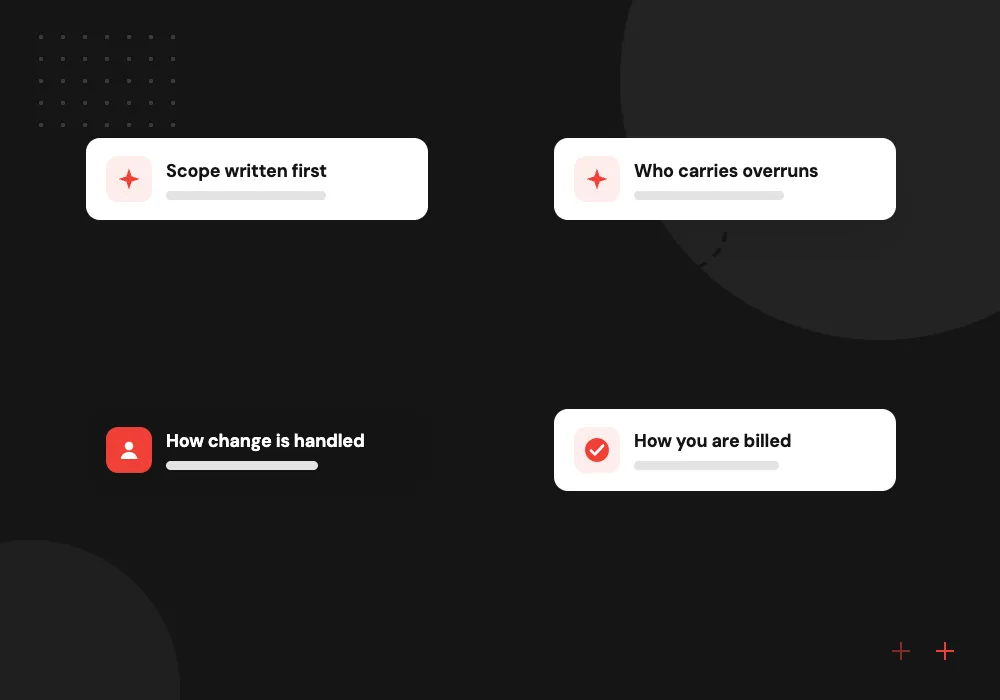
- 01 Scope written first Fixed price needs features, screens and acceptance criteria agreed before signing.
- 02 Who carries overruns The vendor absorbs overruns on fixed price; the client does under time and materials.
- 03 How change is handled Fixed price uses change requests; time and materials reorders the backlog each sprint.
- 04 How you are billed Fixed price pays on milestones; time and materials bills hours actually worked.
Neither model is cheaper by nature. Each one prices uncertainty in a different way.
Software contract models: four key points
The right pricing model for a software project depends on how much is known on day one.
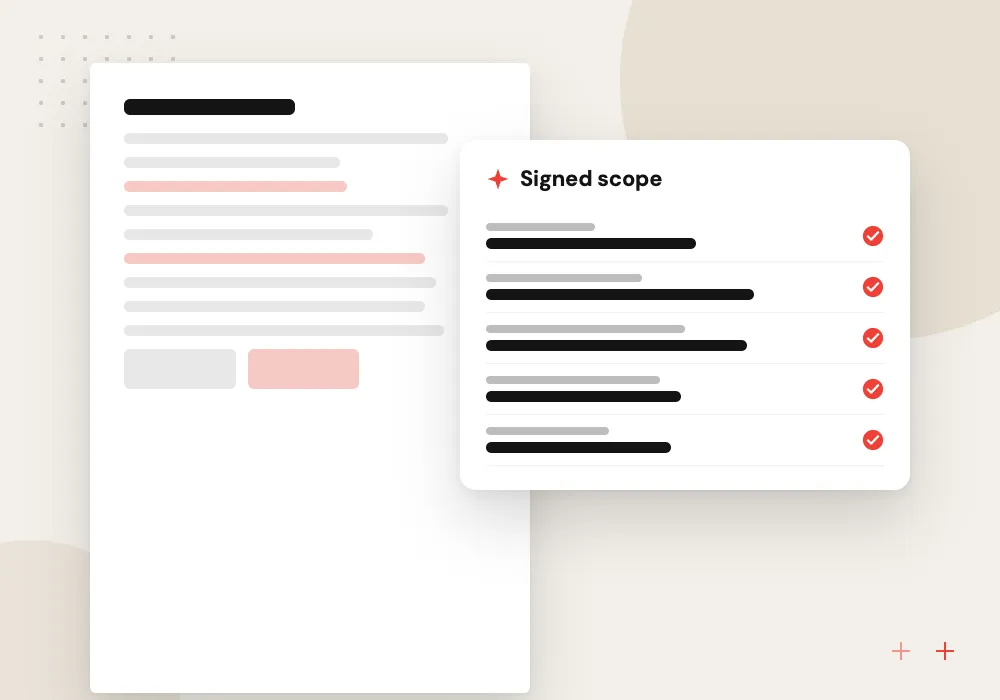
Known scope, fixed price
A rebuild of known screens, a defined integration or a set report pack suits a fixed price, because both sides can agree up front what done means.
Changing scope, hourly billing
New products, research-heavy features and ongoing roadmaps suit time and materials, where priorities shift each sprint without renegotiating the contract.
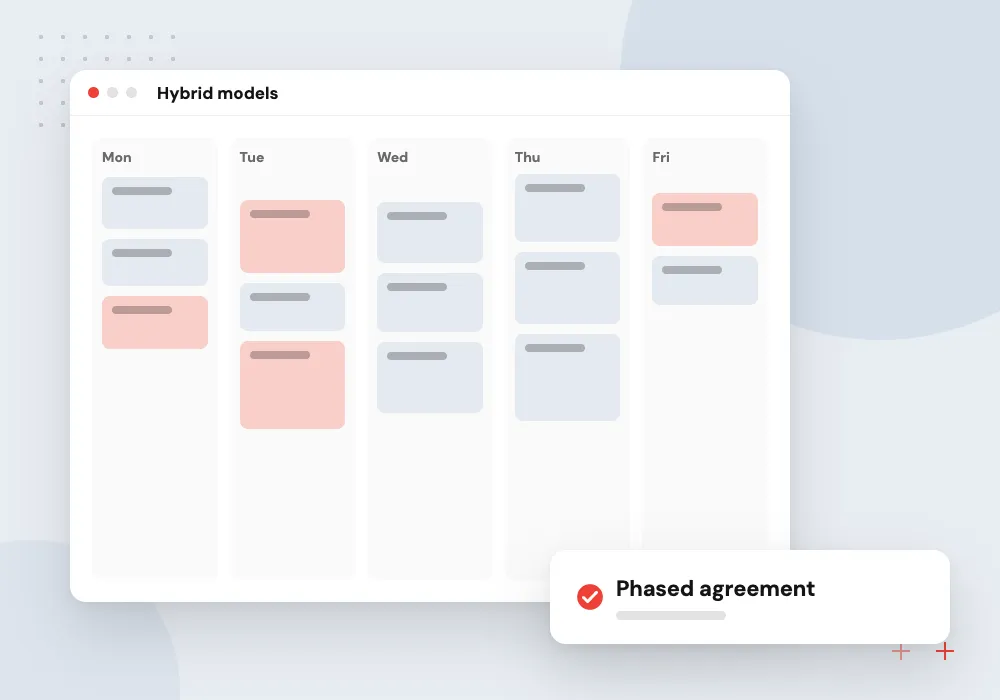
Hybrid models
A fixed-price discovery followed by capped monthly billing, or a fixed price per phase, gives budget control without freezing the plan.
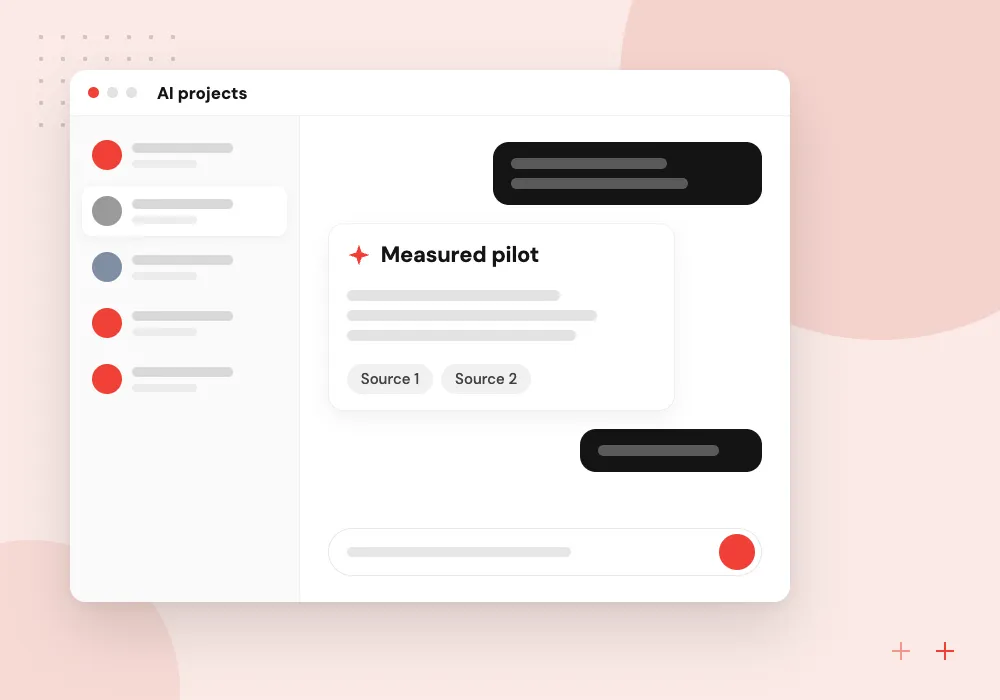
AI projects
Model accuracy is hard to promise before testing on your data. A fixed-price proof of concept with agreed test cases, then a flexible build, suits AI work.
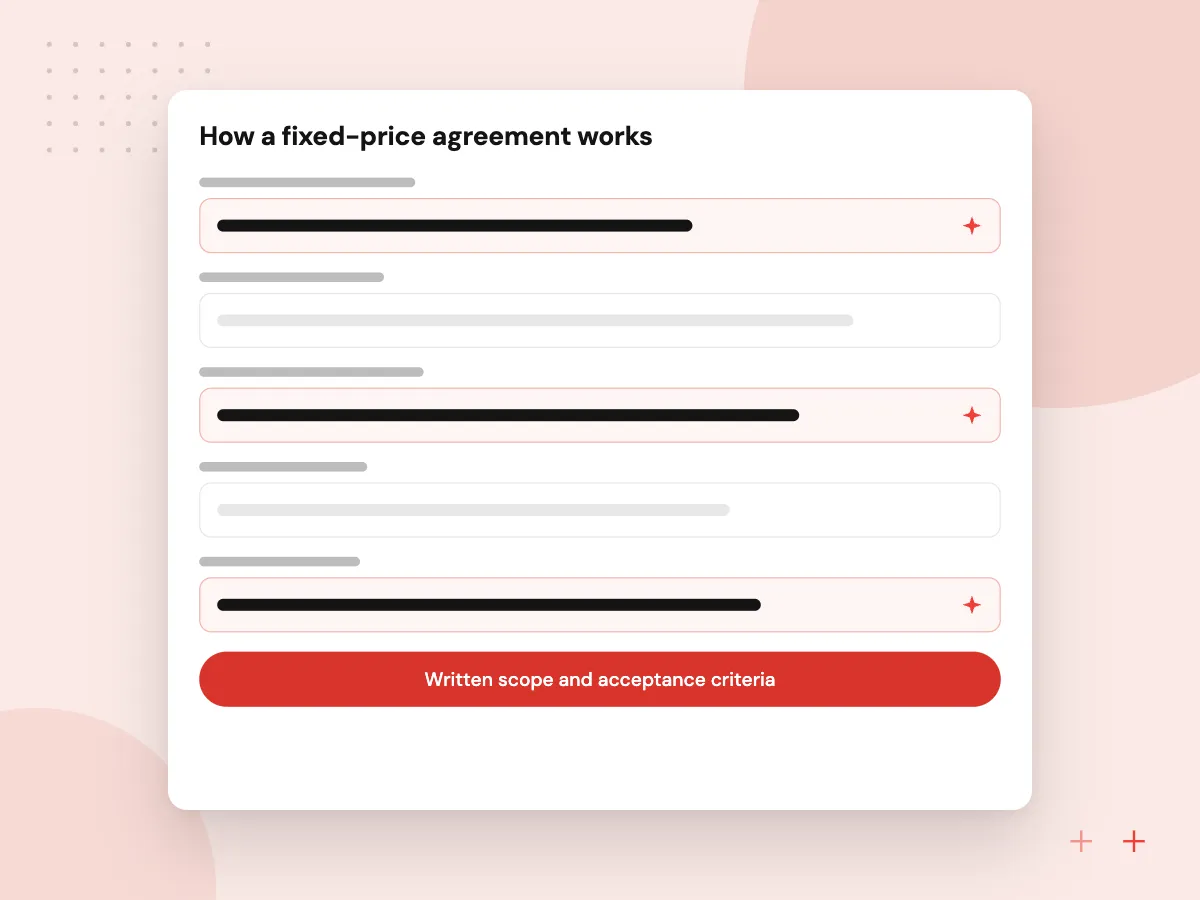
How a fixed-price agreement works
The vendor commits to a defined scope, price and delivery plan, usually paid in milestones tied to accepted features. You get budget certainty and less day-to-day involvement. In return, the scope must be detailed, changes take time to agree, and the price carries the vendor’s risk buffer.
What we do
- Written scope and acceptance criteria
- Milestone payments on accepted work
- Change requests with cost and dates
- Warranty period for defects
- Vendor carries overrun risk
How time and materials works
You pay for the hours people actually spend, at agreed rates, usually billed monthly. Priorities can change every sprint and you see working software often. In return, you carry the budget risk, so caps, time reports and a product owner who decides quickly all matter.
What we do
- Monthly budget ceiling
- Hours reported against tasks
- Sprint demos and backlog reviews
- Stop or reshape at any point
- Client carries budget risk

How we approach a project
AI and new products. When results depend on testing, start with an AI proof of concept at a fixed price, then move the build to flexible billing. Our How We Work page describes the engagement options we offer.
A test from public buying. US federal rules allow time-and-materials contracts only when the work cannot be estimated with confidence up front. Private buyers can borrow that test when choosing a model.
How we work
- Match the model to certainty
- Cap the budget, not the learning
- Write acceptance criteria early
Our Process
-

Rate your scope certainty
Mark each feature as fully defined, roughly known or still only an idea.
-

Fix what is defined
Put the defined features, or a discovery phase, under a fixed price with acceptance criteria.
-

Cap what is uncertain
Place open items under time and materials with a monthly ceiling and sprint demos.
-

Review at each milestone
Move newly defined work into fixed scope, or keep it flexible, at every milestone.
How Aranv helps you decide
All three models on offer
Fixed scope, time and materials and dedicated teams are all available, so the model we suggest follows your project rather than our billing preference.
Discovery that supports fixed quotes
A short discovery turns a brief into user flows, integrations and acceptance criteria that a fixed quote can safely rest on.
Hours and budget in view
Under time and materials you see hours against tasks and budget used each week, with working software to try at the end of every sprint.
Switching models without friction
Work can move from fixed scope to a monthly budget, or back, with a new statement of work at a milestone.
Ready to act on this guide?
Ask our team in a 30-minute conversation.
Or see how we build it: Explore all services
Fixed price vs time and materials FAQs
-
Is fixed price or time and materials better for a software project?
Fixed price is better when you can describe the result in detail and it will not change much. Time and materials is better when the product will evolve with user feedback. Many projects use both: a fixed first phase, then flexible billing for later work.
-
Is fixed price cheaper than time and materials?
Not necessarily. A fixed quote includes a buffer for the vendor’s risk, so it can cost more than the hours a project actually needs. Time and materials charges only for work done, but without a budget cap and clear priorities the total can keep growing.
-
What happens when requirements change on a fixed-price project?
The change is written up with its effect on effort and dates, and you approve it before work starts. Trading a new feature for one of similar size keeps the total steady. Frequent changes are a sign the work belongs under time and materials.
-
How do we control costs under time and materials?
Set a monthly ceiling, ask for hours reported against named tasks, review a working demo every sprint and keep a ranked backlog. If the value of new work drops, you can pause or narrow it without breaking the contract.
-
Which contract model suits an AI project?
A split usually works best. Fix the price of a proof of concept that tests the model on your own data against agreed accuracy checks, then build and tune the production version under time and materials, since tuning depends on what testing shows.
-
What should a software contract include under either model?
A scope or backlog description, acceptance criteria, payment terms, a change procedure, ownership of code and data, confidentiality, a defect warranty period and exit terms. Our Security, NDA and IP page sets out the ownership terms we recommend.

Let’s talk about your next step
Contact Aranv to discuss your workflow, current tools, and goals. Meet with our team or send an inquiry.
Book a meeting with our team
Choose an available date and time for a 30-minute conversation about your project.
Tell us about your project
Share a few details so we can discuss a useful next step.
Prefer email? sales@aranv.com