


What an AI proof of concept includes
Aranv runs an AI proof of concept for small and midsize US companies that want evidence before committing to a full build. We take one use case, test it on your own documents, records or recordings against success criteria agreed up front, and finish with a written go, change or stop recommendation.
An AI proof of concept is a short, fixed-scope test of one use case. It answers a technical question, whether a model can do the task on your data to a standard you set, and a business one, whether the result is worth what it would cost to run.
We use the AI project readiness checklist to choose a use case with data, an owner and a measurable outcome. If several candidates compete, AI consulting can rank them first, and our AI use cases pages show common starting points.
How a proof of concept reaches a decision
One question, real data, clear answer
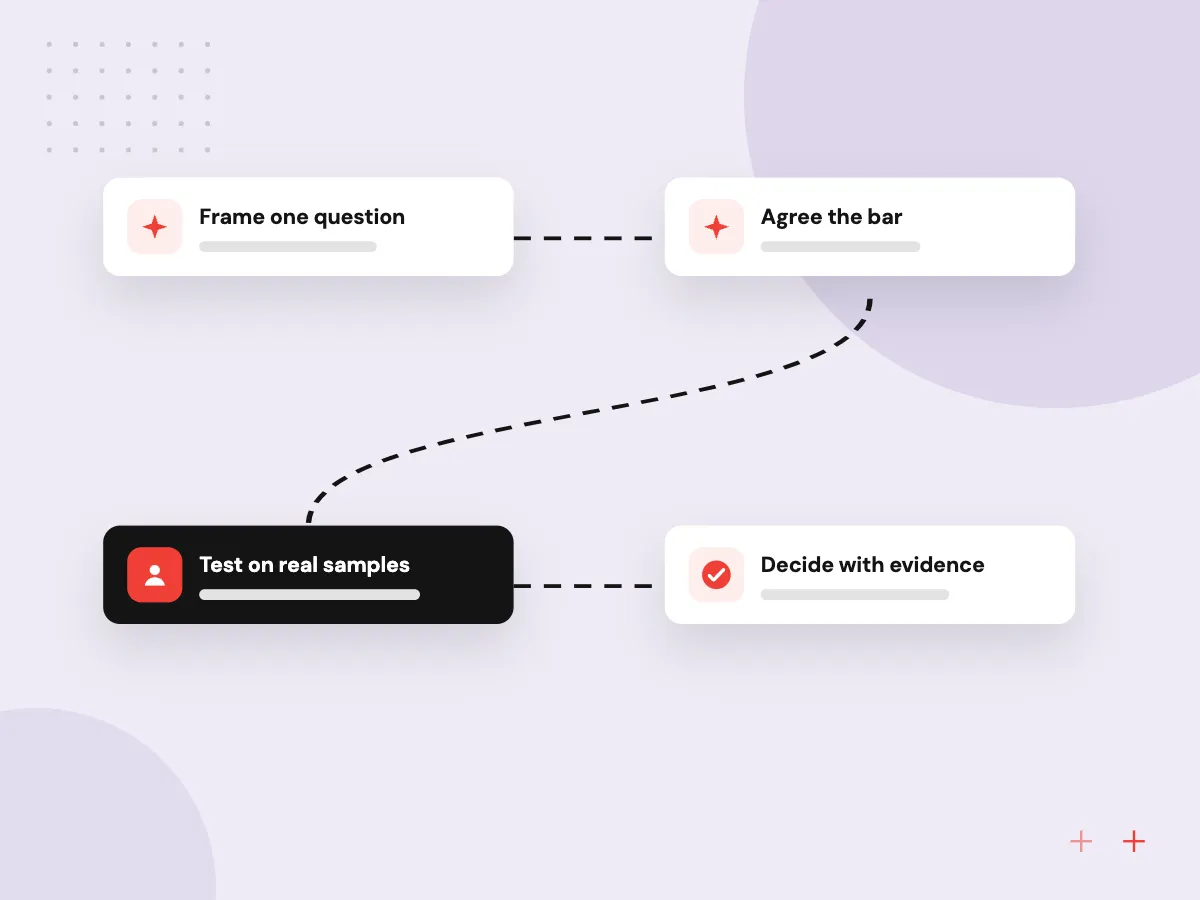
- 01 Frame one question For example: can AI draft quote lines from our emails accurately enough?
- 02 Agree the bar Accuracy, time saved per item and cost limits written down before testing.
- 03 Test on real samples A working pipeline runs on a representative, anonymized slice of your data.
- 04 Decide with evidence Results, failure cases and a cost estimate support a go, change or stop.
A proof of concept should be cheap to stop, so it avoids production integrations until the answer is yes.
AI PoC examples by department
A good proof of concept takes one painful, repeated task and asks whether AI can handle enough of it.
Finance document reading
Can a model pull vendor names, totals and line items from our supplier invoices well enough to cut manual entry?
Support answer drafting
Can replies drafted from our help articles and past tickets be accepted by agents with light edits most of the time?
Sales and quoting
Can AI read a customer’s request and propose the right products and quantities from our catalog for a salesperson to check?
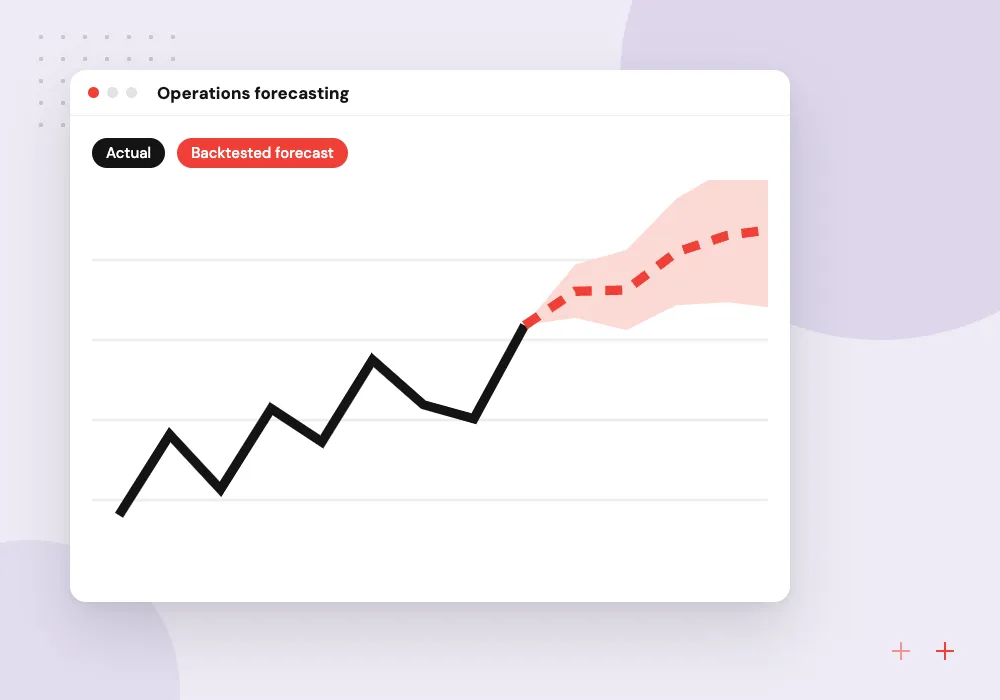
Operations forecasting
Can a model built on our order history forecast next month’s volume better than the current spreadsheet method?
AI pilot project after a successful PoC
A proof of concept runs offline on sample data. A pilot puts the same pipeline into daily work for one team, connected to real systems, with people reviewing every output. We plan the pilot only after the PoC clears its bar, and measure it on the same criteria so results stay comparable.
What we do
- Pilot plan with one team
- Connections to live systems
- Reviewer workflow and sign-off
- Side-by-side with the current process
- Rollout or stop decision
Data handling and evaluation in a PoC
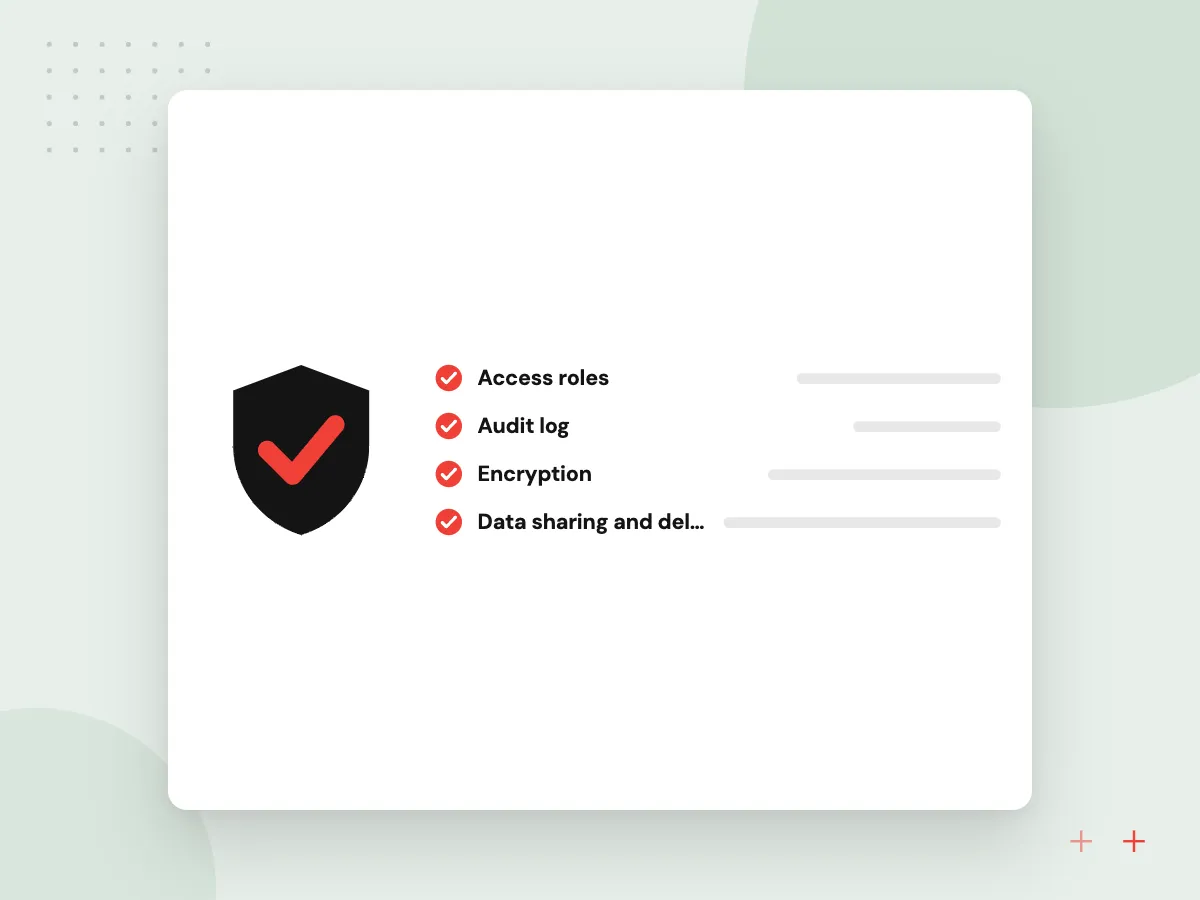
Most PoCs need real samples, which often include customer or employee details. We agree what data is shared, anonymize where possible, process it in an environment you approve and delete it at the end. Results are scored on a labeled test set your staff help create, so the score reflects your own judgment.
What we do
- Data sharing and deletion agreement
- Anonymization of sample data
- Labeled test set with your experts
- Accuracy and error breakdown
- Running cost estimate at full volume

How we approach a project
Evaluation follows the principle in NIST’s AI Risk Management Framework that a system must first be valid and reliable for its intended use. When a PoC passes, the work moves into AI software development, or into an AI MVP if the idea is a new product.
Bring one task that eats staff time, and a sense of what good output looks like, to a 30-minute conversation. We will help you turn it into a question a test can answer. Our contact page has the booking form.
How we work
- Success criteria before any testing
- Your data, not demo data
- Stopping is a valid result
Our Process
-

Question and criteria
We write the question, the success bar and the stop conditions with the person who owns the process.
-

Sample and label
A representative slice of data is gathered, anonymized and labeled by your staff to form the test set.
-

Build and test
A working pipeline is built outside production and run against the test set, with every failure reviewed.
-

Report and decide
A written report covers results, failure types, cost at full volume and a go, change or stop recommendation.
Why Aranv for an AI PoC
Criteria fixed before testing
Success and stop conditions are written with you before any model runs, so nobody moves the goalposts once results come in.
Tested on your data
We test on a representative sample of your own documents or records, messy ones included, not on clean examples picked to impress.
A real answer, including no
If the results fall short, the report says so and explains why. A clear stop is a useful outcome that protects a larger budget.
Nothing wasted on a yes
The pipeline, test set and findings carry straight into the pilot or full build, so passing work is reused rather than rebuilt.
Planning AI Proof of Concept?
Book a 30-minute conversation with the team that would build it.
AI proof of concept FAQs
-
How long does an AI proof of concept take?
Most are scoped in weeks rather than months, because they test one question on a sample instead of building a product. The pace depends mostly on how quickly sample data can be shared and labeled. We agree the length and end date before starting.
-
What does a PoC deliver at the end?
A working pipeline that ran on your data, the labeled test set, a results report with accuracy and failure cases, an estimate of running cost at full volume, and a written recommendation to go ahead, change the approach or stop. The code and test set are yours to keep.
-
How is an AI PoC different from a pilot project?
A PoC tests whether AI can do the task, using samples outside your live systems. A pilot puts a proven approach into one team’s daily work, connected to real systems, to see whether it holds up under real volume and real users. A pilot usually follows a successful PoC.
-
What data do we need for an AI proof of concept?
A representative sample of the inputs the task uses, such as a few hundred emails, invoices or records, plus examples of correct output. Your experts’ time to label a test set matters more than sheer volume. We help anonymize anything sensitive before it is shared.
-
What if the proof of concept fails?
Then you have avoided a larger investment in something that would not work, and you know why it failed. The report shows which inputs failed and whether a different method, better data or a narrower scope would change the result.
-
How do we choose which AI use case to test first?
Pick a task that repeats often, has shareable data and an owner who can judge good output. Avoid starting with your highest-risk decision; the readiness checklist helps rank candidates.

Let’s talk about your next step
Contact Aranv to discuss your workflow, current tools, and goals. Meet with our team or send an inquiry.
Book a meeting with our team
Choose an available date and time for a 30-minute conversation about your project.
Tell us about your project
Share a few details so we can discuss a useful next step.
Prefer email? sales@aranv.com