


What an AI adoption plan should cover
Aranv’s AI implementation roadmap has four stages: pick one frequent task with a clear owner, check the data and systems behind it, pilot on real cases with staff reviewing every output, then widen use only after the results hold. Policy, security and measurement run through every stage instead of arriving at the end.
Stage one: choose. Strong first candidates are frequent, rule-based and easy to check, such as sorting inbound email or pulling fields from supplier invoices. The AI use cases library describes jobs like these, and the AI for small business guide covers where lean teams tend to begin.
Stage two: prepare. Find where the inputs live, who owns them and whether access can be narrowed to what the task needs. Record baseline figures now, because they are hard to rebuild later. Our guide on preparing data for AI covers the clean-up.
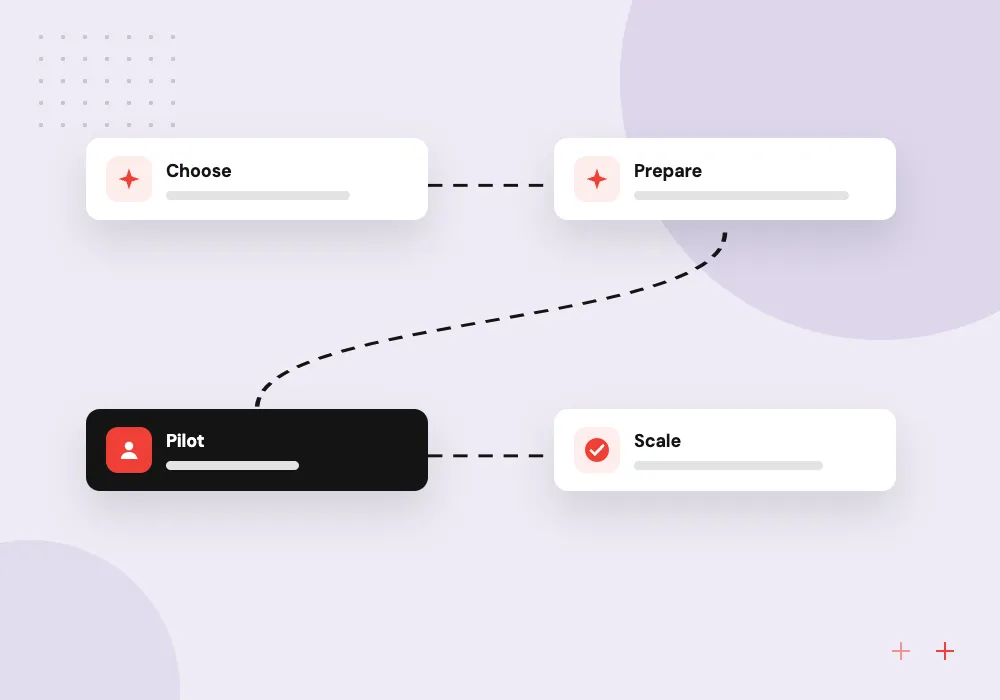
Four stages of an AI adoption plan
One workflow at a time
- 01 Choose Rank candidate tasks by volume, clear rules and the cost of a mistake.
- 02 Prepare Locate the data, fix access rights and record current time and error figures.
- 03 Pilot Run on live cases with staff approving each output for a fixed period.
- 04 Scale Reduce review where accuracy holds, then repeat the pattern on the next task.
Write the success measure before the pilot begins, otherwise nobody can say whether it worked.
AI strategy steps that keep a roadmap realistic
Roadmaps stall when they list technology instead of decisions. These four habits keep the plan tied to the business.
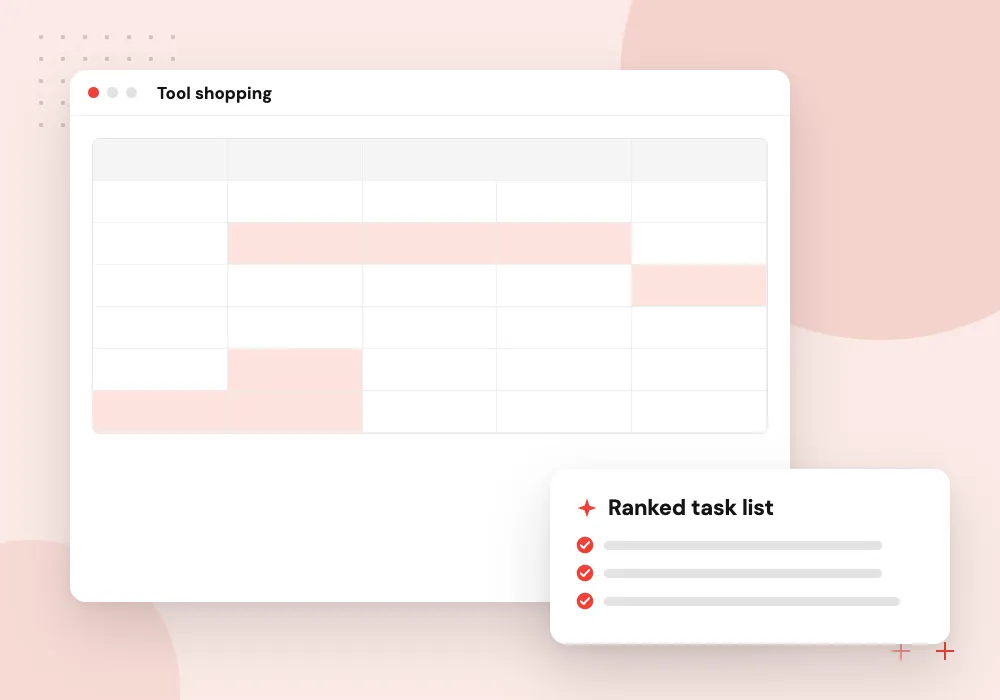
Rank tasks, not tools
List the jobs that consume staff hours, score each on volume, data access and risk, and begin with the top one rather than a platform purchase.
Name an owner
Each AI workflow needs one manager who approves changes, reads the reports and decides whether it grows, changes or stops.
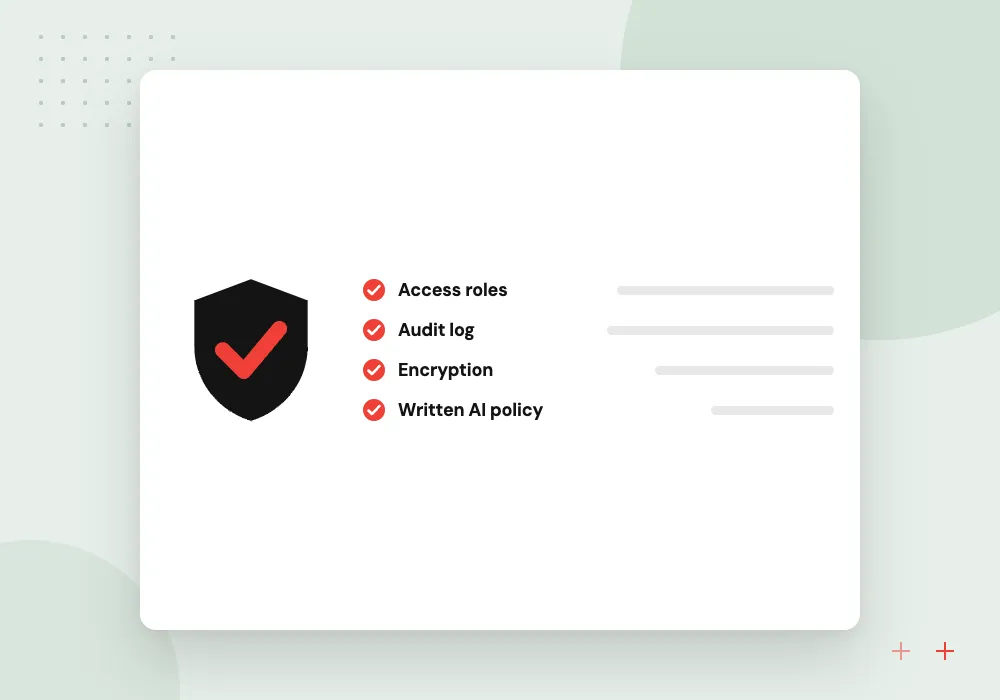
Set the policy early
Agree which AI tools staff may use and what data may go into them before the pilot starts, not after an incident.
Plan the integration
A pilot run by copying text between browser tabs proves little. Budget time to connect the CRM, inbox or ERP the task really uses.
The pilot decides most roadmaps
A pilot answers one question: does this task get faster or more accurate with AI in the loop, at a cost you accept? Keep the group small, the period fixed and the review strict, and record every correction staff make so the next version improves.
What we do
- Pilot group and review period
- Baseline and target measures
- Correction log kept by reviewers
- Weekly accuracy and volume report
- Go, adjust or stop decision
Governance that grows with the roadmap
Controls should match the stage. A pilot needs an approved tool list, data rules and a named owner. Wider use adds access reviews, logging, incident steps and a register of every AI workflow, so nobody loses track of what is running where.
What we do
- Approved AI tools list
- Data classes allowed per tool
- Register of live AI workflows
- Access reviews and logging
- Incident and rollback steps

How we approach a project
Stage three: pilot. A pilot runs inside the real workflow with a small group, every output reviewed, for a set number of weeks. Run an AI proof of concept before it when the open question is whether the task is technically possible at all.
Stage four: scale. Expand only once the measures agreed at the start have held. NIST’s AI Risk Management Framework is a voluntary reference for the governance that runs through each stage, and our AI consulting team can draft the roadmap with you.
How we work
- Small first release with real users
- Measure before and after
- Governance from the first stage
Our Process
-

List and score tasks
Collect candidate tasks from each team and score them on volume, data access, ease of checking and risk.
-

Pick one and set measures
Choose the top task, name its owner and record current handling time, error rate and backlog.
-

Pilot with review
Run the AI on live cases while staff approve outputs, and log every correction for tuning.
-

Decide and repeat
When the pilot ends, compare results with the baseline, expand, adjust or stop, and pick the next task.
How Aranv supports your roadmap
Roadmaps tied to real tasks
We build the plan from interviews with the people who do the work, so each stage names a task, an owner and a measure instead of a technology.
Pilots inside your systems
Our pilots connect to the inbox, CRM or ERP the task already uses, so results reflect daily conditions rather than a demo setup.
Honest stop points
Every stage ends with a decision. If the numbers do not support the next step, we recommend pausing or switching to a different task.
Policy alongside the build
We help write the usage rules and access controls each stage needs, sized for a smaller company rather than copied from a large enterprise.
Ready to act on this guide?
Ask our team in a 30-minute conversation.
Or see how we build it: Explore all services
AI implementation roadmap FAQs
-
How long does AI implementation take?
One workflow can move from selection to pilot in weeks or a few months, depending on data access and integrations. A company-wide program takes longer because each workflow is its own project, so plan in stages and revisit the roadmap after every pilot.
-
What is the first step in an AI adoption plan?
Pick one task. Choose something frequent, with clear rules and a person who owns it today, and write down how you will tell whether the AI version works. The rest of the roadmap follows from that choice.
-
Do we need an AI strategy before we start?
You need a short written direction, not a long strategy document: the goals AI should serve, the tools staff may use, the data that is off limits and who approves new uses. One pilot will teach you more than months of planning.
-
Who should own AI in a small business?
One senior person should own the roadmap and the policy, often the owner, the operations lead or the IT manager. Each workflow then gets its own owner inside the team that uses it day to day.
-
When should we scale beyond the pilot?
When the measures set before the pilot have held for the whole review period, staff trust the outputs, and the cost per task is known. If any of those is missing, extend the pilot or switch tasks.

Let’s talk about your next step
Contact Aranv to discuss your workflow, current tools, and goals. Meet with our team or send an inquiry.
Book a meeting with our team
Choose an available date and time for a 30-minute conversation about your project.
Tell us about your project
Share a few details so we can discuss a useful next step.
Prefer email? sales@aranv.com