


What open-source LLM development involves
Aranv offers open-source LLM development for companies that want AI built on models they can download, inspect and run themselves. We compare open-weight families such as Llama and Mistral on your tasks, check their licenses, adapt them to your data and build the applications around them.
Model choice comes first. Families differ in size, context length, languages, tool calling and license. Some publish weights under permissive terms such as Apache 2.0; others use a custom community license with an acceptable use policy and extra conditions. Our guide to choosing an LLM lists the questions to settle before testing.
Next we adapt the model. Often that means retrieval over your documents through RAG development; sometimes a small adapter trained through LLM fine-tuning. Quantization shrinks memory needs so a capable model fits on one GPU or a workstation, and we measure what that costs in answer quality.
Choosing and building on open-weight models
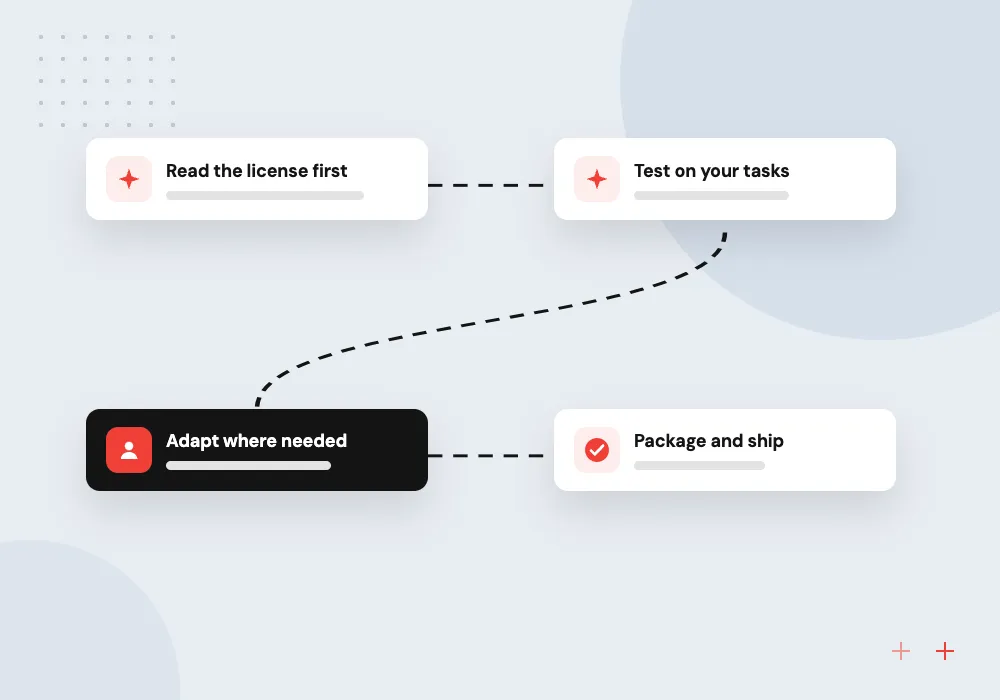
From model card to working app
- 01 Read the license first Commercial use, user limits and acceptable use terms differ between model families.
- 02 Test on your tasks Shortlisted models answer your real questions, scored side by side with a hosted model.
- 03 Adapt where needed Prompting, retrieval or a light adapter close the gaps the tests revealed.
- 04 Package and ship A quantized build, an API and the app screens your staff will use.
Open source is used loosely for models. Many publish their weights under custom licenses rather than an OSI-approved one.
What we build with open-weight models
Open models suit teams that want control over cost, data and the release schedule of the model itself.
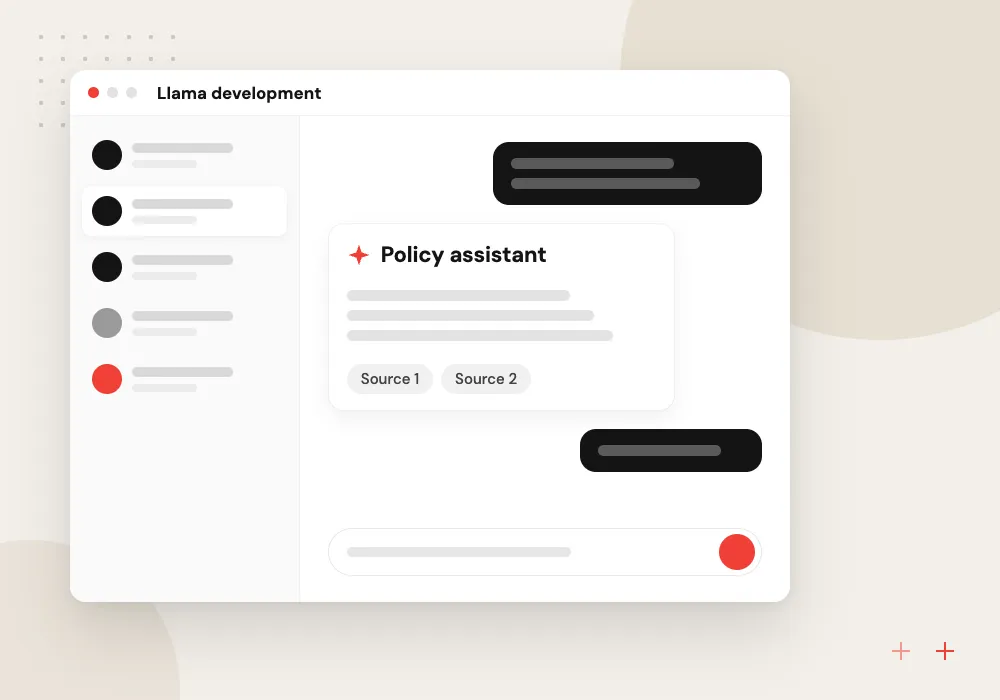
Llama development
Internal assistants built on a Llama model that answer from your policies and manuals, with Meta’s license and acceptable use policy reviewed up front.
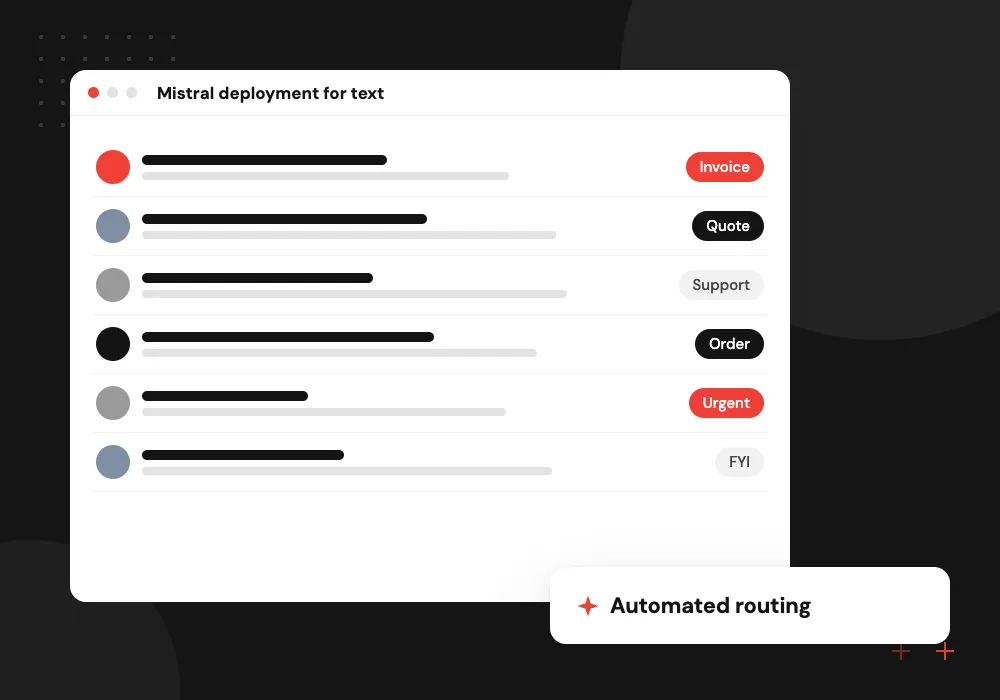
Mistral deployment for text
Mistral models that carry the Apache 2.0 license, used for summarizing, extraction and routing jobs where permissive terms keep legal review short.
Model routers
A layer that sends routine requests to a small open model and only hard ones to a larger hosted model, logging cost and quality for each.
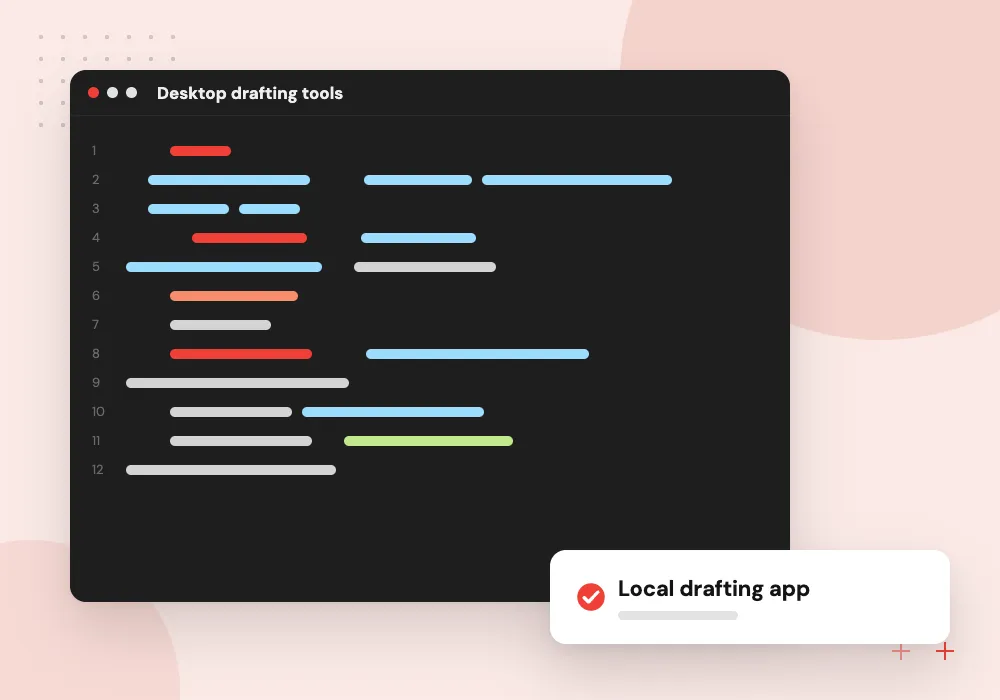
Desktop drafting tools
Quantized models packaged to run on staff machines for drafting and note cleanup when a file must never leave the device.
License and model selection
Before any build, we put the shortlisted models in one table: license type, commercial terms, user limits, acceptable use rules, languages, context length and hardware needs. Your legal contact signs off on the license column and the test results fill in the rest, so the choice is documented for later audits.
What we do
- License comparison table
- Acceptable use policy review
- Hardware and memory estimates
- Side-by-side test results
- Written model decision record
Quantized models on modest hardware
Quantization stores a model’s weights at lower precision, so it fits on smaller GPUs, workstations or laptops. We build quantized versions of the chosen model, measure the quality loss on your tasks and pick the smallest build your users will not notice.
What we do
- Quantized builds at several sizes
- Quality checks against full precision
- Memory and speed measurements
- Packaging for workstation or server
- Update script for new releases
How we approach a project
The application layer is ordinary software: an API, a job queue, screens and integrations, usually written in Python. We put the model behind an interface compatible with common hosted APIs, so swapping models is a configuration change, not a rewrite.
Where it runs is a separate decision. A model can sit on a laptop, a rented GPU or a cluster in your own account, and private LLM deployment covers the hardened server setup. For the wider range of AI products we build, see generative AI development.
How we work
- Licenses checked before code
- Your tasks, not public leaderboards
- Swap models without rewriting apps
Our Process
-

License and data check
Your legal contact reviews the shortlisted licenses with us, and we confirm what data the model may see and where it may run.
-

Bake-off on real cases
A handful of candidates answer a test set drawn from your work, scored for accuracy, format and speed next to a hosted model.
-

Build the first workflow
We connect the winning model to one real process, such as a support inbox or a document queue, and release it to a pilot group.
-

Plan for new releases
Open model families update often. We keep the test set, so each new release can be scored before you decide to switch.
Why Aranv for open models
Licenses read, not assumed
We treat the model license as a requirement, review it with your legal contact and record the terms that affect your product or service.
Tested against a hosted model
Every bake-off includes a leading hosted model as a reference point, so you know what you gain or give up by going open.
No lock-in to one family
The app reaches the model through a standard interface, and the saved test set turns a model change into a measured decision.
Full software around the model
We build the API, integrations and screens too, so the model ends up in a working tool rather than a demo notebook.
Planning Open-Source LLM Development?
Book a 30-minute conversation with the team that would build it.
Open-source LLM FAQs
-
Is Llama actually open source?
Not in the strict sense. Meta publishes Llama weights under its own community licenses, which allow commercial use but add conditions, such as an acceptable use policy and a separate license for very large services. The Open Source Initiative’s definition asks for more. For most businesses the real question is whether the terms fit your use.
-
Should we use Llama or Mistral?
It depends on the task, the languages involved, your hardware and the license terms you can accept. Both families include small models that run on one GPU and larger ones that need more. We run candidates on your own test cases, then pick the smallest model that clears the bar.
-
Are open-weight models cheaper than paying for an API?
Sometimes. At low or uneven volume, paying per call is usually cheaper because nothing runs while idle. At steady, high volume, or when a small model is good enough, running your own can cost less. We model both options with your expected traffic before you commit.
-
What happens when a better open model comes out?
Because the app talks to the model through a standard interface, switching is mostly testing work. We score the new release on your saved test set, check its license, and switch only if it beats the current model on the cases you care about.
-
Who owns what we build on an open model?
You own the application code, prompts, test sets and any adapters we train for you, as set out in the contract. The base model stays under its publisher’s license, which you accept when you use it. The handover documents list each component and its license.

Let’s talk about your next step
Contact Aranv to discuss your workflow, current tools, and goals. Meet with our team or send an inquiry.
Book a meeting with our team
Choose an available date and time for a 30-minute conversation about your project.
Tell us about your project
Share a few details so we can discuss a useful next step.
Prefer email? sales@aranv.com