


What LLM testing covers
Aranv offers LLM evaluation services for teams that need evidence their chatbot, RAG search or AI agent gives correct, safe answers. We build test sets from your real cases, define scoring rules with your experts, run automated and human grading, and wire the suite into every release.
Evaluation starts with a test set: representative cases plus the hard ones your staff remember, each stored with its expected answer or a grading rubric. Systems we build through RAG development and AI agent development ship with such a suite.
Grading mixes three methods. Exact checks cover formats, numbers and citations. A model-based grader scores softer qualities such as completeness and tone, and we measure how often it agrees with your experts before trusting it. People review a sample, especially the failures. Research such as Stanford’s HELM shows why accuracy alone is not enough.
Turning a convincing demo into measured results
Test sets before opinions
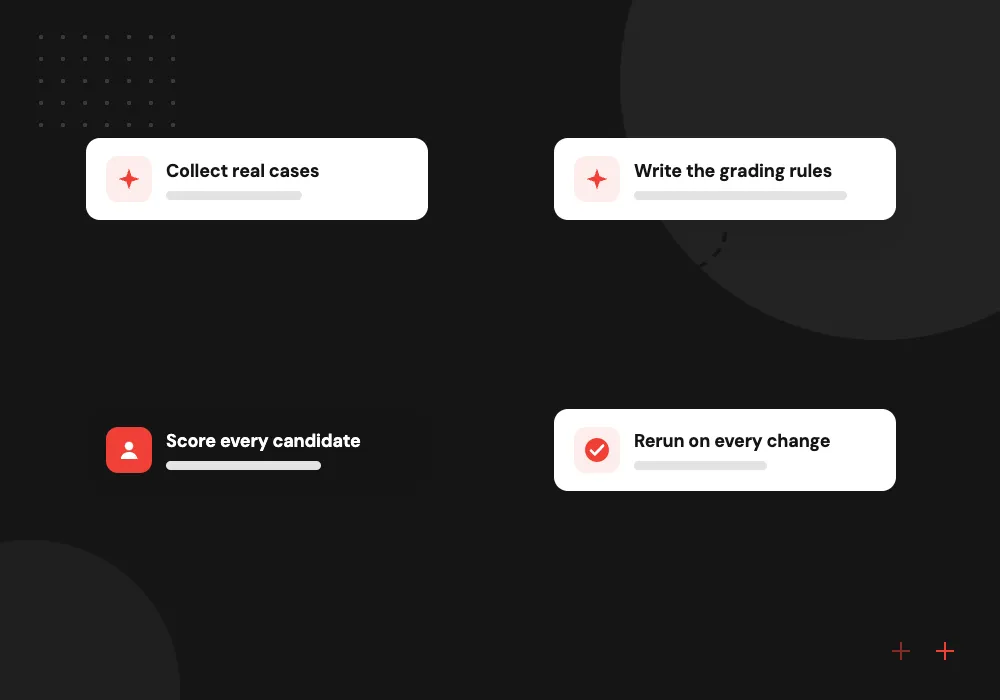
- 01 Collect real cases Questions, documents and tasks taken from your tickets, inboxes and logs.
- 02 Write the grading rules Your experts define what correct, partly correct and unacceptable look like.
- 03 Score every candidate Prompts, models and retrieval settings compared on the same cases.
- 04 Rerun on every change The suite runs in CI so regressions show up before release.
Public benchmarks rank general ability. They say little about your documents, your customers or your edge cases.
AI testing services for LLM features
Each kind of LLM feature fails in its own way, so the test design follows the feature.
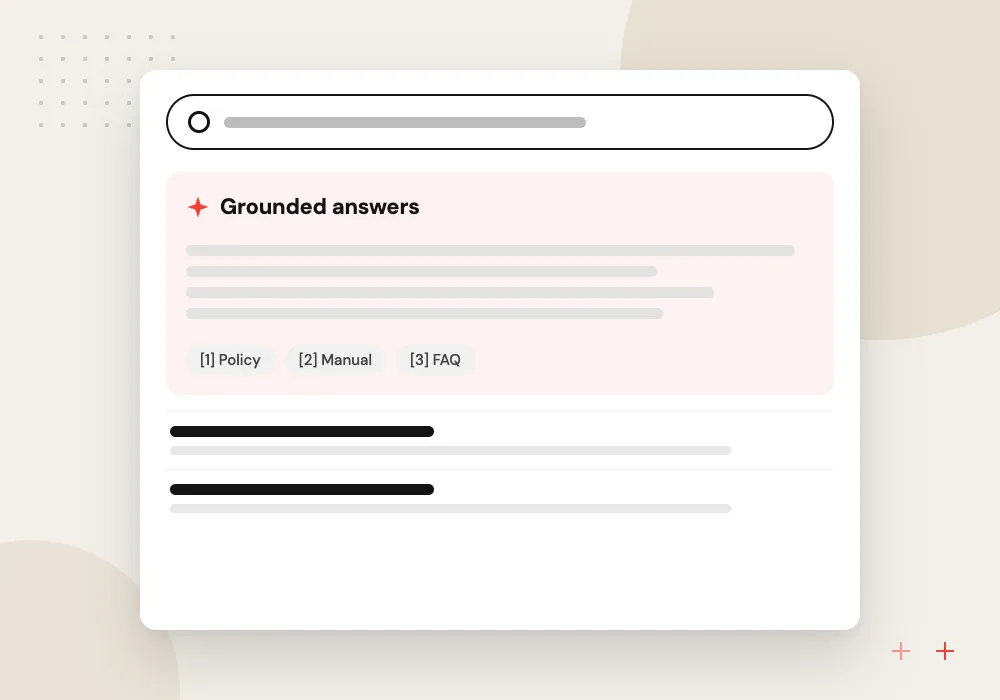
RAG answer testing
Checks that answers come from the right passages, cite sources that exist, and admit it when the documents do not cover a question.
Agent task testing
Scripted scenarios that check whether an agent picks the right tools, passes correct arguments and stops before actions that need approval.
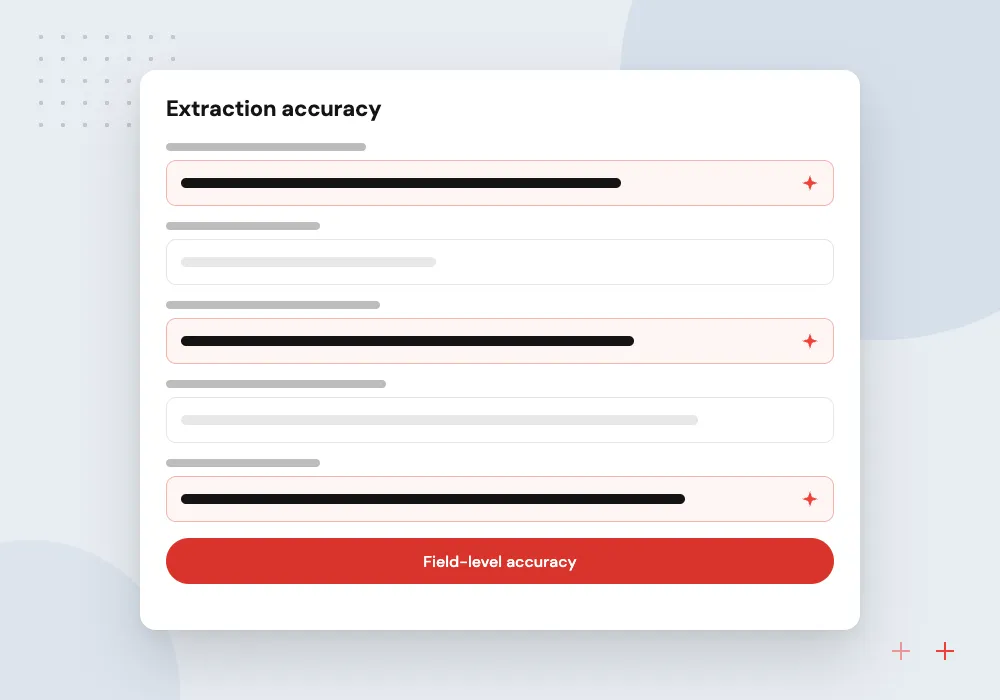
Extraction accuracy
Field-level scores for invoices, forms or contracts compared with hand-checked answers, broken down by document type and field.
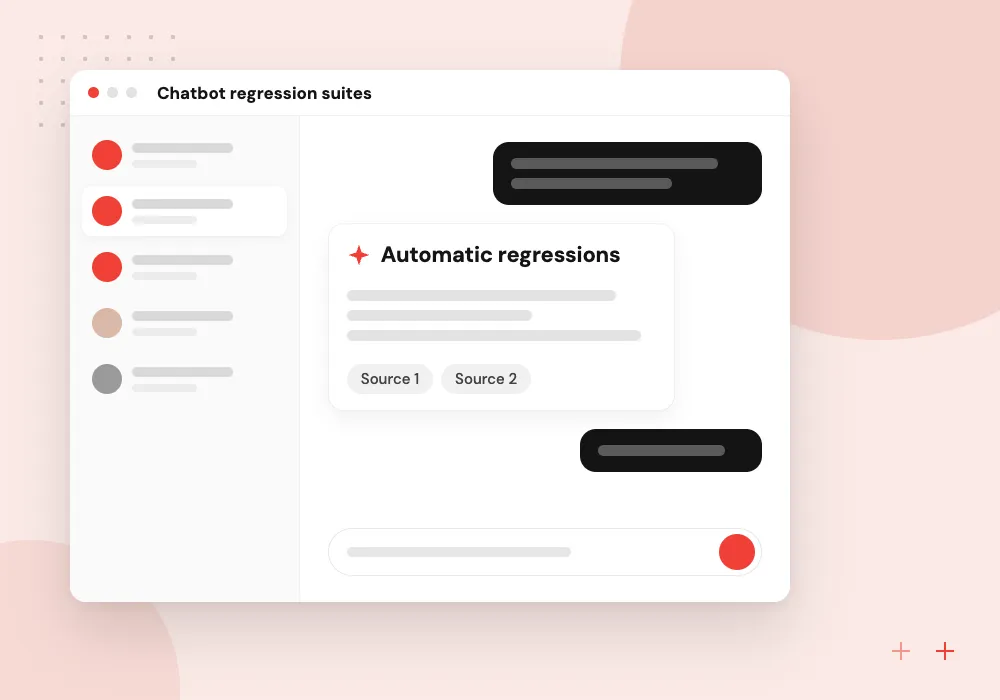
Chatbot regression suites
Conversations replayed after each prompt or model change to catch tone shifts, broken flows and answers that used to be right.
Test sets and expert labeling
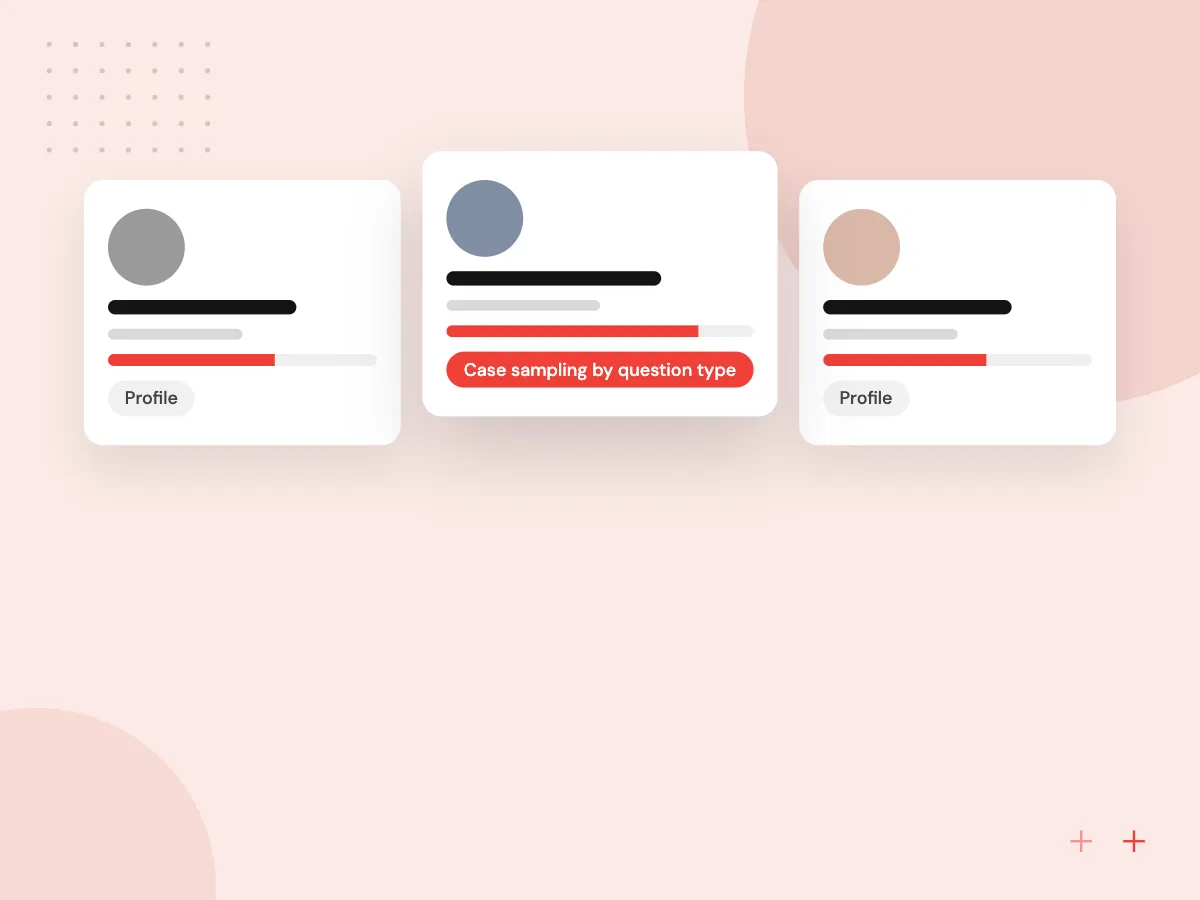
We pull cases from tickets, chats, documents and logs, remove personal details, and group them by question type so gaps are visible. Your experts label the expected answer or grading rule for each case from a short guide, and we check how consistently two labelers agree.
What we do
- Case sampling by question type
- Anonymized real examples
- Labeling guide and rubric
- Agreement checks between labelers
- Versioned test set
Automated scoring in your pipeline
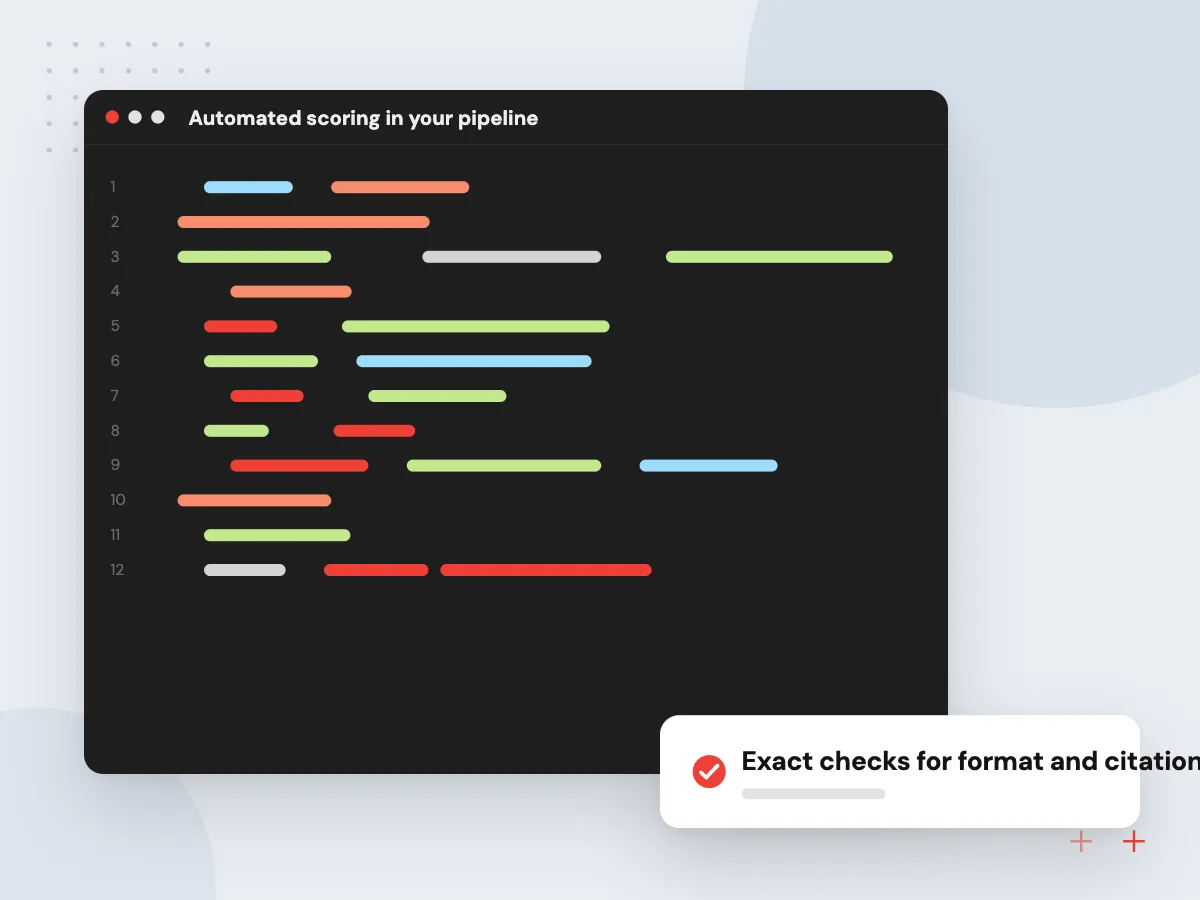
Grading scripts run in CI whenever a prompt, model, retrieval setting or tool changes. Results are compared with the last release, and a drop on any critical case type blocks the merge until someone reviews it.
What we do
- Exact checks for format and citations
- Calibrated model-based graders
- Score comparison with last release
- Blocking rules for critical cases
- Trend dashboard by version

How we approach a project
We also test safety. Basic checks for harmful output and leaked instructions are part of every suite, while deeper adversarial work belongs to AI red teaming. Functional and load testing of the surrounding app comes from our QA and software testing team.
The suite keeps working after launch. It gates changes made through prompt engineering, and LLMOps feeds corrected production answers back in as new cases.
How we work
- Your cases, not public benchmarks
- Graders checked against human judgment
- Results reported with their limits
Our Process
-

Define success with owners
We sit with the people who own the process and agree which errors are tolerable, which are costly and which must never happen.
-

Build and label the test set
Cases are drawn from real records, anonymized where needed, and labeled by your experts using our rubric and guidance.
-

Run the first scorecard
The current system is scored as it stands, giving a baseline and a ranked list of failure types to fix first.
-

Automate and hand over
Grading scripts run in your CI, results go to a dashboard, and your team learns how to add cases as the product grows.
Why Aranv for LLM evaluation
Built from your own work
Test cases come from your records and your experts’ judgment, so a passing score means something for your customers rather than for a public leaderboard.
Graders we have checked
Model-based graders are measured against human labels before we rely on them, and the agreement rate appears in every report.
Plain reports for owners
Scorecards show results by case type in plain terms, with examples of failures, so a non-technical owner can decide whether to launch.
Independent of who built it
We can score systems built by us, by your team or by another vendor, and the method is the same either way.
Planning LLM Evaluation and Testing?
Book a 30-minute conversation with the team that would build it.
LLM evaluation FAQs
-
What do LLM evaluation services include?
A test set built from your real cases, grading rules agreed with your experts, automated and human scoring, a baseline report on the current system and a suite that reruns whenever prompts, models or data change. The output is a scorecard you can use to approve releases.
-
Can an LLM grade another LLM’s answers reliably?
Partly. A model-based grader is useful for qualities like relevance and tone, but it has blind spots and biases. We calibrate it against human labels on a sample and use exact checks wherever a rule can decide. A grader that disagrees with your experts too often is dropped.
-
How many test cases do we need for LLM testing?
Enough to cover your main question types and the failures that matter. For many business assistants a few hundred well-chosen cases give a clear picture, with more added as production reveals new failure types. Variety matters more than raw count.
-
How is LLM testing different from normal software testing?
Normal tests expect the same output every time. An LLM can phrase a right answer many ways and can change behavior after a model update, so tests score meaning and rules rather than exact text, and run across many cases to judge overall quality.
-
Can you evaluate an AI system another vendor built?
Yes. We need access to the system or its API, sample cases and someone who can say what a correct answer is. The baseline report shows where it stands and which failure types to address first, whoever does the fixing.

Let’s talk about your next step
Contact Aranv to discuss your workflow, current tools, and goals. Meet with our team or send an inquiry.
Book a meeting with our team
Choose an available date and time for a 30-minute conversation about your project.
Tell us about your project
Share a few details so we can discuss a useful next step.
Prefer email? sales@aranv.com