


What AI for CPA firms covers
Aranv builds AI for accounting firms and CPA practices: client document collection that sorts uploads against each client’s checklist, bookkeeping transaction classification, first-pass review notes and client email drafts. The tools work with your practice management, tax and ledger software, and preparers and reviewers sign off on every return and entry.
Firms typically run a practice management system for workflow and deadlines, tax preparation software, a client portal, e-signature, and the clients’ own ledgers. We connect to each through its API or exports, and our QuickBooks integration work covers the most common ledger.
For document-heavy work, AI document processing reads tax forms and statements, and our AI bookkeeping automation page details the monthly close. Receipts for expense-heavy engagements follow the AI receipt processing pattern.
One client’s tax documents, from portal to preparer
How AI organizes a tax season file
- 01 Checklist from last year Expected wage, brokerage, partnership and mortgage forms are listed from last year’s return.
- 02 Uploads sorted on arrival Each upload is identified by form type, matched to the checklist and renamed.
- 03 Missing items chased Clients get polite reminders listing exactly what is still outstanding.
- 04 Preparer starts complete The preparer opens a file with documents organized and gaps already noted.
The signing preparer remains responsible for the return. AI organizes and checks; it does not sign or file.
Accounting automation for busy seasons
Accounting firms run at two speeds: a quieter stretch, then a crush from January to the extended deadlines. These tools take the sorting and chasing out of the crush.
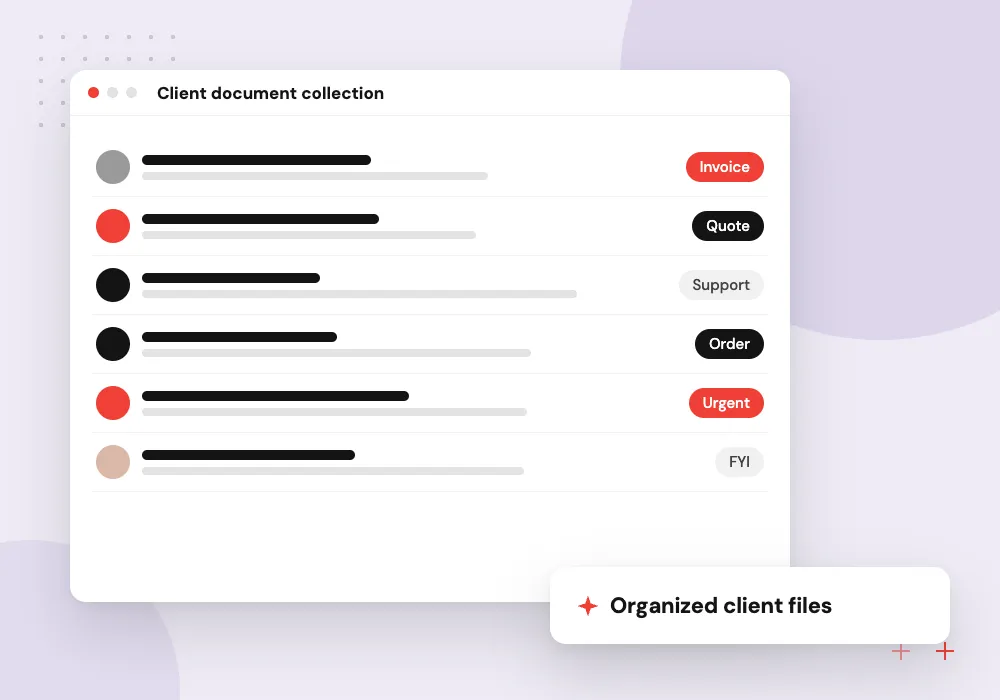
Client document collection
Portal uploads are identified as wage statements, brokerage forms, partnership schedules or receipts, matched to each client’s checklist and chased when missing.
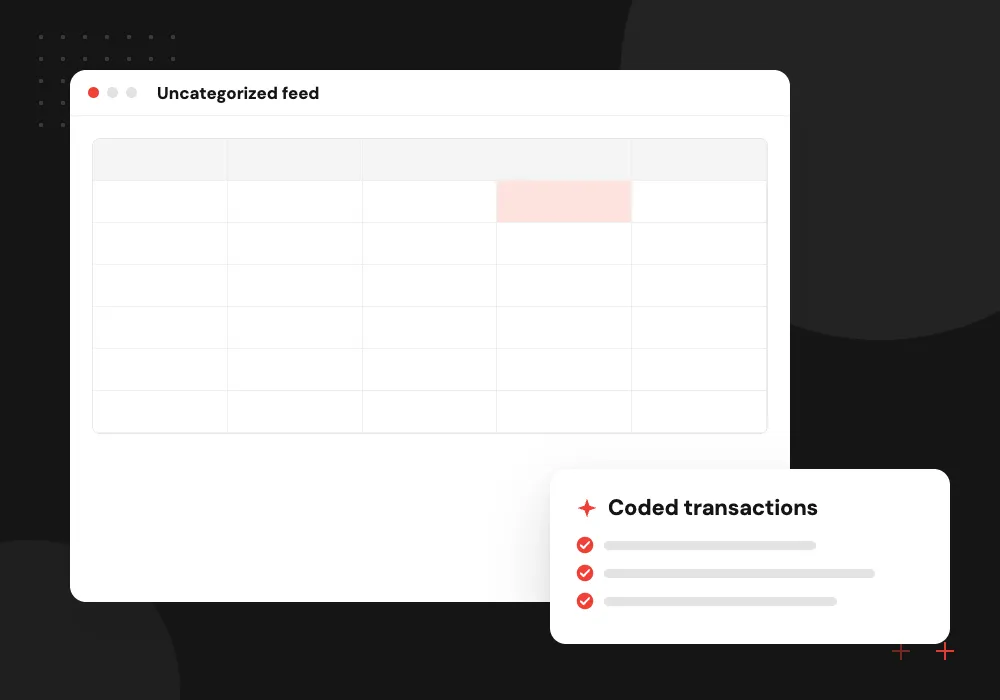
Transaction classification
Bank feed transactions are coded to the client’s own chart of accounts based on past entries, with low-confidence items left for the bookkeeper.
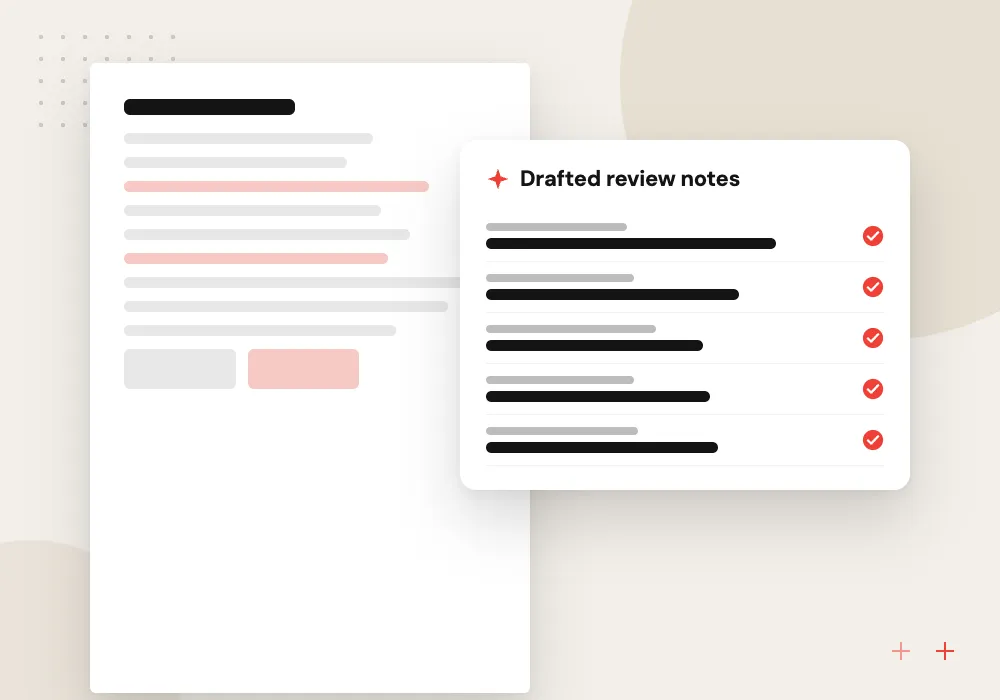
First-pass review notes
Compares this year’s draft return with last year’s, flags large swings, missing schedules and dropped carryovers, and drafts notes for the reviewer.
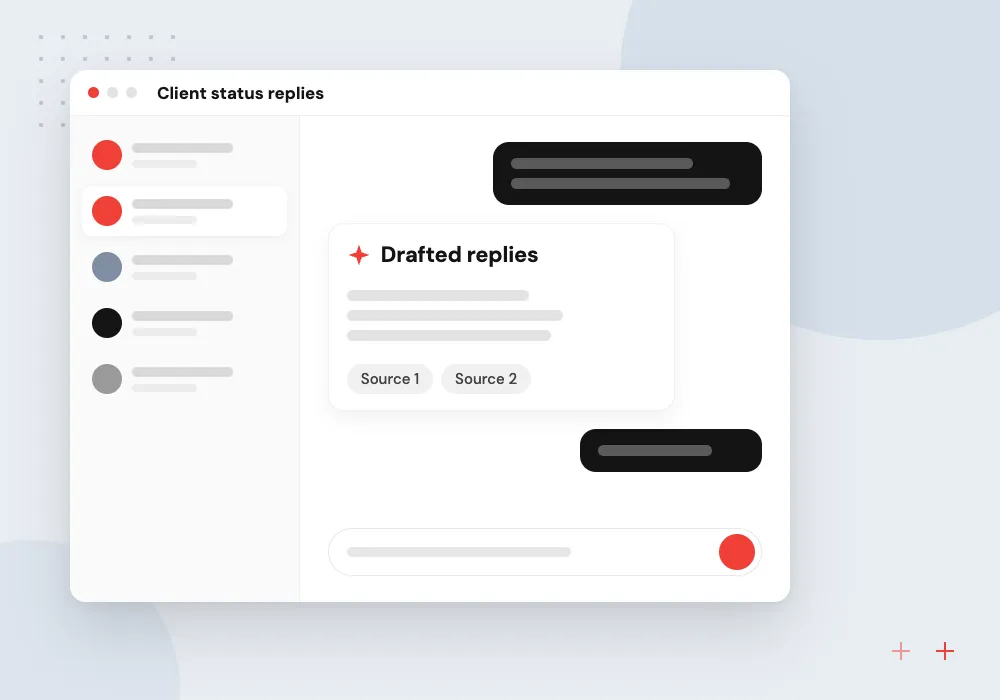
Client status replies
Drafts answers to the questions that flood in during tax season, such as return status or missing documents, from your practice management data for staff to send.
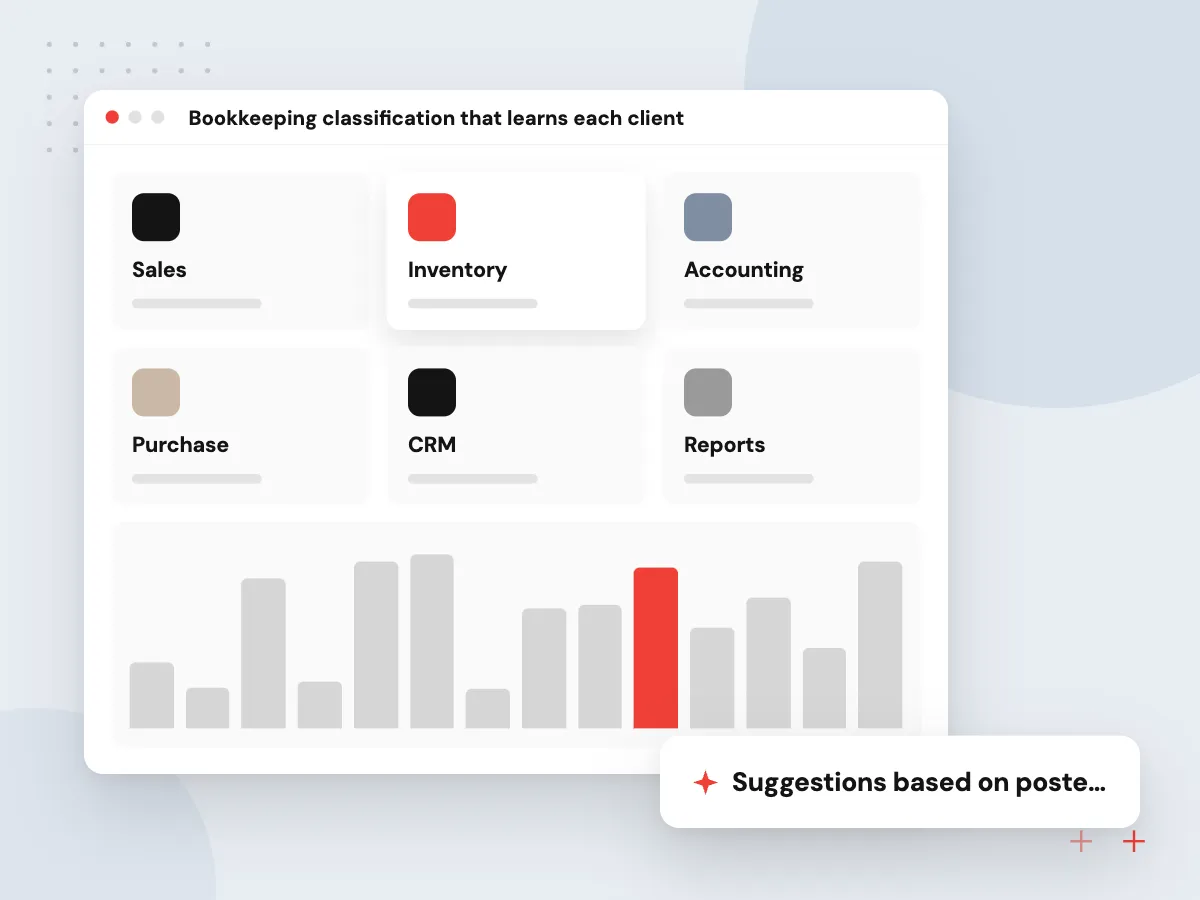
Bookkeeping classification that learns each client
Monthly bookkeeping clients send bank and card feeds that need coding to their own chart of accounts. We build classification that learns from each client’s posted history, explains its suggestion and posts to the ledger only after a bookkeeper approves. Unusual items, such as owner draws or new vendors, always go to a person.
What we do
- Suggestions based on posted history
- Confidence shown on every line
- Ledger posting after approval
- New vendors held for review
- Month-end exception list
Client data and your security plan
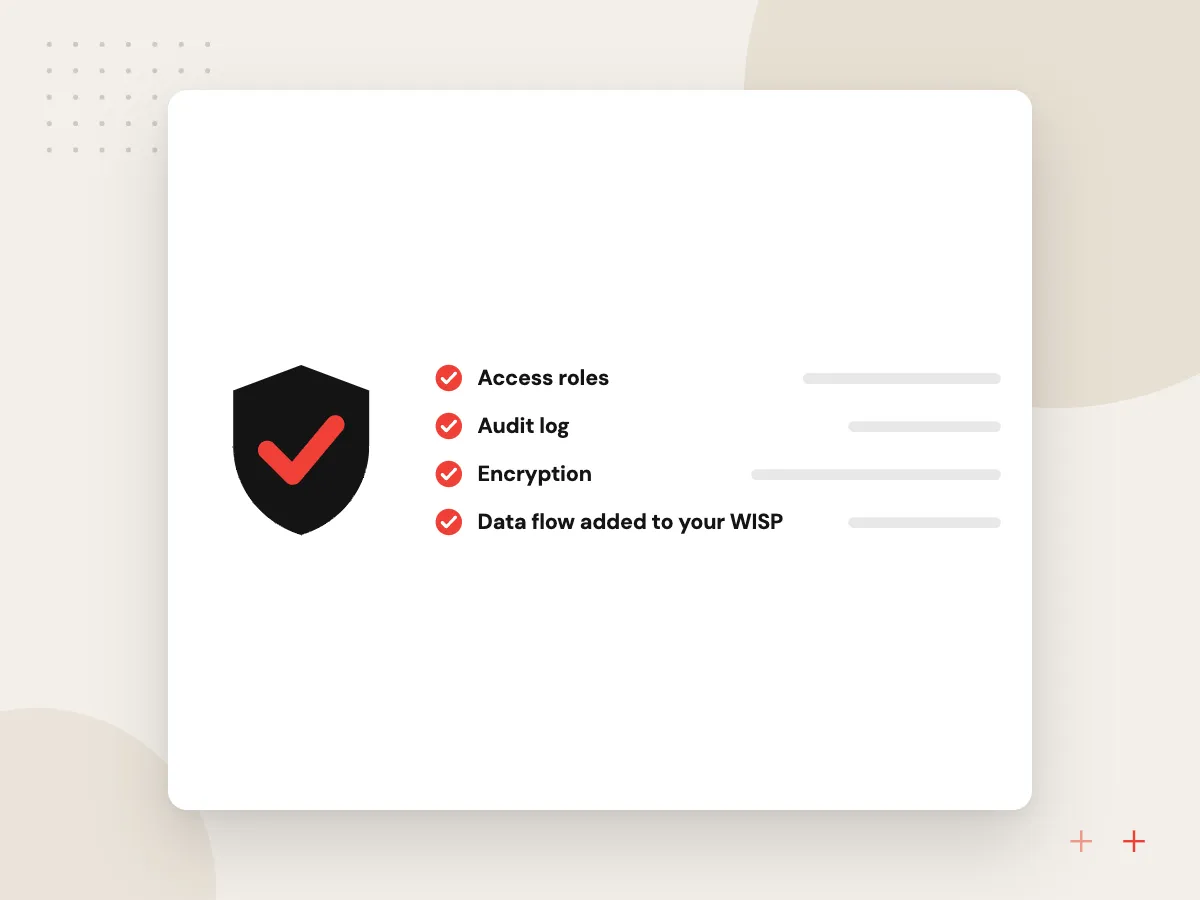
Federal law requires tax and accounting professionals to keep a written information security plan, and the FTC expects firms to choose service providers that can safeguard client data. Any AI vendor becomes one of those providers, so we document data flows, contract terms and access controls for your plan before go-live.
What we do
- Data flow added to your WISP
- Model vendor terms reviewed
- Client identifiers masked where possible
- Staff access by engagement
- Incident steps written down

How we approach a project
Section 7216 of the Internal Revenue Code limits how preparers use and disclose tax return information, so we review data flows with your firm before any client data reaches a model vendor. The IRS reminder on written information security plans lists the safeguards the FTC expects.
Accounting sits beside law and consulting on our legal and professional services page. Building between May and December means the tools are tested before January. Summer, with the last season still fresh, suits a 30-minute conversation about what slowed your team down; book it on our contact page.
How we work
- Preparers and reviewers sign off
- Client data stays inside your WISP
- Built during the off-season
Our Process
-

Start after the deadline rush
Discovery begins once the busiest deadlines pass, when partners and managers have time to explain their process.
-

Inventory client documents
We review a sample of last season’s client files to list form types, formats and the reasons files stalled.
-

Test on past seasons
Tools are tested on prior-year files with known outcomes, and your reviewers check the results.
-

Go live before January
Staff training and a small pilot group of clients run in the fall, ahead of the next season.
Why Aranv for accounting firms
We plan around tax season
Discovery, build and testing are scheduled for your quiet months, and nothing new goes live in the middle of a filing deadline.
Your chart of accounts
Classification learns from each client’s own posting history and account names, so suggestions match how your staff already code.
Review stays with credentialed staff
Every return, ledger entry and client message passes a preparer, bookkeeper or reviewer before it leaves the firm.
Documented for your WISP
Data flows, vendors and access rules are written up so your security plan stays accurate after AI is added.
Planning AI for Accounting Firms?
Book a 30-minute conversation with the team that would build it.
Accounting firm AI FAQs
-
Can AI prepare tax returns for us?
AI can organize documents, pull figures into workpapers and flag issues, but the tools we build do not sign or file returns. Your preparers and reviewers make the judgments and remain responsible for what is filed.
-
Is client data safe with AI tools?
It depends on the setup. We treat each model vendor as a service provider under your written information security plan, review its contract terms on data use, mask client identifiers where possible and limit staff access by engagement.
-
Will it work with our tax and practice management software?
Usually, through the vendor’s API, import formats or exports. Some tax software accepts only limited imports, so we check what yours allows before deciding whether the AI fills workpapers or the return input directly.
-
When should an accounting firm start an AI project?
Right after the spring deadlines. Discovery and the build fit the quieter months, testing happens in the fall on prior-year files, and staff learn the tools before the January rush rather than during it.
-
What does AI for an accounting firm cost?
Cost depends on the systems involved, the variety of client documents, the number of service lines and the review screens needed. Document collection for individual returns makes a contained first phase. We estimate in phases after discovery.

Let’s talk about your next step
Contact Aranv to discuss your workflow, current tools, and goals. Meet with our team or send an inquiry.
Book a meeting with our team
Choose an available date and time for a 30-minute conversation about your project.
Tell us about your project
Share a few details so we can discuss a useful next step.
Prefer email? sales@aranv.com