


Comparing in-house and outsourced development
Aranv’s short answer on in-house vs outsourced software development: hire in-house when software is your product or changes weekly and you can recruit and keep the skills; outsource when you need a full team fast, specialist skills for a defined project, or capacity your hiring plan cannot supply. Many firms mix both.
In-house teams know the business, sit close to users and keep knowledge inside the company. The costs are hiring time, pay plus benefits, management attention and the risk of losing a key person. BLS figures for June 2026 show benefits taking 30.0 percent of what private employers pay out in compensation, so salary is never the whole number.
Outsourcing software development gives you a full team quickly, specialist skills for a set period and the option to scale down after launch. The risks are knowledge leaving with the vendor, thinner day-to-day contact and contracts that leave you without code or documentation. Ownership belongs in the contract; our security and IP page sets out the terms we recommend.
Choosing who builds your software
In-house, outsourced or a mix
- 01 Judge how core it is Your product leans in-house; supporting tools lean outsourced.
- 02 Count the skills needed Product, design, front end, back end, testing, operations and AI.
- 03 Weigh time and hiring Compare hiring and retention time against when you need results.
- 04 Pick the model and owner Whatever the mix, keep product ownership and code access inside.
Many growing firms combine the two: an internal owner with an outside team.
Four factors in the in-house or outsource decision
Neither option wins in general; these four factors usually settle it.
How core the software is
If the software is your product or your main edge, in-house knowledge compounds. Back-office tools and one-off projects are often better outsourced.
Skills and team size
A real product needs design, development, testing and operations skills. Hiring each takes time, while an outside team brings them together at once.
Full cost of each option
Employees cost salary plus benefits, recruiting, tools and management time. Vendors cost their fees plus your time to brief, review and steer them.
AI skills are scarce
Evaluation, data preparation and model operations are specialist skills. One path is to outsource the first AI project and hire once the work proves its value.
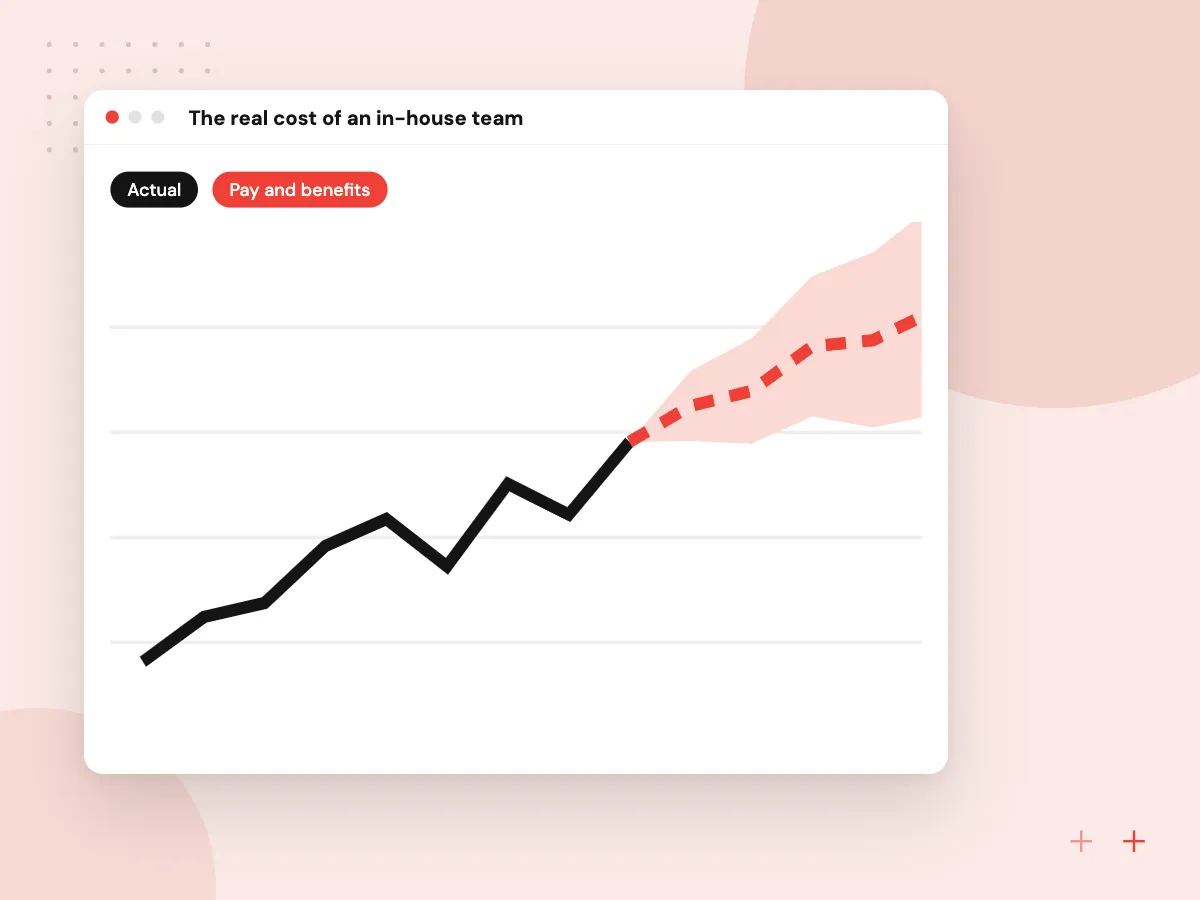
The real cost of an in-house team
Salary is the visible part. Add benefits, recruiting time, equipment and software licenses, training, and the manager who sets priorities and reviews work. A lone developer also needs cover for holidays and departures, which often means a second hire sooner than planned.
What we do
- Pay and benefits
- Recruiting time and fees
- Tools, licenses and equipment
- Management and review time
- Cover for leave and turnover
Making an outsourced team work like yours
Good outsourced setups feel like part of the company. A named internal owner sets priorities, the code lives in your repositories, demos run on a fixed schedule and documentation grows with the software, so you can bring the work in-house whenever it makes sense.
What we do
- Internal product owner
- Code in your own accounts
- Regular demos and planning
- Documentation as a deliverable
- Planned handover option

How we approach a project
Hybrid models are common: an internal product owner directs a dedicated development team, or a small in-house team hands peaks and specialist work to a partner. Our how we work page describes those engagement models, and the dedicated team vs freelancers guide covers the next choice once you decide to go outside.
AI work sharpens the question, since evaluation, data and monitoring skills are rare on small teams. Running a first project with an AI software development partner shows what the role really requires before you hire. More decisions like this are covered in our software and AI guides.
How we work
- Keep product ownership inside
- Match the model to the work
- Plan the handover from day one
Our Process
-

Classify the software
Mark each planned system as core product, important support tool or one-off project.
-

List roles and workload
Note which skills each project needs and whether the work is steady or arrives in peaks.
-

Compare full costs and time
Add pay, benefits, hiring time and management for staff; add fees and your review time for vendors.
-

Protect ownership either way
Keep code in your own repositories, documentation current and a named internal owner for every system.
How Aranv fits either choice
Honest about when to hire
If your software is core and steady, we will say an internal team may serve you better and help you plan the transition.
Works beside your developers
Our engineers can join your existing team, follow your code review rules and leave the knowledge with your staff.
Ownership kept with you
Code, designs and documentation sit in your accounts from the first day, under contract terms agreed before work begins.
AI skills without a first hire
Our team covers evaluation, data preparation and model operations while you learn what an AI role inside your company needs.
Ready to act on this guide?
Ask our team in a 30-minute conversation.
Or see how we build it: Explore all services
In-house vs outsourcing questions
-
Is it cheaper to outsource software development?
Sometimes, but not by default. Outsourcing avoids recruiting, benefits and idle time between projects, but adds vendor margins and your time to manage the work. For steady, long-term product work, an in-house team can cost less per year once it is hired and productive.
-
Should a small business hire developers or an agency?
If you need one ongoing role and someone to manage that person, hiring can work. If you need several skills at once, a defined project or results within months, an agency or dedicated team is usually more practical. Starting outside and hiring later is a common path.
-
What are the risks of outsourcing software development?
Knowledge held only by the vendor, unclear code ownership, slow communication and quality you cannot check. Reduce them with code in your own repositories, regular demos, written documentation, clear ownership terms and an internal person reviewing the work.
-
When does an in-house development team make more sense?
When software is your product, changes every week, depends on deep knowledge of your customers or needs people on call around your operations. Then the knowledge a permanent team builds is worth the cost and time of hiring.
-
Can we move from an outsourced team to in-house later?
Yes, if you plan for it. Keep the code in your own accounts, make documentation and tests part of the vendor’s work, and have your first hires work alongside the outside team for a while before the handover.

Let’s talk about your next step
Contact Aranv to discuss your workflow, current tools, and goals. Meet with our team or send an inquiry.
Book a meeting with our team
Choose an available date and time for a 30-minute conversation about your project.
Tell us about your project
Share a few details so we can discuss a useful next step.
Prefer email? sales@aranv.com