


What an AI lead qualification build includes
Aranv builds AI lead qualification for small and midsize sales teams. It reads each inbound inquiry, checks it against your ideal-customer rules and CRM history, asks for missing details, scores the lead with written reasons and routes it to the right rep.
We begin by writing down your qualification rules with the people who close deals: the industries, deal sizes, locations and timelines worth a call, and the signals that rule a lead out. Those rules become the scoring prompt and its test set.
The build connects your form tool, chat widget, shared inbox and phone notes, then writes scores, reasons and next steps into the CRM record. It is often one part of an AI sales assistant. With HubSpot AI integration or a custom CRM, the scores sit in fields your existing reports can filter on.
From raw inquiry to qualified lead
One inbound lead, start to finish
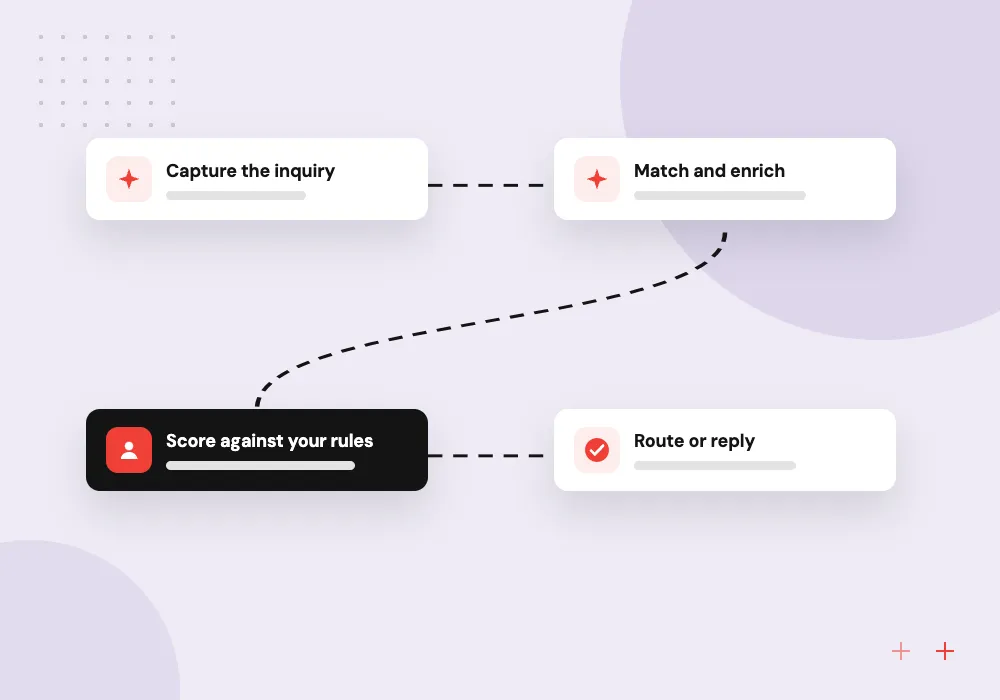
- 01 Capture the inquiry Web forms, chat transcripts, emails and call notes land in one intake queue.
- 02 Match and enrich Past deals, open tickets and company details are pulled from the CRM.
- 03 Score against your rules The model applies your fit criteria and lists the reason behind each point.
- 04 Route or reply Strong leads reach a rep with a brief; weaker ones get a reply or nurture.
Your sales team writes the scoring rules, and reps can override any score.
Where AI lead scoring earns its keep
Promising inquiries often sit in the same pile as vendor pitches, job seekers and spam.
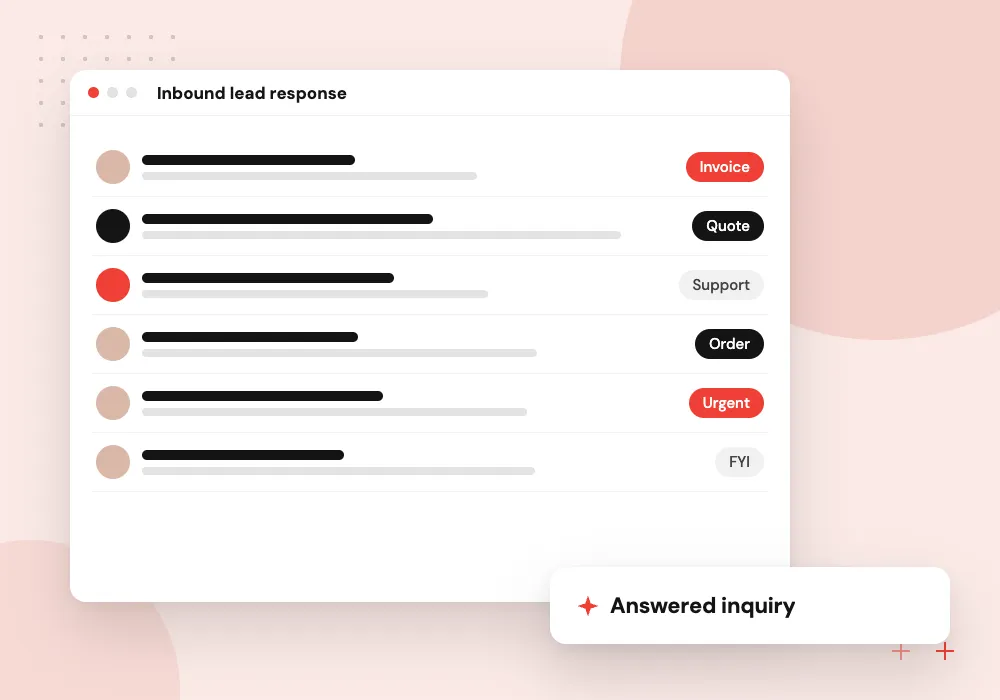
Inbound lead response
A drafted first reply answers the question the prospect actually asked and offers meeting times when the lead fits your criteria.

AI lead scoring
Each lead gets a fit score and an intent score, with the evidence listed: budget mentioned, service area matched, start date stated.
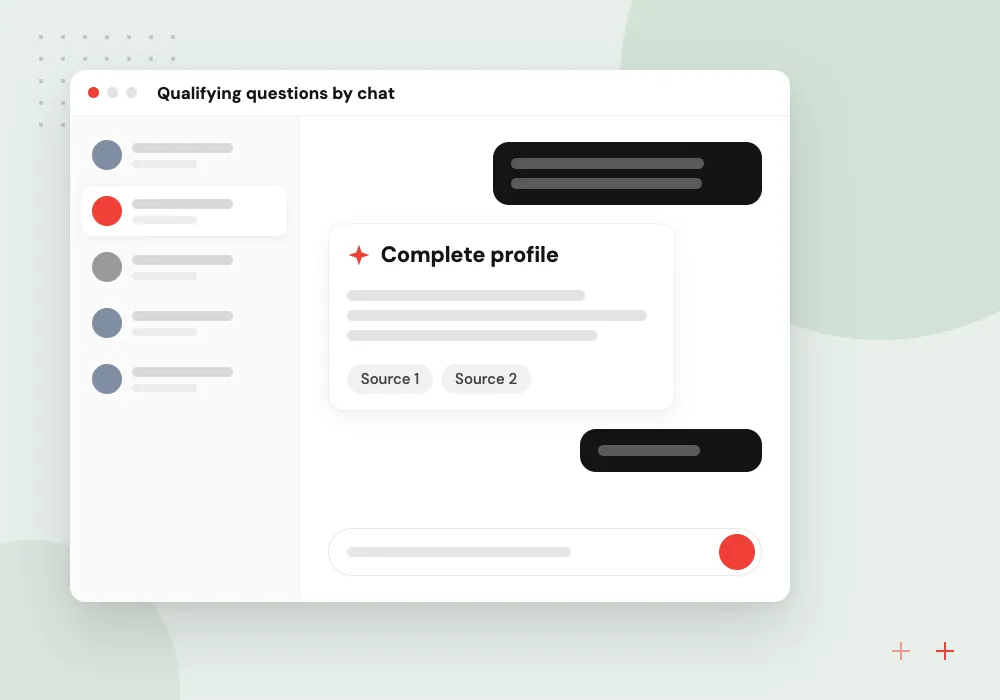
Qualifying questions by chat
When a form is thin, a chat or email follow-up asks two or three qualifying questions before a rep spends time on it.
Misfit and spam filtering
Sales pitches, job applications and out-of-area requests are tagged and sent to the right inbox instead of a rep’s queue.
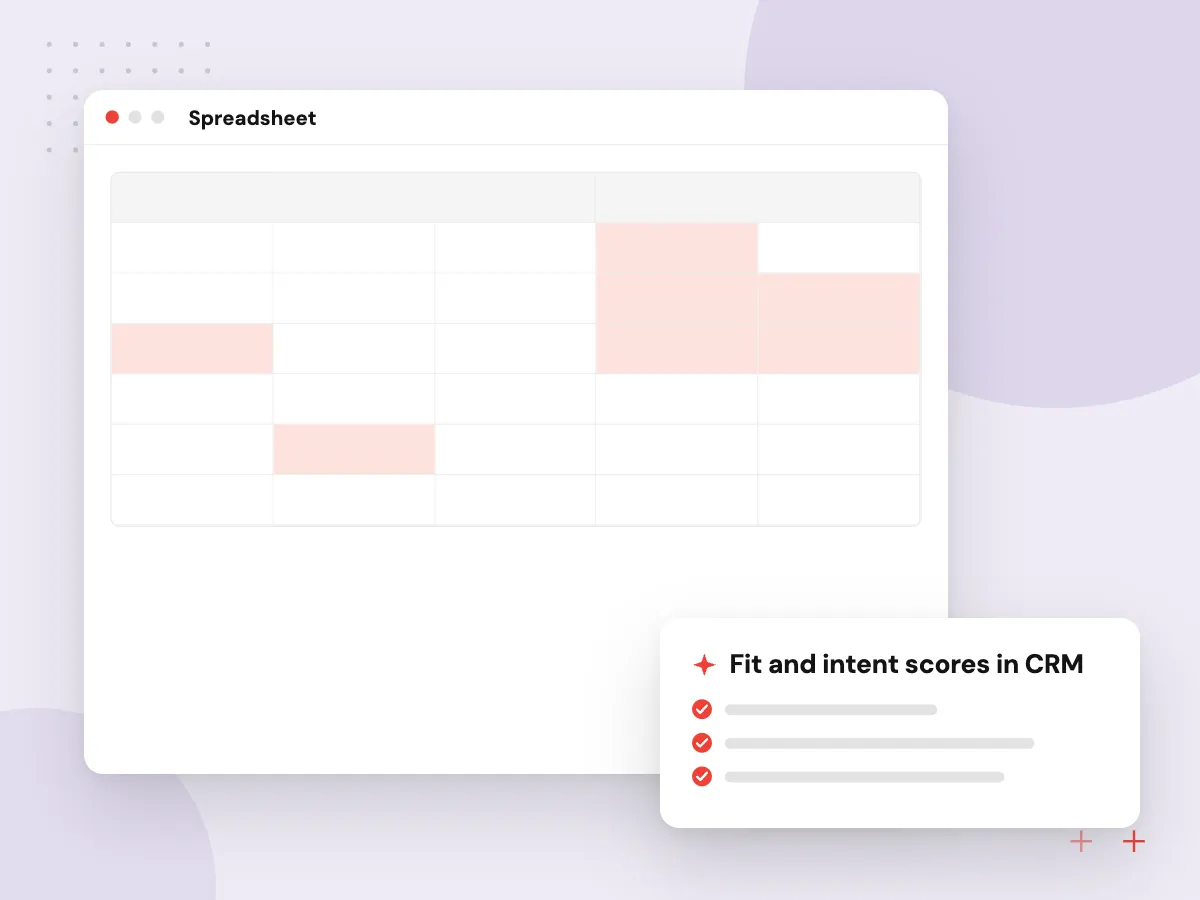
Scores your reps can read
A score with no reason gets ignored. Each lead record shows the facts the model used, such as stated budget, project type, location and start date, and the rule each fact matched. Reps see why a lead ranked high and can correct a wrong reading, which feeds the next round of tuning.
What we do
- Fit and intent scores in CRM
- Reason list on every lead
- Rep override with comment
- Weekly disagreement report
- Versioned scoring rules
First replies that answer the question
The reply draft uses your service list, coverage area and booking calendar to answer what the prospect asked. Simple cases can send on their own during hours you set; anything unusual waits for a rep to approve.
What we do
- Replies grounded in your services
- Booking links for qualified leads
- Approval queue for edge cases
- Consent and opt-out checks
- After-hours handling rules

How we approach a project
Follow-up has legal limits. Calls to someone who asked about your services fall under the FTC Telemarketing Sales Rule, and marketing email must honor opt-outs. The system stores inquiry dates, consent and opt-out status, so automated touches stop when they should.
Lead scoring pays off where one good job is worth real effort, such as home service businesses and real estate firms. It is one of the sales jobs on our AI use cases list. Whether your inquiry volume justifies a build is something we can work out together in a 30-minute conversation, requested from our contact page.
How we work
- Your criteria, written down first
- Every score carries a reason
- Reps keep the final call
Our Process
-

Review closed deals
We pull won, lost and ignored leads from the CRM and ask reps why each one went that way.
-

Write and test the rules
Your criteria become a scoring prompt, checked against past leads until its calls match your sales manager’s.
-

Connect intake and CRM
Forms, chat and the inbox feed the scorer, and results land as CRM fields, tasks and owner assignments.
-

Shadow mode, then live
At first reps see scores beside their own judgment, and we adjust the rules wherever the two disagree.
Why Aranv for lead qualification
Rules from your closers
We build the scoring from interviews with the reps and managers who win deals, so the system reflects how your team already judges a prospect.
Tested on past outcomes
Before launch we run the scorer over leads you already won or lost and show where its calls agree with what actually happened.
Compliance in the follow-up
Consent dates, opt-outs and calling-hour limits are checked before any automated message goes out or any call task is created.
Handover you can maintain
Prompts, rules, test sets and integration code come with documentation, so your own developer or another partner can keep them running.
Planning AI Lead Qualification?
Book a 30-minute conversation with the team that would build it.
AI lead qualification FAQs
-
How is AI lead scoring different from the scoring built into my CRM?
Built-in CRM scoring usually adds points for fields and actions, such as job title or page visits. AI lead scoring also reads the free text of the inquiry, telling a real project request from a student question, and records why it gave each score.
-
Can the AI reply to leads directly, or only score them?
Both, and you decide. Many teams start with scores and drafted replies that a rep sends, then allow automatic replies for simple cases such as booking a call. Pricing exceptions and contract terms always stay with a person.
-
What data do you need to build AI lead qualification?
Past leads with their outcomes, your written ideal-customer profile and the questions reps ask on a first call. If outcomes were never recorded in the CRM, we start from your sales manager’s rules and collect outcomes as the system runs.
-
How do you keep lead scores fair and accurate?
Scores rest on business facts such as service area, project type and timeline, never on personal traits. We test the rules on past leads, review a weekly sample early on and let reps flag wrong calls for correction.
-
What decides how long setup takes?
The number of channels that feed leads, the state of your CRM data and how quickly your sales manager reviews test results. We usually pilot one intake channel first and agree a schedule after seeing your data.
-
Who owns the scoring rules and lead data?
You do. Rules, prompts, test sets and lead records stay in your accounts and systems, and the contract states this before work begins.

Let’s talk about your next step
Contact Aranv to discuss your workflow, current tools, and goals. Meet with our team or send an inquiry.
Book a meeting with our team
Choose an available date and time for a 30-minute conversation about your project.
Tell us about your project
Share a few details so we can discuss a useful next step.
Prefer email? sales@aranv.com