


What multimodal AI development includes
Aranv offers multimodal AI development for companies whose daily work mixes photos, PDFs, screenshots, diagrams and text. We build applications on vision language models that look at an image and its written context together, answer questions about it, extract details and draft the next step for a person to approve.
Multimodal AI means one model working with more than one kind of input, usually images and text, and with some providers audio or video as well. Hosted models from the major providers accept photos, scanned pages and screenshots in the same request as instructions, so many tasks no longer need a separately trained image model.
The right route depends on the task. Our LLM integration work covers hosted providers, while computer vision development suits a single visual check repeated at very high volume. For scanned paperwork, OCR development and multimodal reading often work together, with OCR text given to the model as a second view of the page.
How a multimodal request is handled
Image, text and context together
- 01 Collect the inputs A photo, PDF page or screenshot arrives with the message or ticket around it.
- 02 Add business context Order history, product specs or policy text are fetched to sit beside the image.
- 03 Ask a precise question The model returns structured answers, such as damage type, part number or missing fields.
- 04 Check, then act Rules and a reviewer confirm the answer before anything updates a record.
Multimodal models are general readers; for one narrow visual check at high volume, a trained vision model may cost less.
Image and text AI for real work
Multimodal systems help when the answer depends on both what a picture shows and what the surrounding words say.
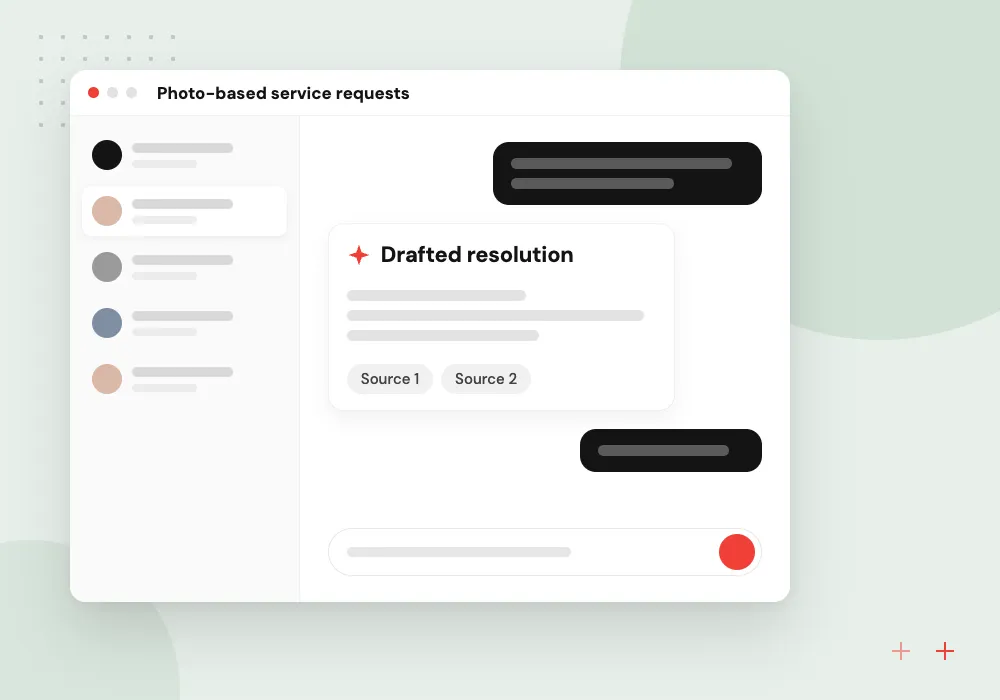
Photo-based service requests
A customer sends a photo of a broken part with a short note; the system identifies the part, checks warranty status and drafts a reply.
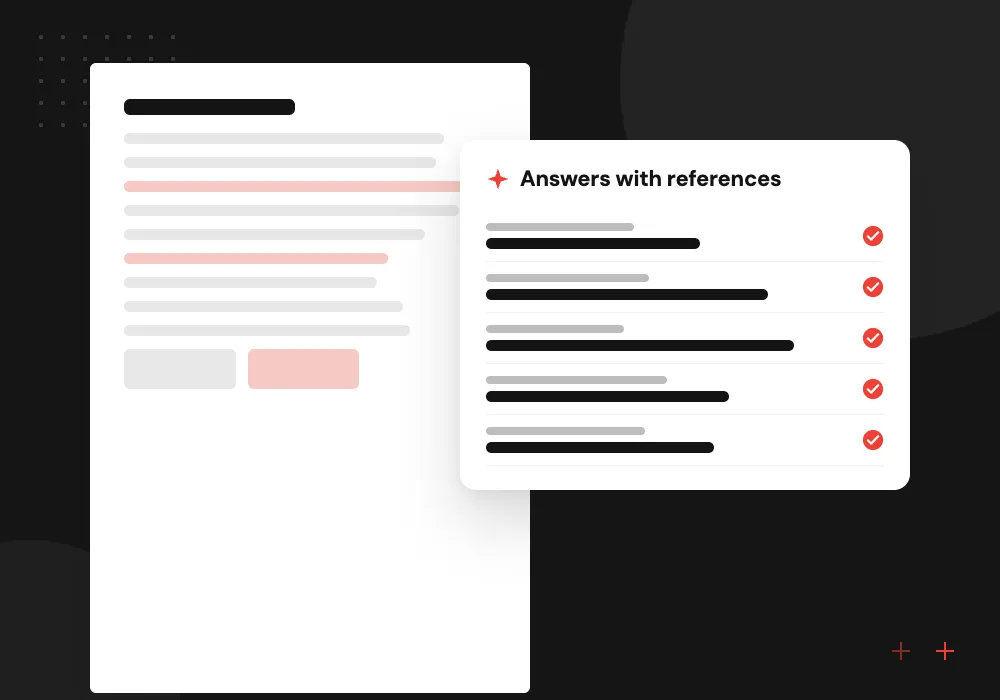
Charts, drawings and diagrams
Questions answered about floor plans, wiring diagrams, report charts or technical drawings, with the answer pointing to the region it relied on.
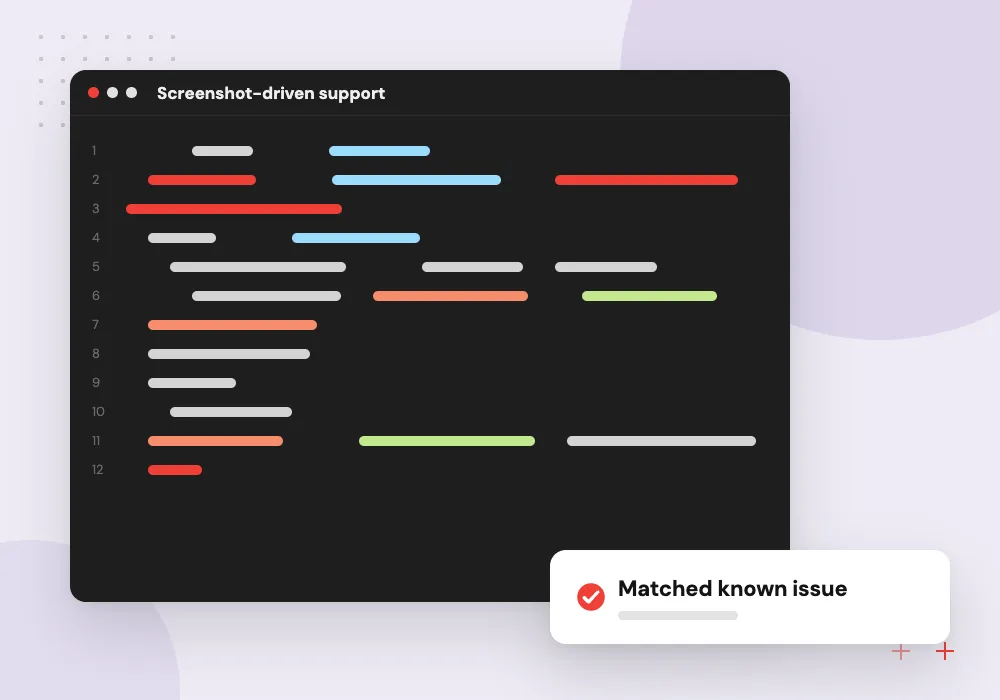
Screenshot-driven support
Users attach a screenshot of an error; the assistant reads the screen, matches it to known issues and suggests the documented fix.
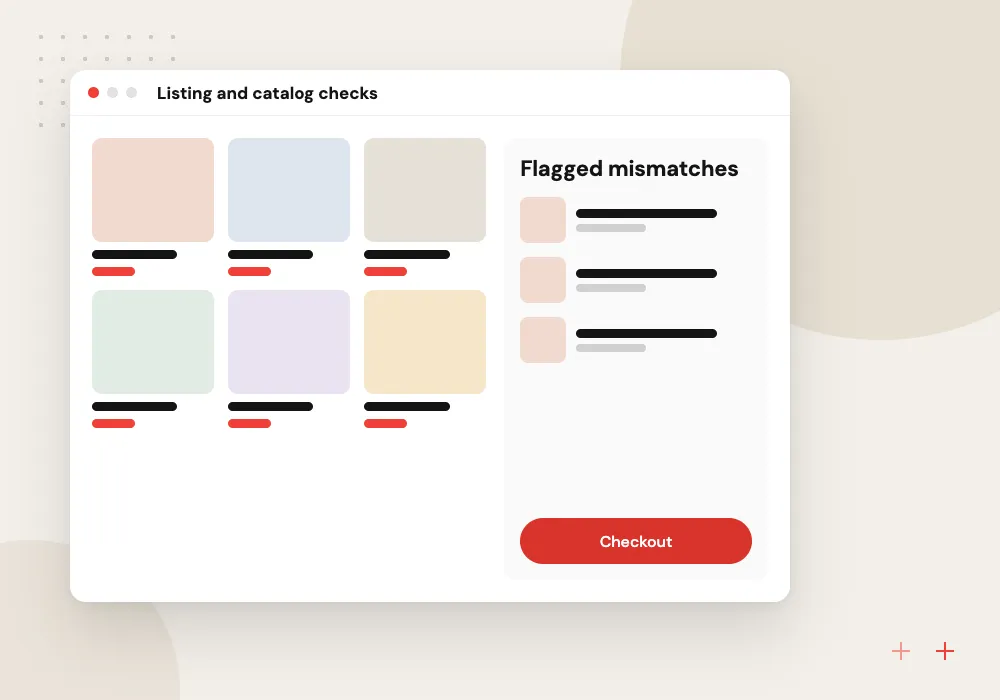
Listing and catalog checks
Product photos compared with titles and attributes, flagging mismatched colors, missing images or wrong sizes before listings go live.
Vision language model applications
We build on hosted models that accept images and documents alongside text, and on open vision language models when data must stay on your servers. The application sends the right page or crop with a focused question, asks for JSON output, and checks the answer against your records before it is used.
What we do
- Model comparison on your images
- Prompt and output schema design
- Image cropping and page selection
- Answer checks against business rules
- Cost and latency per request
Testing mixed inputs with people involved
Multimodal models can misread small print, invent a detail that is not in the image or miss a faint mark. We build a test set of your real images with expected answers, track errors by type, and send low-confidence or high-value cases to a reviewer who sees the image and the model’s answer side by side.
What we do
- Test images with expected answers
- Error tracking by input type
- Reviewer queue with image preview
- Limits on actions without approval
- Retesting after model updates
How we approach a project
Each provider documents its own limits on image count, size and format, and they change often. Anthropic’s vision documentation is one example of what we check before designing a pipeline. Store teams can see a retail version of this work on AI for retailers.
Pick three or four example images and write the question you would ask about each. We will walk through them with you during a 30-minute conversation, which you can schedule from the contact page.
How we work
- Images read with their context
- Structured answers, not loose prose
- People approve consequential actions
Our Process
-

Gather paired examples
We collect real images with the text that came with them and the answer a skilled person gave.
-

Model and prompt trials
Two or three models answer the same examples, and we compare accuracy, cost per request and response time.
-

Build with guardrails
The feature goes into your app or workflow with output schemas, business-rule checks and a review queue.
-

Monitor and retest
Errors are logged by input type, and the test set is rerun whenever the provider releases a new model version.
Why Aranv for multimodal AI
Tested on your images
We judge models on your real photos, scans and screenshots, poor ones included, so the chosen model fits your inputs rather than a public benchmark.
Structured, checkable output
Answers come back as defined fields that rules can validate against orders, products or policies, instead of free text someone has to interpret.
Provider choice stays open
Model calls go through one adapter layer, so you can move between providers or to a self-hosted model as quality and prices change.
Approval before actions
Refunds, claim decisions and record changes wait for a person, who sees the image and the model’s answer together before approving.
Planning Multimodal AI Development?
Book a 30-minute conversation with the team that would build it.
Multimodal AI FAQs
-
What is a vision language model?
It is a language model that also accepts images, so it can describe a photo, read a chart, compare a picture with a description or answer a question about a scanned page. You instruct it in plain text, and it can return plain text or structured data.
-
When is multimodal AI better than a custom computer vision model?
It is better when tasks vary, volumes are moderate and the answer needs context from text, because there is no training step. A trained vision model is better for one fixed check at high speed or very high volume, where cost per image and consistency matter most.
-
Can multimodal models read handwriting and poor photos?
They often handle handwriting and imperfect photos better than older OCR, but blur, glare and tiny print still cause errors, and a model may fill a gap with a plausible guess. We test on your worst images and design capture screens that ask for a retake when quality is low.
-
Is it safe to send customer photos to an AI provider?
That depends on the provider’s business terms, the hosting region and what the images show. We review data use and retention terms with you, strip metadata such as location, crop out areas the task does not need and, where required, run a model inside infrastructure you control.
-
What does it cost to run image and text AI?
Usage charges depend on how many images you send, their resolution and the model you choose, since larger images use more tokens. We report cost per request during testing and reduce it by resizing, cropping and sending only the pages that matter.

Let’s talk about your next step
Contact Aranv to discuss your workflow, current tools, and goals. Meet with our team or send an inquiry.
Book a meeting with our team
Choose an available date and time for a 30-minute conversation about your project.
Tell us about your project
Share a few details so we can discuss a useful next step.
Prefer email? sales@aranv.com