


What AI data preparation includes
Aranv provides AI data preparation for companies whose documents, records and labels are not yet fit for an AI project. We clean and deduplicate files, mask personal data, label examples with your experts, chunk content for retrieval, and deliver versioned data sets for search, fine-tuning or machine learning.
Preparation starts with an inventory: what data exists, who owns it, how current it is and what rules apply. If you are just starting, our guide on preparing your data for AI covers the questions to ask internally first. Pipelines that move and refresh data at scale come from data engineering.
For retrieval projects, the work is document conversion, removal of outdated versions, chunking that respects structure, and metadata for access control, all feeding RAG development. For tuning, it is selecting and formatting examples for LLM fine-tuning. For prediction, it is joining tables and defining labels for machine learning development.
From scattered files to a data set a model can use
Clean, label, check, version
- 01 Inventory the sources Shared drives, mailboxes, databases and exports, each with an owner and rules.
- 02 Clean and normalize Duplicates, outdated versions, broken scans and inconsistent fields fixed or removed.
- 03 Label with your experts Clear guidelines, sampled reviews and agreement checks between labelers.
- 04 Version and document Each data set ships with a datasheet describing sources, gaps and allowed uses.
Many AI failures trace back to data: an outdated policy in the index, a mislabeled example or a missing field.
Training data preparation by project type
What preparation means depends on what the data will feed: a search index, a tuned model or a predictive model.
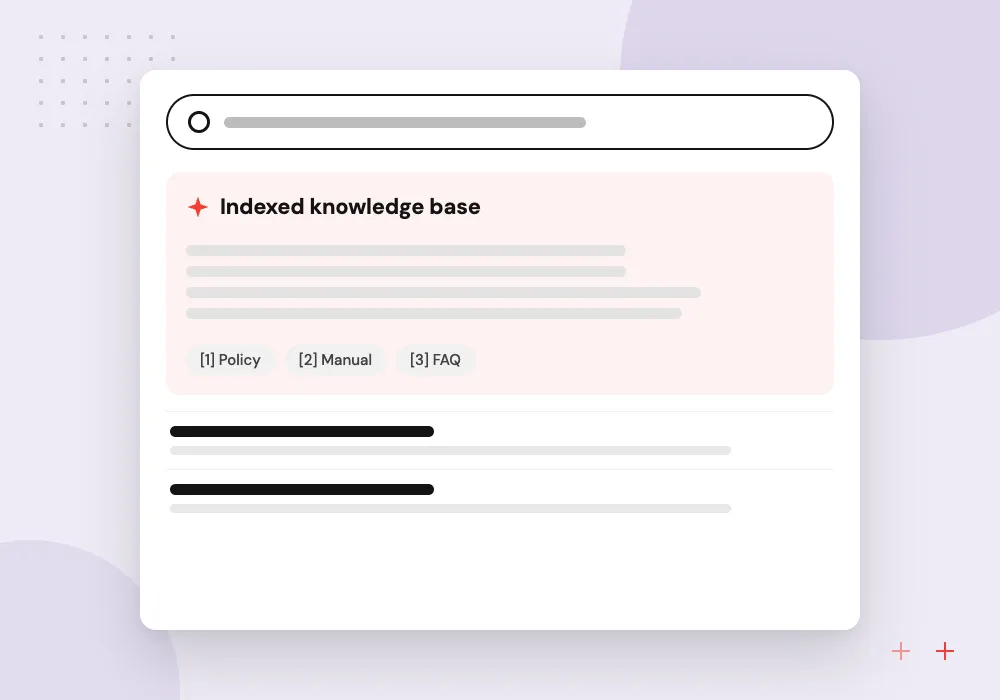
Documents for RAG search
Policies, manuals and contracts converted to clean text, split into sections that keep headings and tables intact, and tagged with owner, date and access level.
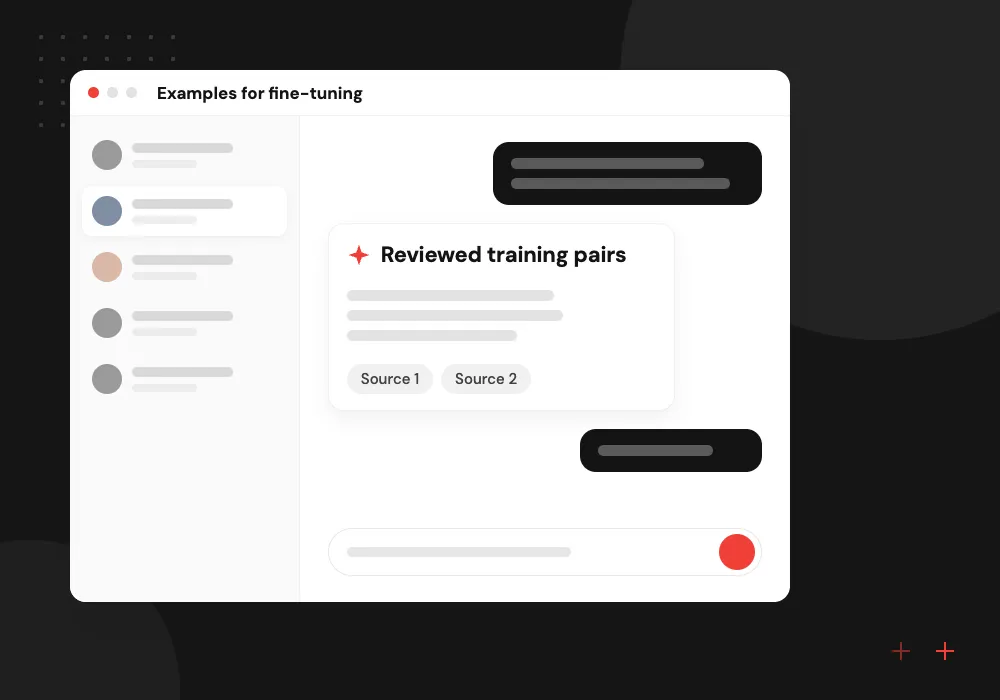
Examples for fine-tuning
Input and output pairs pulled from past tickets, emails or approved drafts, filtered for quality and formatted for the chosen training method.
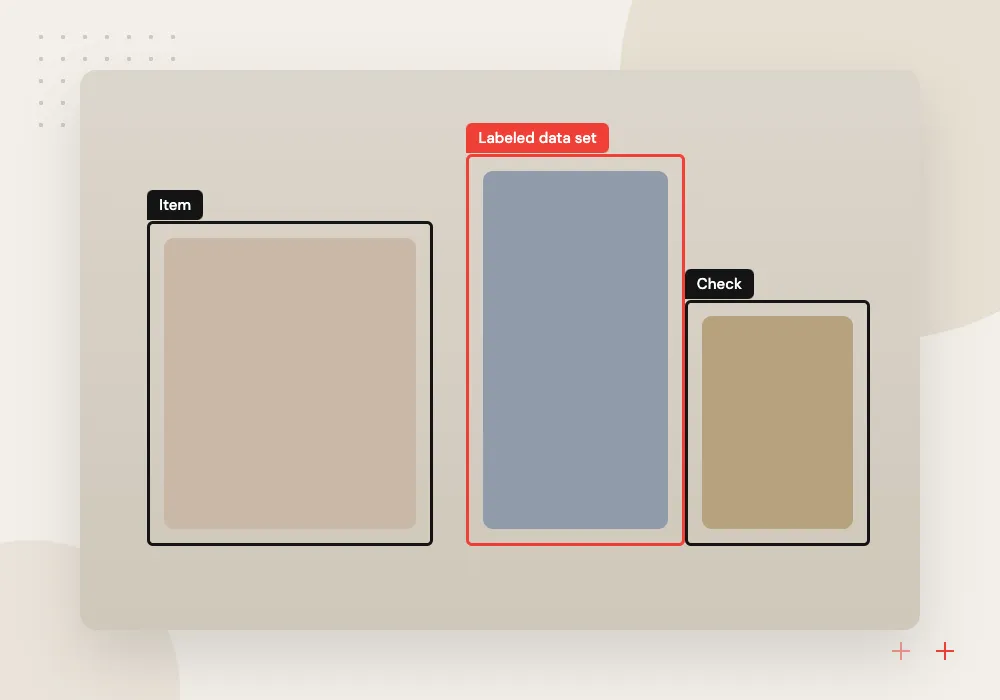
Labels for ML models
Categories, outcomes or bounding boxes added to records and images by your staff or ours, following written guidelines and spot checks.
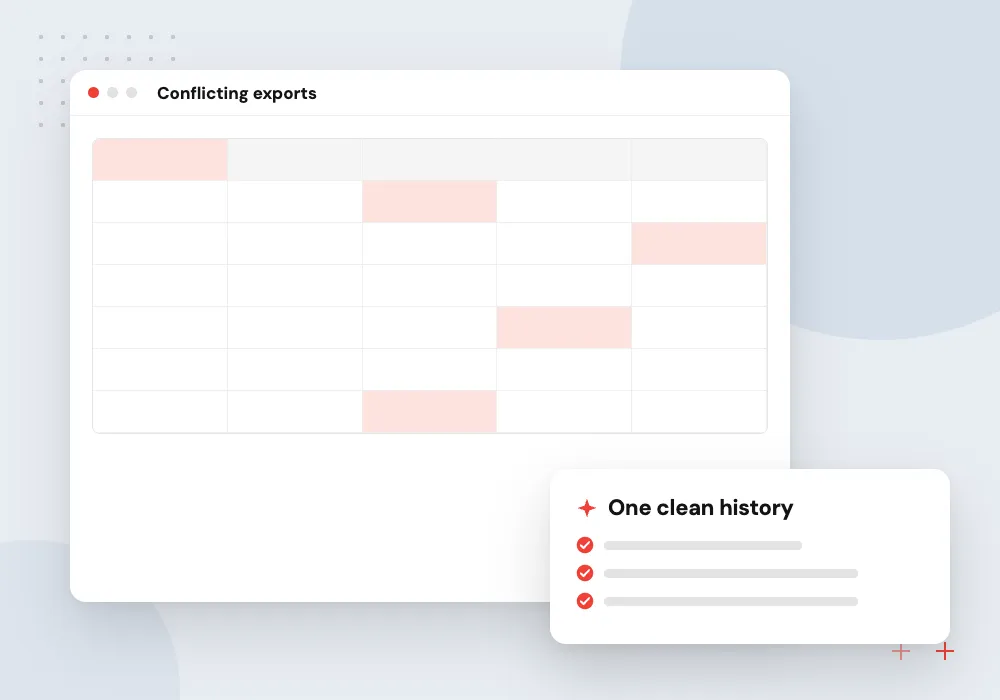
Tables for forecasting
Sales, stock and customer records joined, deduplicated and filled for gaps, so a forecasting or scoring model learns from consistent history.
Document cleanup and chunking for retrieval
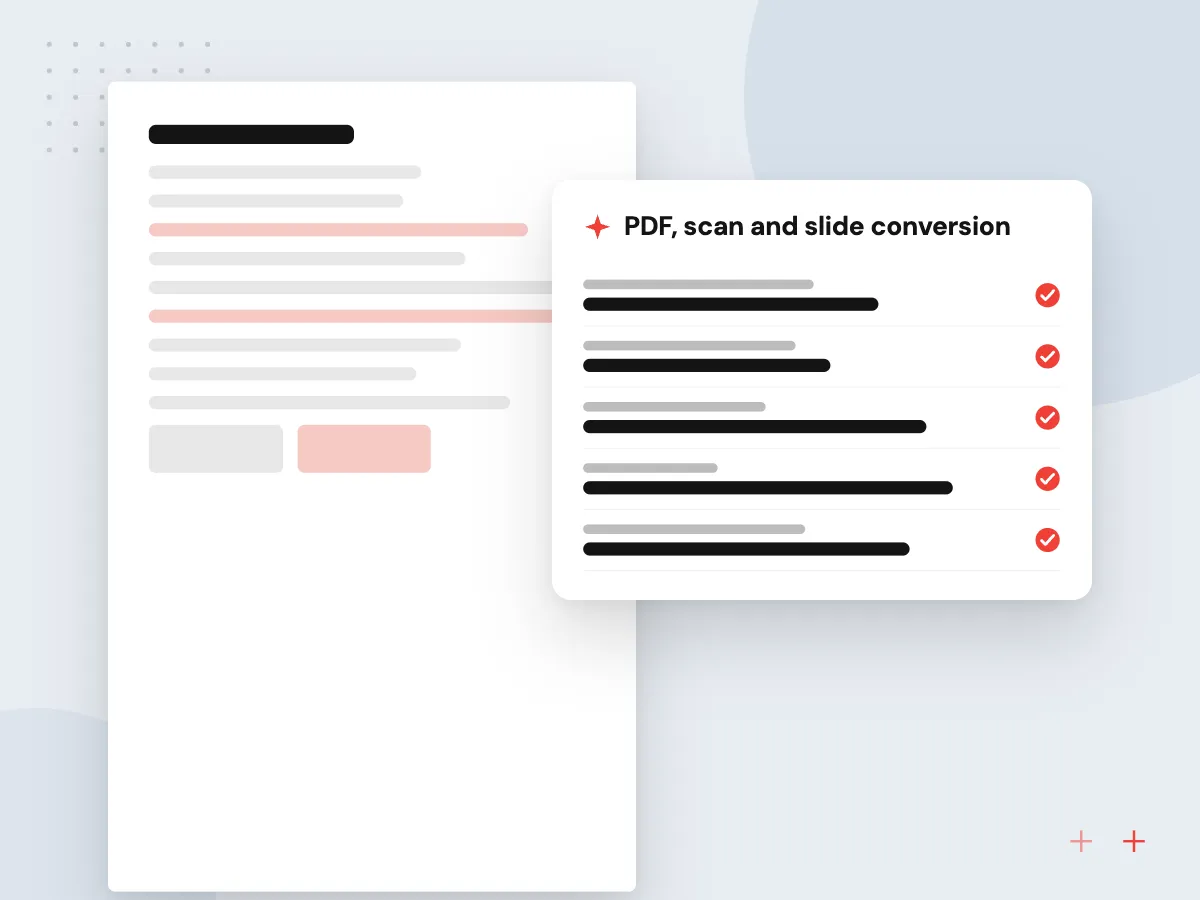
We convert PDFs, scans, slide decks and web pages into clean text, remove superseded versions, and split each document along its own headings so answers keep their context. Every chunk carries its source, date and access level, so search returns only what the asking user may see.
What we do
- PDF, scan and slide conversion
- Superseded version removal
- Structure-aware chunking
- Table and form extraction
- Access-level tags per chunk
Data labeling with quality checks
Labeling runs from a written guide with examples of every category and the borderline cases between them. A share of items is labeled twice, disagreements go to your expert, and batches that fall below the agreed agreement rate are relabeled before they join the data set.
What we do
- Labeling guidelines with examples
- Labeling tool setup
- Double-labeled quality samples
- Expert review of disagreements
- AI pre-labels checked by people

How we approach a project
Quality checks run throughout: duplicate detection, format validation, and splits that keep near-identical records from landing in both training and test sets. Where AI can pre-label, as in document classification, people review its suggestions instead of starting from blank.
Each delivered data set comes with documentation modeled on the Datasheets for Datasets proposal: where the data came from, what was removed, known gaps and allowed uses. Personal and confidential data is masked or excluded under rules your compliance lead approves.
How we work
- A named owner for every source
- Personal data handled before modeling
- Labels checked, not assumed
Our Process
-

Source and rules review
We list each source with its owner, format, age and sensitivity, and agree what may be used, masked or left out.
-

Sample and profile
A sample from each source is profiled for duplicates, gaps, odd formats and conflicting values, and the findings are shared before full processing.
-

Clean, label and check
Cleaning scripts run on the full set, labeling proceeds in batches, and each batch passes quality checks before the next one starts.
-

Deliver with a refresh plan
You receive the data set, its datasheet and the scripts that produced it, plus a plan for keeping it current as records change.
Why Aranv for data preparation
Shaped for the model it feeds
Our engineers also build the search, tuning and ML systems, so data is prepared for how the model will actually use it.
Privacy rules set first
Masking, exclusion and storage rules get your compliance lead’s sign-off before any file is touched, and only named people can open the raw data.
Repeatable, not one-off
You get the scripts that cleaned and split the data, so the next refresh is a rerun rather than a new project.
Your experts where it counts
Your staff make the hard labeling calls and approve samples, while we handle the volume, the tooling and the checks.
Planning AI Data Preparation?
Book a 30-minute conversation with the team that would build it.
AI data preparation FAQs
-
What does AI data preparation involve?
Finding the right sources, removing duplicates and outdated versions, fixing formats, masking personal data, labeling examples, splitting documents for retrieval and documenting the result. The exact mix depends on whether the data feeds a search index, a fine-tuned model or a predictive model.
-
Can our own staff do the data labeling?
Often they should, at least for a sample, because they know the categories best. We write the guidelines, set up the labeling tool, train your labelers and check agreement. Where volume is high, our team labels the bulk and your experts review the hard cases.
-
How do you handle personal or confidential data?
We agree rules with your compliance lead before processing: what is masked, what is excluded and where the data may be stored. Masking runs before data reaches any model or outside service, and access to raw data is limited to named people under the NDA.
-
How much of our data do we need to prepare?
Less than most teams expect. For a first release, a well-prepared subset covering the main document types or cases beats everything at low quality. We profile all sources, then prepare the part the first release needs and plan the rest.
-
What drives the cost of training data preparation?
The number and messiness of sources, the share of scanned or handwritten material, how many labels are needed and how specialized they are, and how strict the privacy rules are. We estimate after profiling a sample, which shows the real state of the data.

Let’s talk about your next step
Contact Aranv to discuss your workflow, current tools, and goals. Meet with our team or send an inquiry.
Book a meeting with our team
Choose an available date and time for a 30-minute conversation about your project.
Tell us about your project
Share a few details so we can discuss a useful next step.
Prefer email? sales@aranv.com