


What AI contract review includes
Aranv builds AI contract review tools for US small and midsize businesses and law firms. Incoming agreements are read clause by clause, terms such as renewal, liability caps and payment are extracted, departures from your playbook are flagged, and a lawyer or contract manager decides what to accept or negotiate.
The core is clause extraction with citations. A language model reads the agreement and returns each clause type you care about, its exact text and its page, in a fixed format. Scanned contracts go through OCR first, and poor pages are flagged instead of guessed at. Extraction runs on our AI document processing stack.
Your playbook turns extraction into review. With your counsel we write down preferred, fallback and unacceptable positions for each clause type, with the reasons. The system compares each clause with those positions and drafts a comment or redline. Questions across a whole archive use retrieval, built as described under RAG development.
How a contract moves through review
From received draft to marked-up position
- 01 Identify the agreement The system recognizes the type: NDA, MSA, order form, lease or vendor agreement.
- 02 Extract the clauses Term, renewal, notice, liability, indemnity, payment and governing law come out with citations.
- 03 Compare with your playbook Each clause is checked against your preferred, acceptable and walk-away positions.
- 04 A reviewer decides Counsel sees flagged clauses with suggested redlines and accepts, edits or rejects each.
The tool assists review and does not give legal advice; the decision always sits with a qualified person.
Contract analysis AI in daily work
Contract work is mostly reading for the same few things. These are the jobs where a first pass by software helps the reviewer.
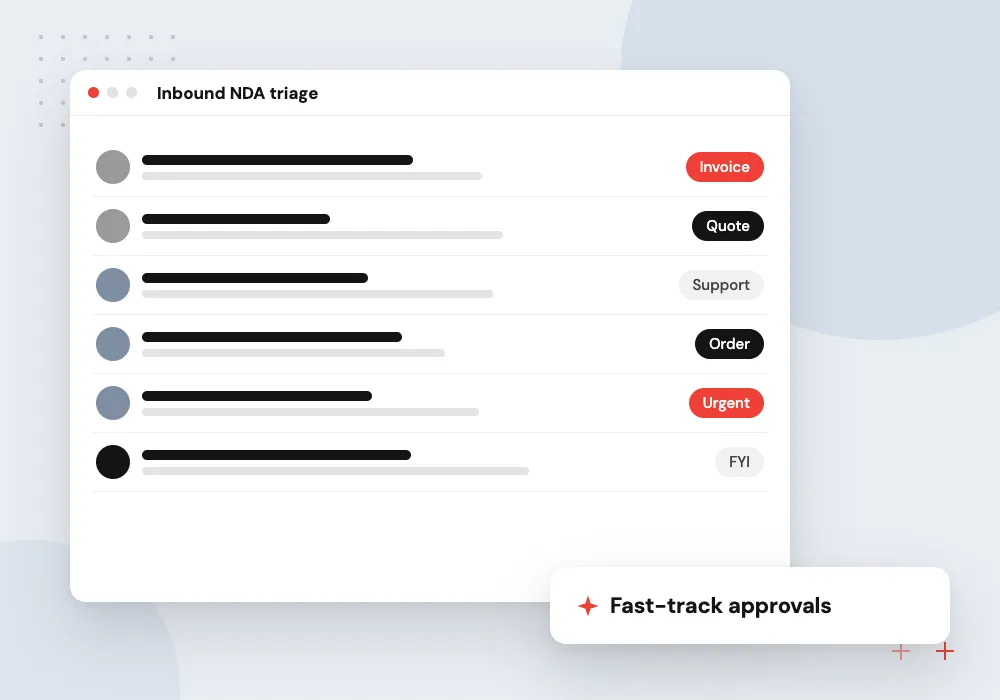
Inbound NDA triage
Standard nondisclosure agreements are checked against your positions on term, scope and residuals, and clean ones go to a single approver instead of a full legal review.
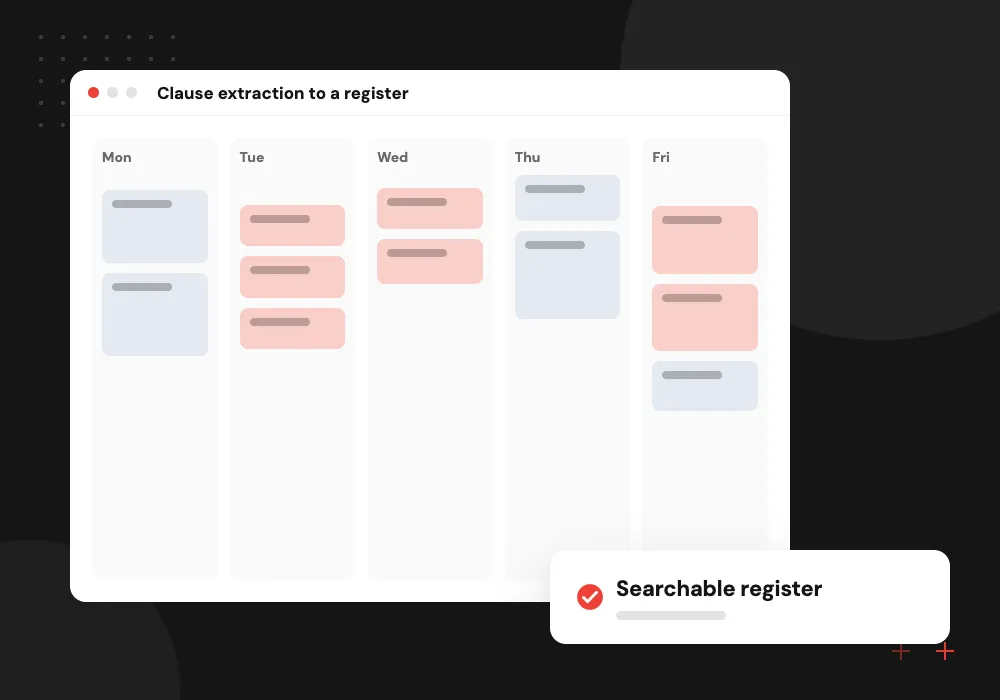
Clause extraction to a register
Renewal dates, notice periods, price increases and termination rights from signed contracts fill a contract register, with reminders ahead of each deadline.
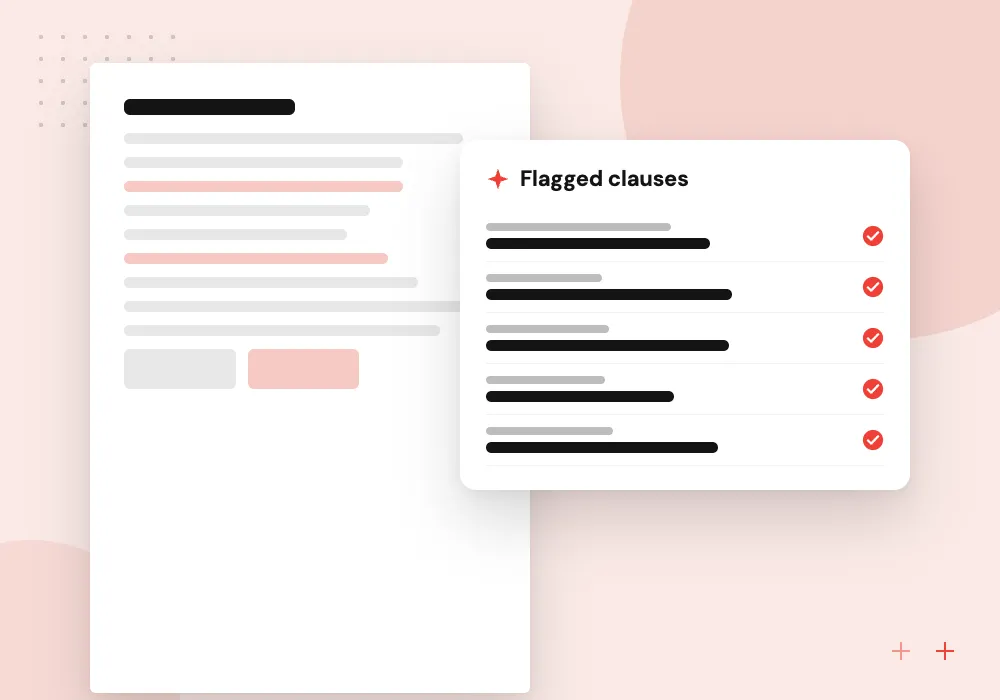
Vendor agreement review
Supplier MSAs and order forms are compared with your procurement standards, and data protection, liability and auto-renewal terms are flagged for the buyer and counsel.
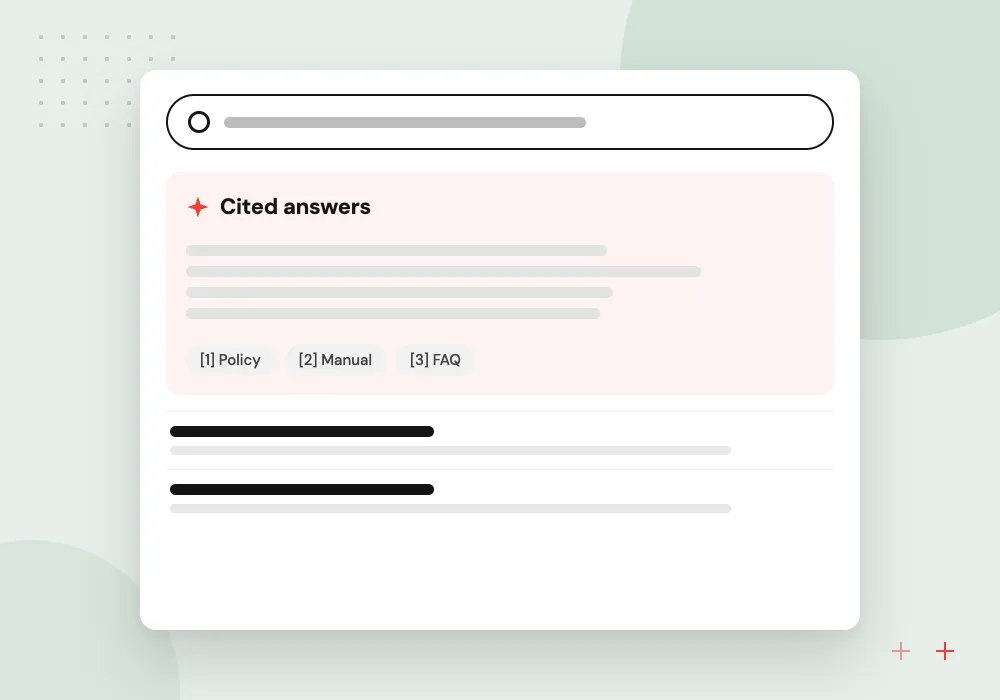
Questions across the archive
Questions such as which customer contracts allow assignment, or which leases end next year, are answered across all agreements with links to each source clause.
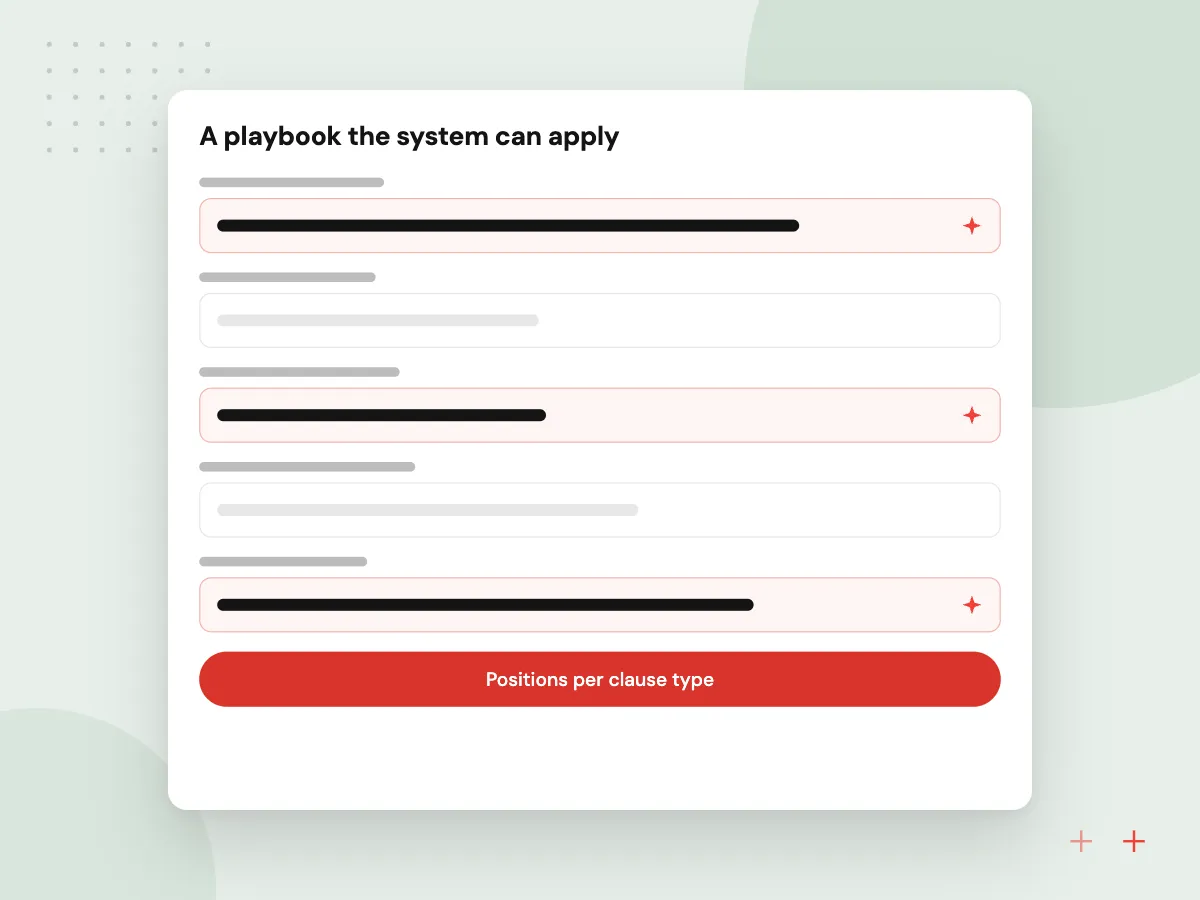
A playbook the system can apply
Negotiating positions often live in people’s heads or an old memo. We turn them into a structured playbook: clause type, preferred wording, acceptable fallbacks, what to escalate and who decides. The same playbook drives the flags, the suggested redlines and the reviewer’s checklist.
What we do
- Positions per clause type
- Fallback wording library
- Escalation rules by risk
- Approver named per issue
- Versioned as positions change
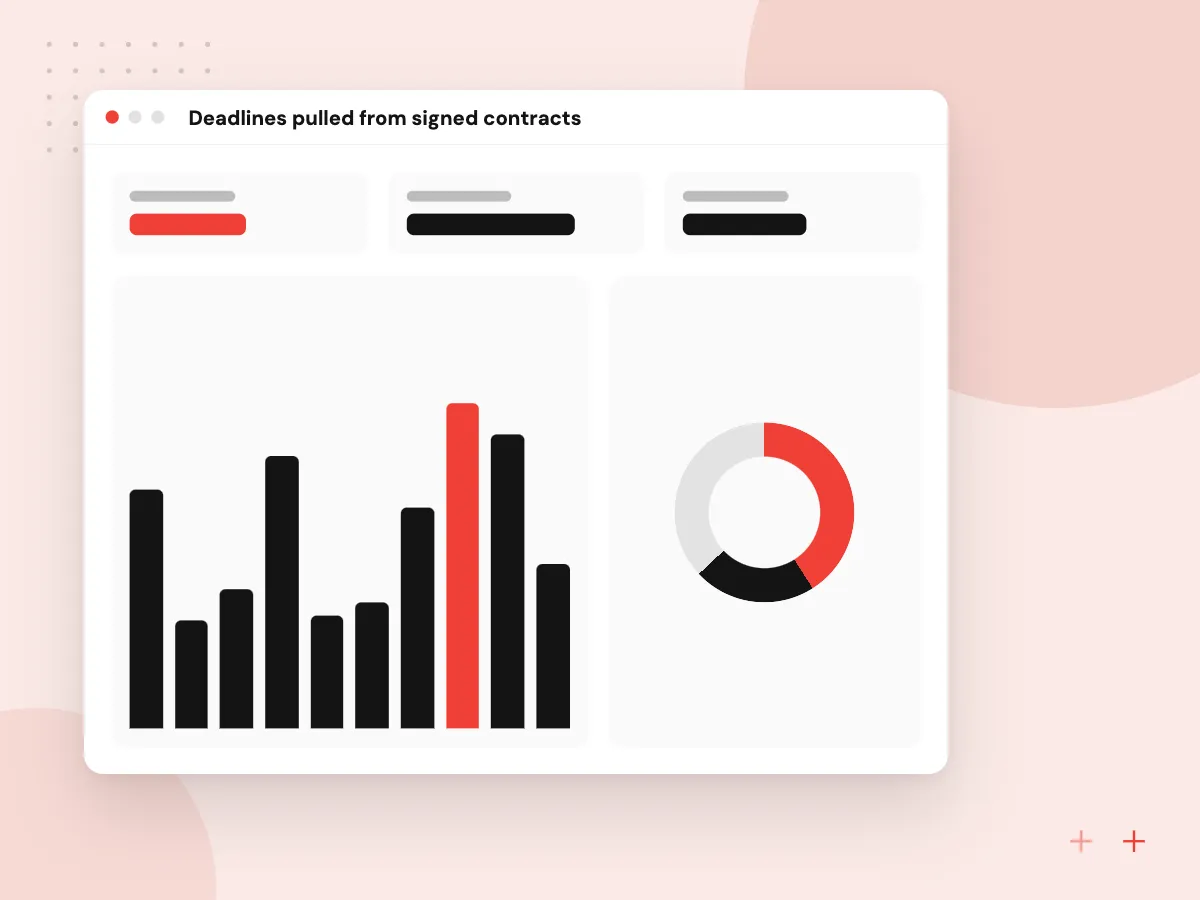
Deadlines pulled from signed contracts
Signed agreements hold dates that cost money when missed: renewal windows, notice periods, price review dates, insurance certificate expiries. Extracted dates feed a register and reminders, and each date links back to its clause so the contract owner can check it.
What we do
- Renewal and notice dates
- Price escalation triggers
- Termination rights by party
- Owner assigned per contract
- Reminders before each deadline

How we approach a project
Confidentiality shapes the design. Contracts stay in your document store or cloud account, model settings are chosen so your documents are not used for training, and access follows matter or department permissions. Bar guidance such as the North Carolina State Bar’s 2024 opinion on AI expects lawyers to protect client information and review AI output themselves.
Law firms use it for first-pass review and due diligence; see AI for law firms. In-house teams and operations managers use it to keep vendor and customer contracts in order, often next to a document management system. It is a review aid, not legal advice.
How we work
- Every flag cites the clause
- Your playbook, not generic rules
- Lawyers make the call
Our Process
-

Gather contracts and positions
You share signed and inbound agreements plus any playbook, templates or negotiation notes you already keep.
-

Label the clauses
Your lawyer and our team mark clause types and correct positions on a sample, which becomes the test set.
-

Tune and measure
Extraction and flags run on the test set, and we report what was found, missed or flagged wrongly per clause type.
-

Roll out to reviewers
Reviewers start with low-risk agreements such as NDAs, then move to vendor and customer contracts.
Why Aranv for contract review
Built on your positions
We encode the clause positions your lawyers already take, so flags match how your business negotiates rather than a generic risk list.
Every answer is cited
Each extracted term and flag points to the exact clause and page, so reviewers check the source directly instead of rereading the whole agreement.
Confidential by design
Documents stay in storage you control, access follows existing matter or team permissions, and model settings keep your contracts out of training data.
Lawyers stay accountable
The tool drafts and highlights; a qualified person accepts or rejects. We log who reviewed each contract and what they changed, which supports supervision duties.
Planning AI Contract Review?
Book a 30-minute conversation with the team that would build it.
AI contract review FAQs
-
Can AI review a contract instead of a lawyer?
No. AI contract review finds and compares clauses quickly, but it can misread context, miss an unusual term or apply a position where an exception was agreed. A lawyer or experienced contract manager should review the flags and make every decision.
-
What clauses can contract analysis AI extract?
Any clause you can define with examples. Common ones are parties, term, renewal, termination, notice, payment, price changes, limitation of liability, indemnity, confidentiality, data protection, assignment and governing law. Custom fields such as service levels or exclusivity are added during setup.
-
Is it safe to upload confidential contracts to an AI tool?
It can be, with the right setup. Documents sit in storage you control, the model provider is chosen and configured so prompts are not kept for training where that choice exists, and access is limited by team or matter. Lawyers should also check their own professional rules on confidentiality.
-
Does it work on scanned or older contracts?
Yes, once OCR converts the scan to text. Clear scans read well; faxed copies, margin notes and stamped amendments need more review. Low-quality pages are marked so a person checks those clauses against the image.
-
How quickly can an AI contract review tool be ready?
A first version covering one or two contract types, such as NDAs and vendor agreements, can be ready in weeks. Writing the playbook with your lawyers is often the longest step. More contract types follow in later phases.

Let’s talk about your next step
Contact Aranv to discuss your workflow, current tools, and goals. Meet with our team or send an inquiry.
Book a meeting with our team
Choose an available date and time for a 30-minute conversation about your project.
Tell us about your project
Share a few details so we can discuss a useful next step.
Prefer email? sales@aranv.com