


Building an AI business case you can check
Aranv’s method for how to measure AI ROI: record the task’s baseline before launch, count every cost including model usage and staff review time, measure the same figures the same way afterward, and compare at fixed checkpoints. The return is the value of time saved, errors avoided and revenue gained, minus those costs.
Costs. Include discovery and build, integrations, model usage billed per token, hosting, monitoring, support and the staff time spent reviewing outputs, which is the cost most often left out. For the build side, the AI agent development cost page sets out the main budget factors.
Benefits. Value hours saved at what an hour of staff time costs you, benefits included, not the wage alone. Count errors avoided at the cost of fixing them. Treat revenue effects such as faster quotes with caution and report them separately, since many other factors move revenue too.
Measuring AI return on investment
Baseline, cost, result, decision
- 01 Record the baseline Time per task, volume, error rate and backlog, measured before any AI is used.
- 02 Count full costs Build, model usage, hosting, support and the hours staff spend reviewing outputs.
- 03 Measure after launch Track the same figures with the same method, so the comparison stays fair.
- 04 Decide at checkpoints Review on set dates, then expand, adjust or retire the workflow.
If the task is not measured today, measure it for a few weeks before the build starts.
Where AI return on investment comes from
Most returns fall into four groups. A business case should say which ones it relies on and how each will be measured.
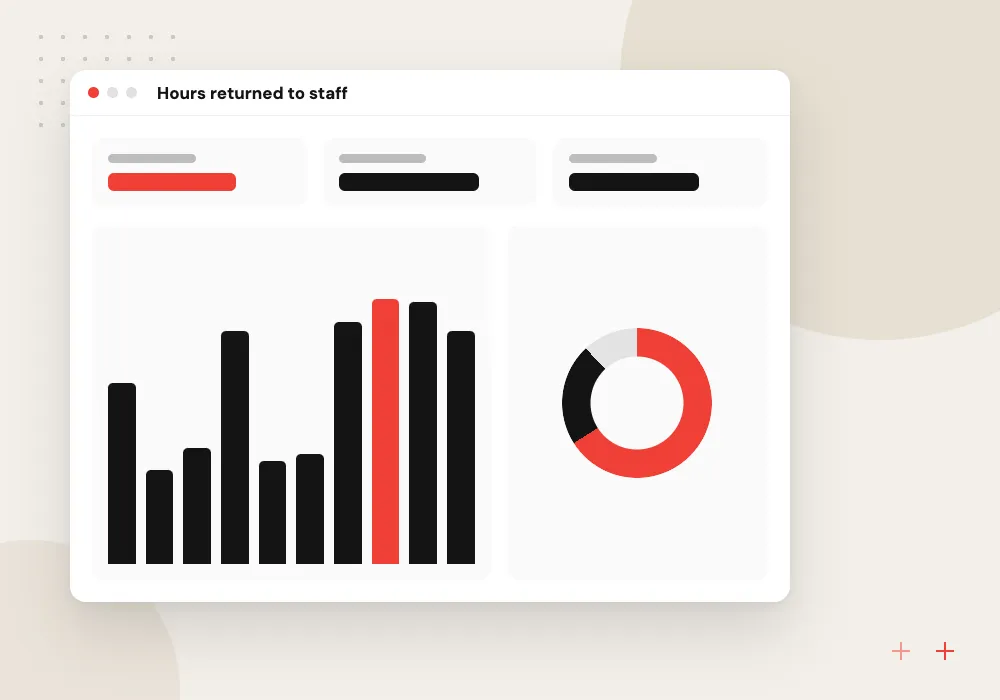
Hours returned to staff
Fewer minutes per invoice, email or report. Value those hours at the full cost of employment and note what staff now do with the time.
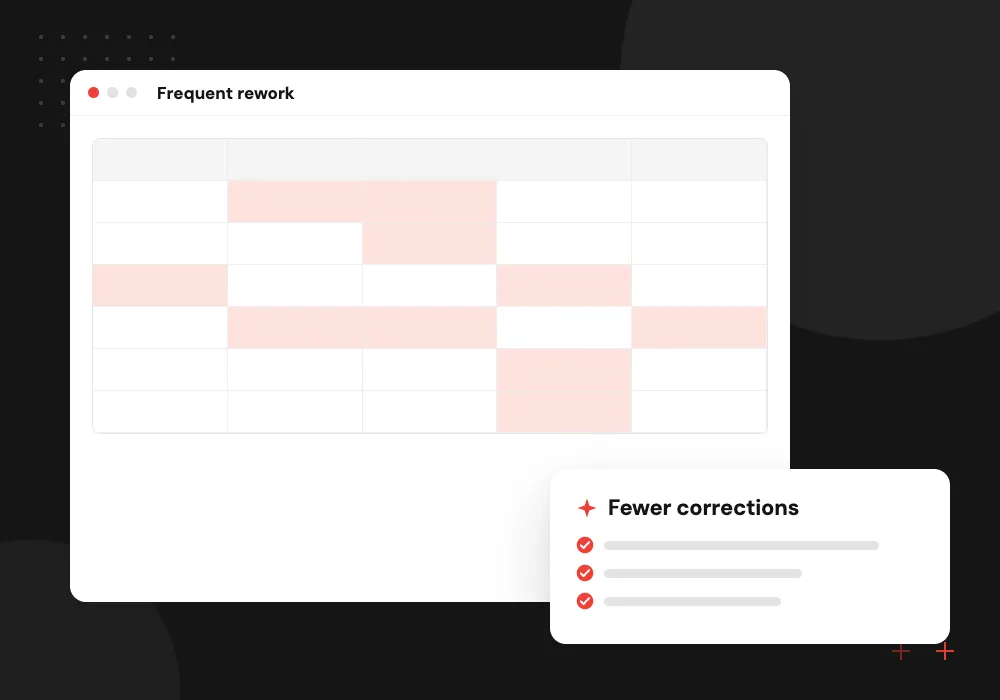
Fewer errors and rework
Fewer wrong entries, missed fields or misrouted requests. Count corrections per hundred items before launch and again after it.
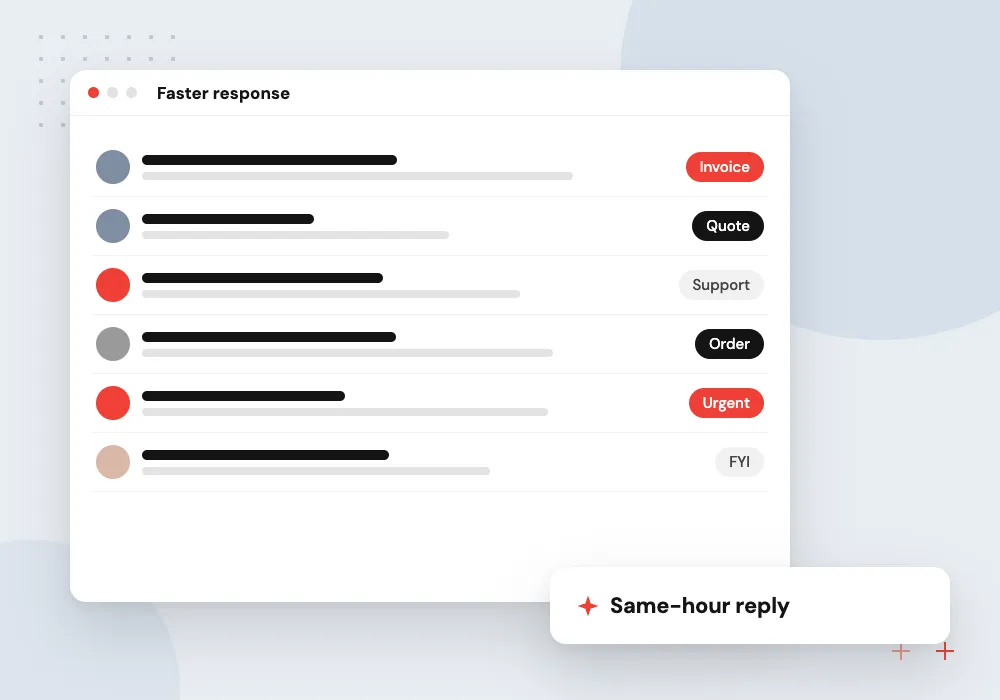
Faster response
Shorter time to reply, quote or book, which can lift conversion or retention when speed matters to your buyers.
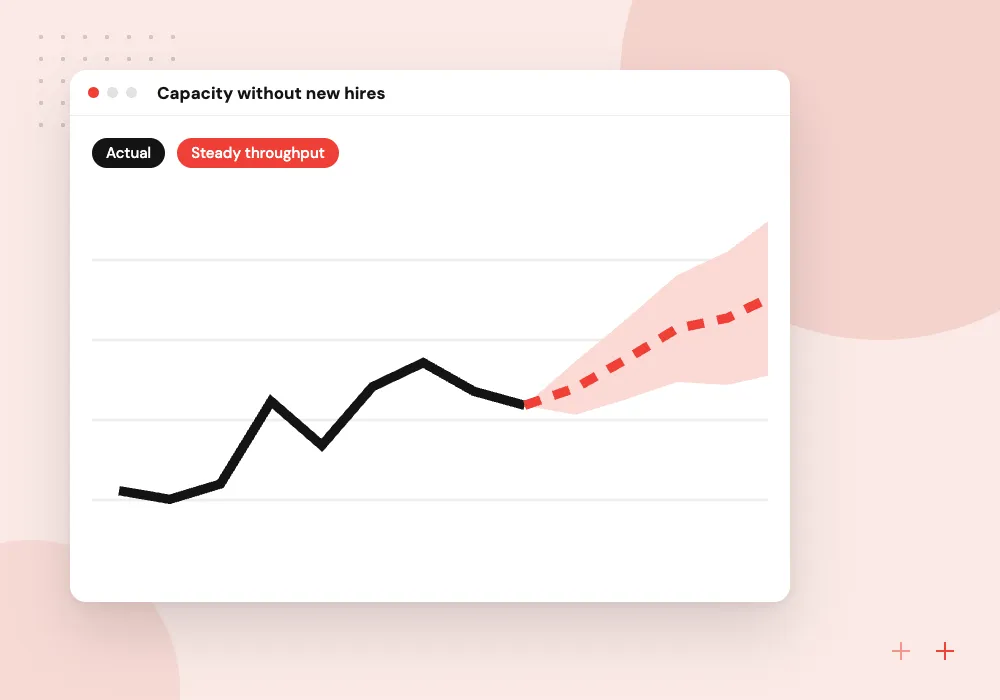
Capacity without new hires
More volume handled by the same team during busy periods, measured as items processed per person each week.
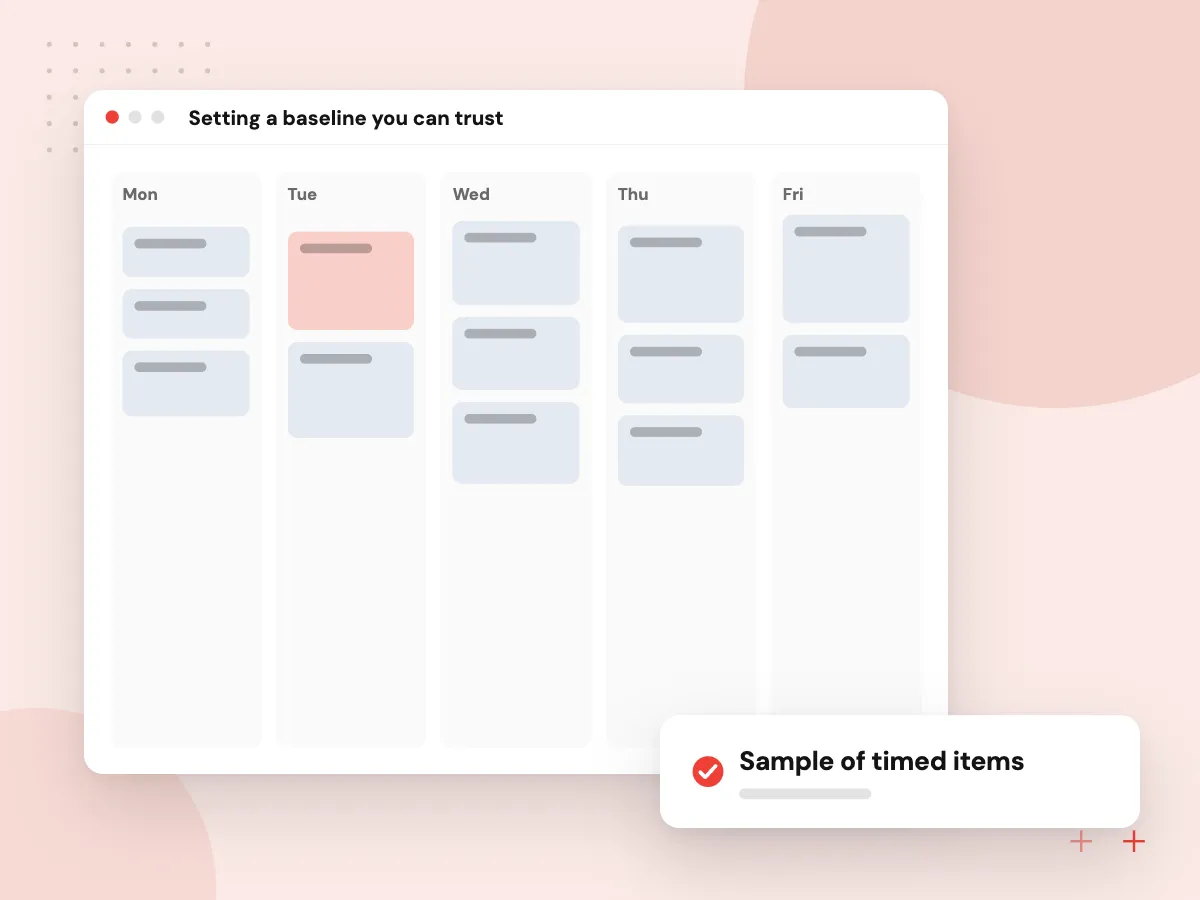
Setting a baseline you can trust
A baseline is only useful if it is measured the same way as the results. Pick several weeks of normal volume, time a sample of items from start to finish, count corrections and note seasonal effects. Write the method down so the comparison after launch is fair.
What we do
- Sample of timed items
- Error and rework counts
- Weekly volume and backlog
- Seasonal effects noted
- Method written down
Reading early results honestly
Early figures can mislead. Staff review more carefully in the first weeks, volume may be unusual, and some gains appear in other teams. Compare like periods, separate what the AI did from other changes, and report the cases it handled poorly as well as the wins.
What we do
- Like-for-like period comparison
- Review time tracked separately
- Failed cases reported
- Effects on other teams noted
- Decision recorded at each checkpoint
How we approach a project
Measurement. Log every AI-handled item with its time, outcome and any correction. A simple dashboard fed from those logs makes each checkpoint review quick, and LLM evaluation and testing tracks accuracy, the measure every other figure depends on.
Decisions. Fix the checkpoints before launch and write down which results mean expand, adjust or stop. Our AI consulting team can build the case from your own figures, starting with a 30-minute conversation you can request on the Contact page, and the AI implementation roadmap shows where measurement fits in each stage.
How we work
- Baseline before build
- Count review time as a cost
- Compare like with like
Our Process
-

Measure the current task
Time a sample of items, count errors and note weekly volume over several normal weeks.
-

Write the business case
List expected gains and full costs, with the assumption behind every figure stated plainly.
-

Instrument the workflow
Log each AI-handled item with time taken, outcome and any correction staff made.
-

Review at checkpoints
Compare results with the baseline on the agreed dates and record the decision taken.
How Aranv measures results
Logging designed in
Workflows we build record time, outcome and staff corrections for each item, so the checkpoint review rests on data rather than impressions.
Running costs shown early
Proposals include an estimate of model usage, hosting and support at your volume, so the cost side of the case is visible before approval.
Baselines agreed together
We measure the current task with your team before building and agree the method, so nobody disputes the comparison later.
Straight answers at checkpoints
If a workflow is not paying its way, we say so and suggest whether to adjust it, narrow it or switch it off.
Ready to act on this guide?
Ask our team in a 30-minute conversation.
Or see how we build it: Explore all services
AI ROI FAQs
-
How do you calculate ROI for an AI project?
Subtract the full cost of building and running the AI from the value of its gains over the same period, then divide by that cost. Gains are usually staff hours saved, errors avoided and revenue effects, each measured against a baseline recorded before launch.
-
What should an AI business case include?
The task and its current volume, baseline time and error figures, the expected improvement and why, full build and running costs, staff review time, the main risks, and the checkpoints at which you will decide whether to continue.
-
How soon should an AI project show a return?
That depends on volume and cost; high-volume tasks show results sooner. Set a review date when you approve the project and judge it against the measures agreed then, not a general impression.
-
What costs do AI ROI estimates often miss?
Staff time reviewing outputs, data clean-up, integration upkeep when connected systems change, retesting when a model is updated, and the hours managers spend on training and rollout.
-
Can we measure ROI for AI tools staff use on their own?
It is harder, because the use is spread across many small tasks. Ask users to estimate time saved each week, sample their work for quality and set that against license costs. Connected workflows are easier to measure since every item is logged.

Let’s talk about your next step
Contact Aranv to discuss your workflow, current tools, and goals. Meet with our team or send an inquiry.
Book a meeting with our team
Choose an available date and time for a 30-minute conversation about your project.
Tell us about your project
Share a few details so we can discuss a useful next step.
Prefer email? sales@aranv.com