


Choosing a legacy system modernization strategy
Aranv’s short answer: a legacy system modernization strategy starts with an inventory of what the system does and what it costs to keep, then picks an approach for each part, from rehosting to refactoring, rebuilding, replacing or retiring, and moves in stages with old and new running together until the new one proves itself.
Start with why the system must change. Typical reasons are an unsupported platform, a shrinking pool of people who understand the code, fragile or costly hosting, and integrations the old design cannot support. Each reason points somewhere different: an unsupported database may need only a replatform, while a changed business process may need a rebuild.
Next, score each part. For every module, note its business value, technical condition, the data it owns and the systems that call it. Valuable but fragile parts go first; low-value parts may be retired, and standard functions such as payroll are often better replaced with packaged software. Our legacy application modernization service runs this assessment and the work after it.
Building a modernization plan for an old system
Assess, choose, move, retire
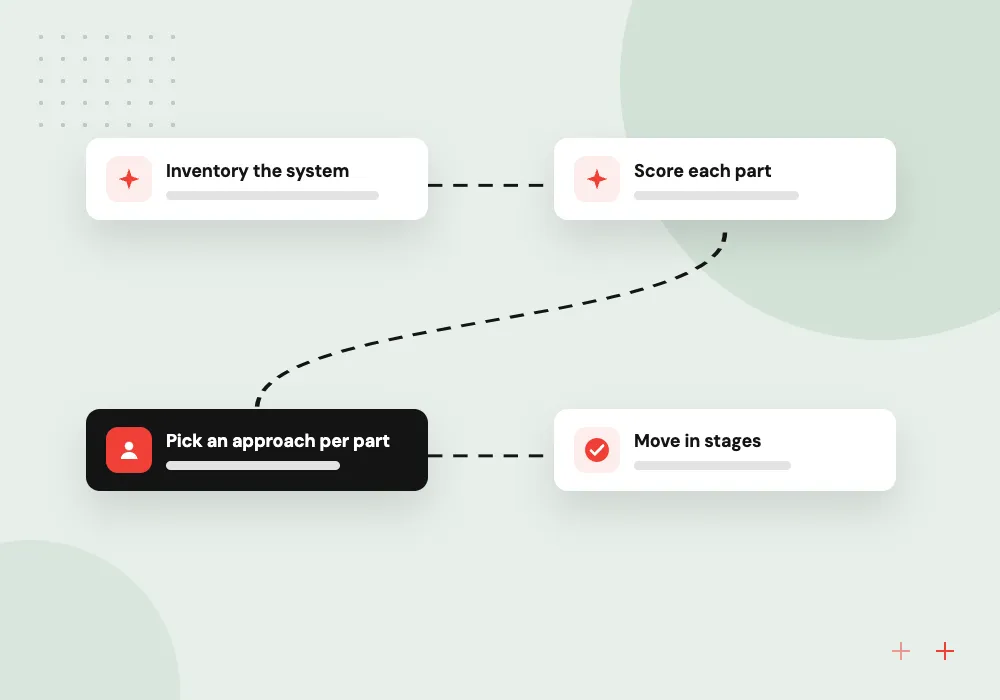
- 01 Inventory the system List modules, data, integrations, users and what each costs to keep.
- 02 Score each part Rate business value, technical health and risk for every module.
- 03 Pick an approach per part Rehost, refactor, rebuild, replace or retire, decided module by module.
- 04 Move in stages Run old and new side by side until each piece proves itself.
Most plans mix approaches; one label for the whole system is rarely right.
Modernization approaches and where AI helps
Rehosting, refactoring and rebuilding solve different problems, and AI now speeds up the slowest job of all: understanding old code.
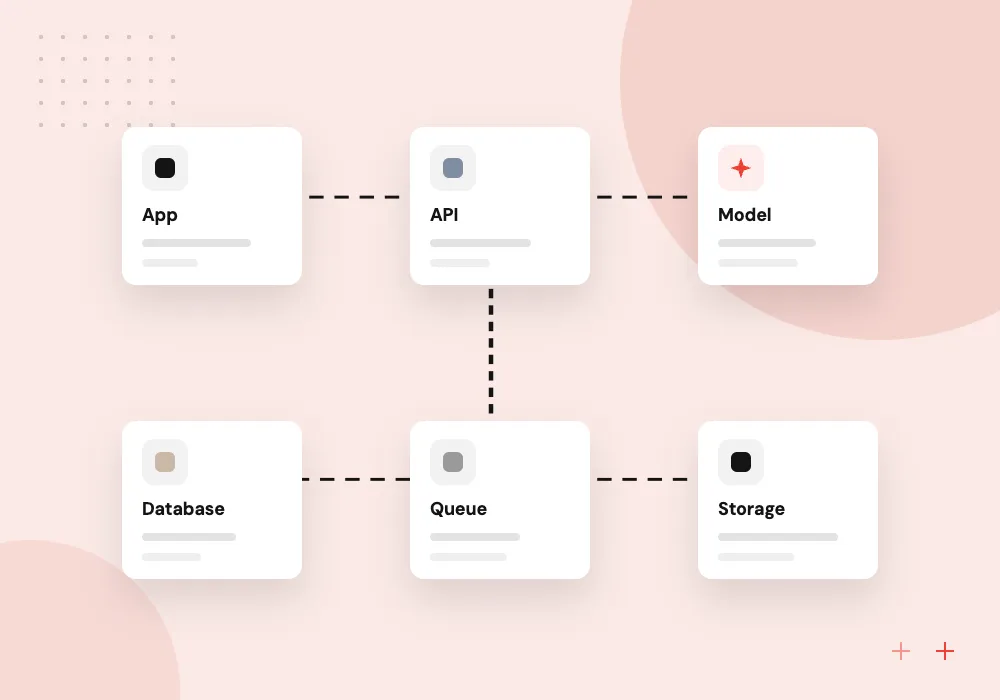
Rehost or replatform
Move the application to new infrastructure with few or no code changes, such as from an aging server to a cloud host, when the code still works well.
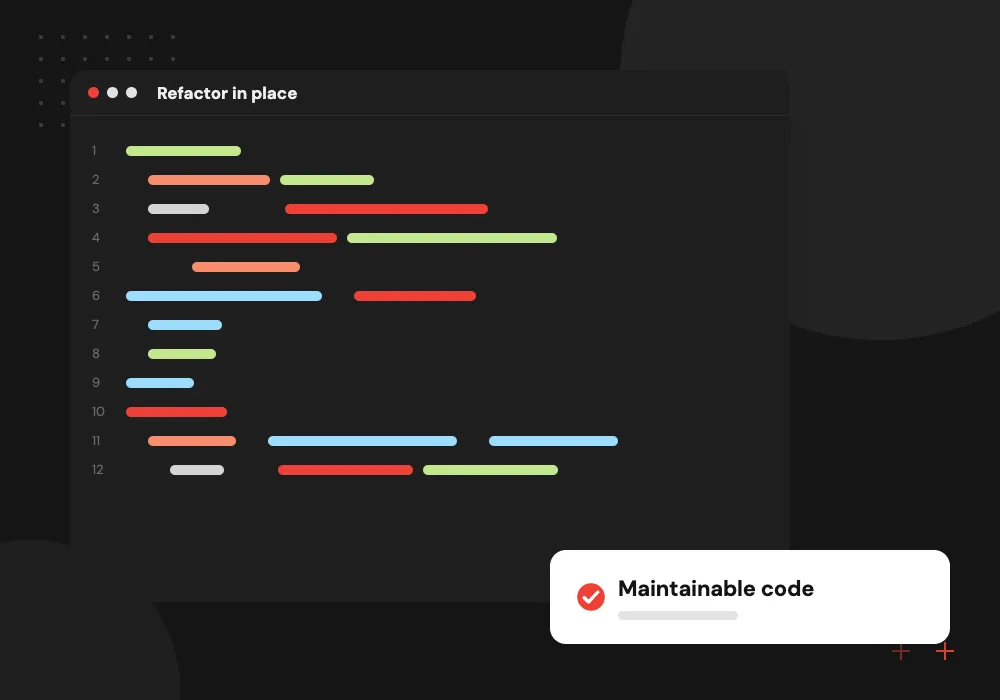
Refactor in place
Restructure and update the code while keeping its behavior, upgrading frameworks and adding tests, when the logic is sound but hard to change.
Rebuild piece by piece
Write new services around the old core and route features to them one at a time until the old system can be switched off.
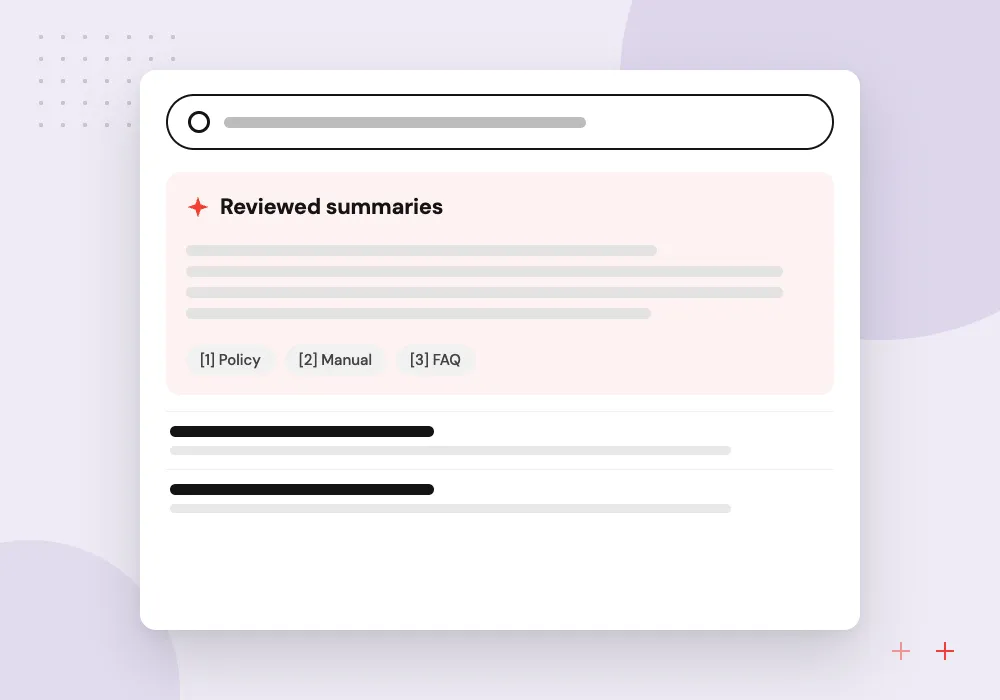
AI that reads old code
AI tools can summarize unfamiliar modules, draft missing documentation and suggest tests, with engineers checking every result before anyone relies on it.
Scoring modules before choosing an approach
A simple grid does most of the work. Rate each module for business value and technical health, note who understands it and what data it owns, and let the grid suggest the approach. The scores also give an order of work you can explain to whoever funds it.
What we do
- Module and integration inventory
- Value and health scores
- Knowledge holders named
- Data ownership per module
- Approach and order of work
Where AI helps in a modernization
The slowest part of legacy work is understanding code nobody documented. AI coding tools speed that up by summarizing modules, tracing where a field is used and drafting tests. After the move, the cleaner system is a better base for AI features such as document reading or smarter search.
What we do
- Code summaries checked by engineers
- Draft tests for current behavior
- Field and rule tracing
- Documentation for handover
- AI features on the new stack

How we approach a project
Plan the data early, since it is usually the hardest part: which records move, how they are cleaned and how you prove the new system matches the old. Our data migration services page covers reconciliation. Vendor deadlines can set the pace; Microsoft’s lifecycle page for SQL Server 2016 shows extended support ending in July 2026.
Move in stages. Put an API layer in front of the old system, route one feature at a time to new code, and keep both running until users and reports confirm the result. Hosting moves fall under cloud migration services, maintenance and support keeps the new stack current, and the software and AI guides cover related planning.
How we work
- Approach chosen per module
- Data migration planned first
- Old system off only after proof
Our Process
-

Write the case for change
State the business reasons, the vendor deadlines that apply and the cost of leaving the system as it is.
-

Assess modules and data
Inventory code, data, integrations and users, score each module and find knowledge held by only one or two people.
-

Choose approaches and order
Assign an approach per module, sequence the work by risk and value, and start with a low-risk piece to prove the method.
-

Migrate, verify, retire
Move each piece with tested data migration and a parallel run, then switch off the old part once reports match.
How Aranv approaches modernization
Assessment before commitment
We start by inventorying and scoring the existing system, so the approach and order of work rest on evidence rather than a favorite technology.
Business rules captured first
Engineers and your staff write down what the old system really does, including odd cases, before any of it is replaced.
Parallel runs and reconciliation
Each migrated piece runs beside the old one until data and reports match, with a rollback path ready during cutover.
AI used with review
We use AI tools to read and document legacy code faster, and an engineer checks each summary or test against the running system.
Ready to act on this guide?
Ask our team in a 30-minute conversation.
Or see how we build it: Explore all services
Legacy modernization questions
-
What is the difference between rehost, refactor and rebuild?
Rehosting moves the application to new infrastructure with little or no code change. Refactoring restructures the existing code while keeping its behavior. Rebuilding writes new code for the same purpose, often with a new design. Each step changes more, with more risk and reward.
-
Should we rewrite our legacy system from scratch?
Rarely in one go. A full rewrite must match years of hidden business rules before it is useful, and it delivers nothing until the end. Replacing the system piece by piece behind an API layer lets each part go live and be checked alone.
-
How do we choose between modernization approaches?
Score each module on business value and technical health. Healthy, valuable parts can be rehosted or lightly refactored. Valuable but fragile parts suit refactoring or rebuilding. Low-value parts may be retired, and standard functions are often better bought than built.
-
Can AI help modernize legacy code?
Yes, as an assistant. AI tools can explain unfamiliar code, draft documentation, propose tests and suggest translations between languages. An engineer must check every output against the running system, because a model can describe behavior the old code does not actually have.
-
How do we avoid downtime during modernization?
Run old and new in parallel, migrate data in rehearsed batches and switch traffic one feature or user group at a time with a rollback plan. Compare reports from both systems before each cutover, while the old system is still there to fall back on.

Let’s talk about your next step
Contact Aranv to discuss your workflow, current tools, and goals. Meet with our team or send an inquiry.
Book a meeting with our team
Choose an available date and time for a 30-minute conversation about your project.
Tell us about your project
Share a few details so we can discuss a useful next step.
Prefer email? sales@aranv.com