


How estimates are made and how to reduce cost
Aranv’s short answer: custom software development cost is set by scope, how many user roles and integrations there are, data migration, security needs, the team’s makeup and how quickly decisions get made. A reliable figure comes from a short discovery phase that ends in a phased, written estimate, not from a rate per screen.
A reliable software cost estimate starts from a clear scope. Estimators break the work into small pieces, estimate each one, add testing, project management and contingency, and write down every assumption. A figure given after a short call therefore carries far more uncertainty than one produced after a software discovery phase, which supplies the process map, backlog and integration list the estimate rests on.
Team makeup matters as much as hours. A first release usually needs a product owner on your side plus design, development, testing and some DevOps. The commercial model changes who carries the risk of change, as the fixed price vs time and materials guide explains, and our custom software development page describes how we phase projects.
How a custom software estimate is built
From scope to a phased estimate
- 01 Define the scope List users, roles, workflows, integrations and data to migrate.
- 02 Break down the work Split features into tasks small enough to estimate with confidence.
- 03 Record the assumptions Write down what the estimate depends on and what it excludes.
- 04 Phase and revisit Commit firmly to the first release and refine later phases with actuals.
An estimate is only as good as the scope and assumptions written beside it.
What drives custom software cost
Four groups of factors explain most of the gap between two estimates for software that sounds alike.
Scope and complexity
The number of user roles, screens, workflows and business rules, plus how many unusual cases each workflow must handle correctly.
Integrations and data
Each connection to a CRM, ERP, payment or shipping system adds work, and so does cleaning and moving records out of old systems.
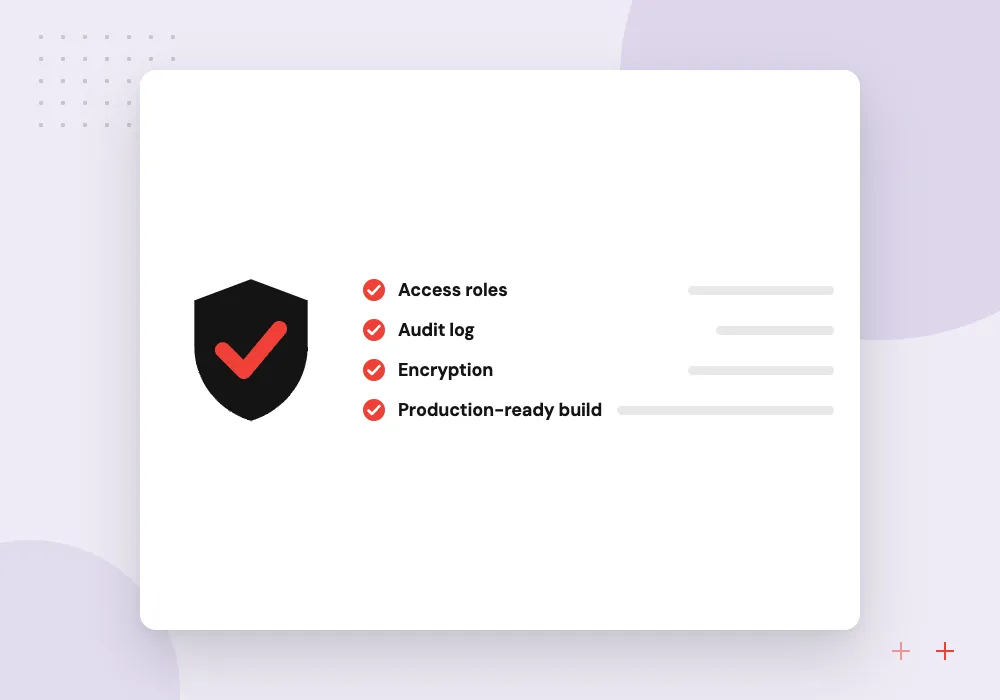
Quality, security, compliance
Testing depth, access controls, audit logs, accessibility and rules such as HIPAA or PCI DSS all add effort that a demo never shows.
AI features and usage
AI adds evaluation, review screens and monitoring to the build, plus a usage-based bill from the model provider for each request after launch.
Reading a software cost estimate
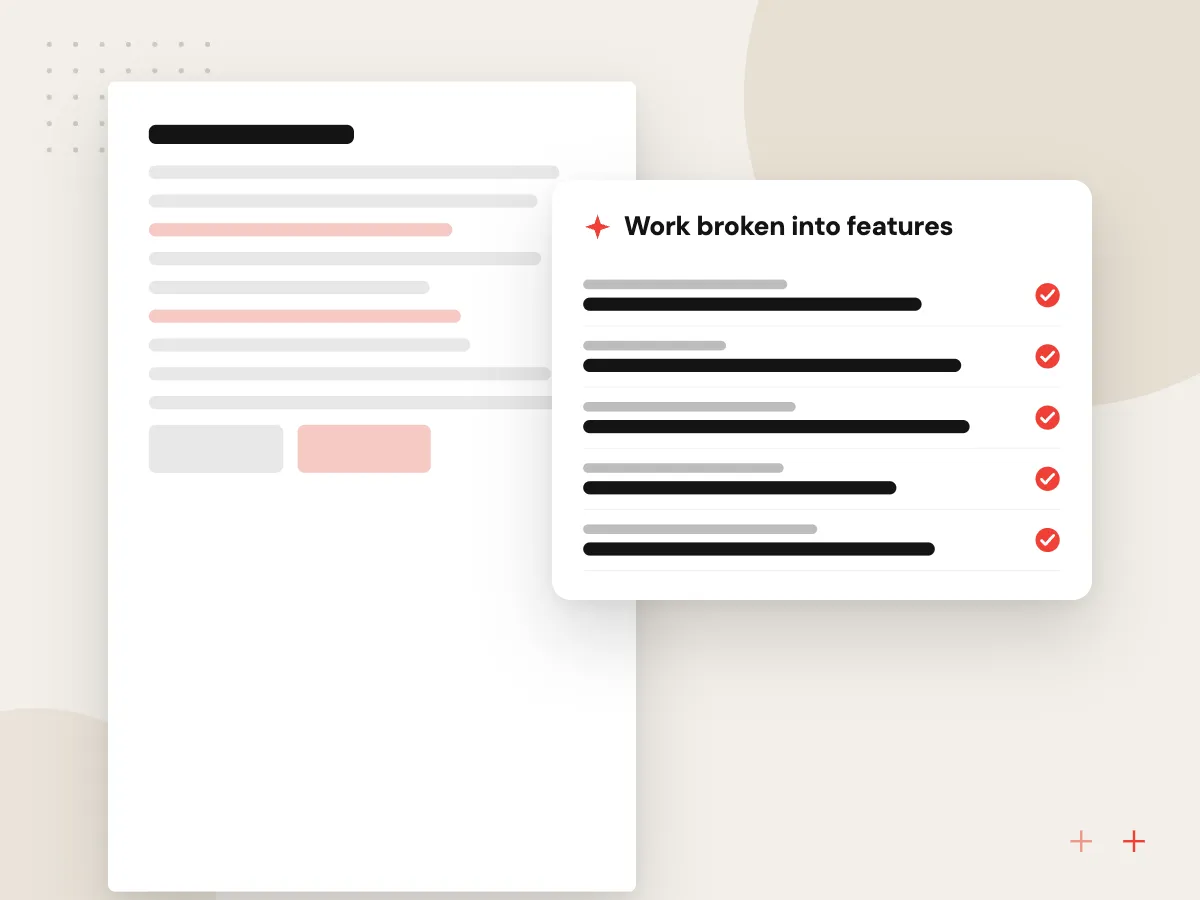
A useful estimate shows its working. It breaks the work into features or phases, states the team and the assumptions behind each part, lists what is excluded and says how changes will be handled. If an estimate is one number with no breakdown, ask for one before comparing it.
What we do
- Work broken into features
- Team roles and effort per phase
- Assumptions and exclusions listed
- Contingency stated openly
- Change handling explained
The cost of AI features
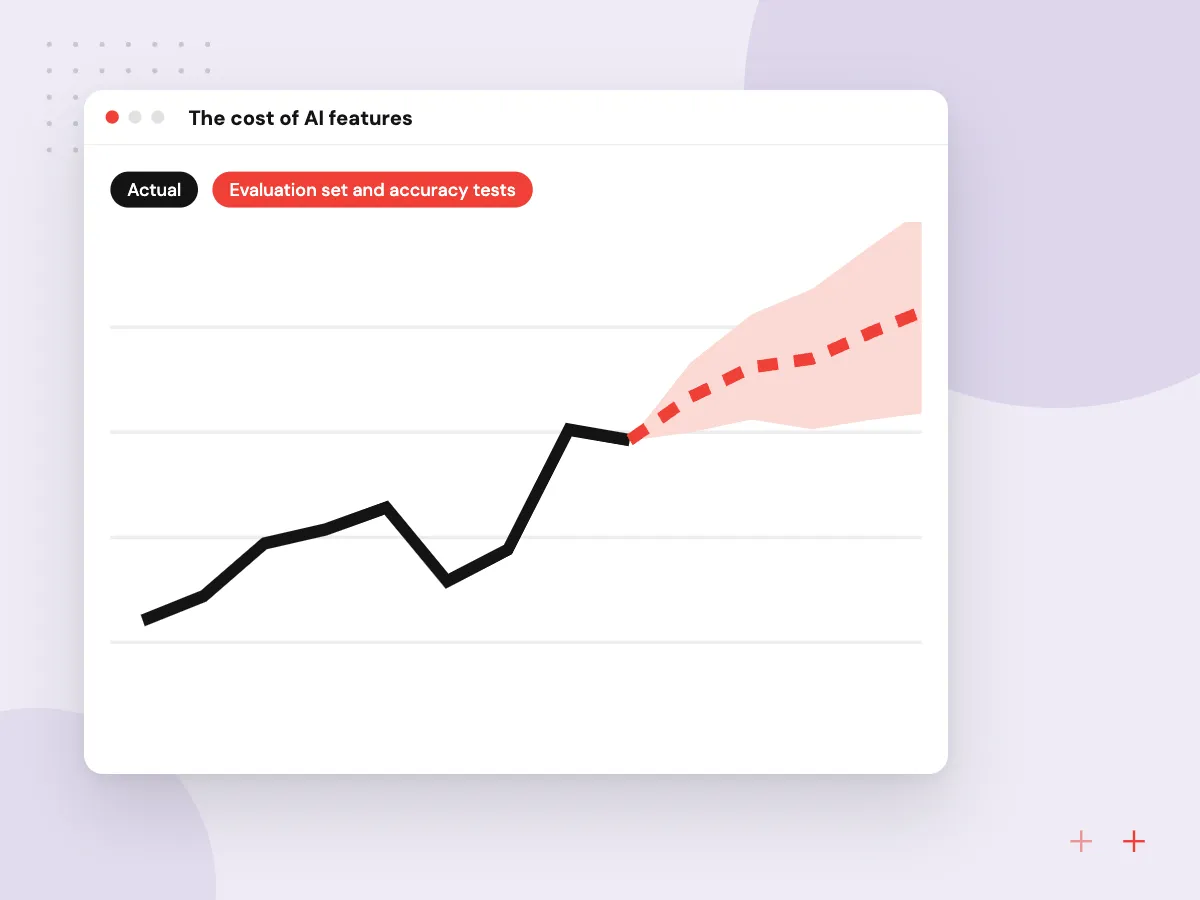
AI changes the cost picture in two ways. The build includes work an ordinary feature lacks, such as test sets, review screens and monitoring. After launch, every model request carries a usage charge, so running cost depends on volume, prompt size and the model chosen.
What we do
- Evaluation set and accuracy tests
- Human review screens
- Usage monitoring and alerts
- Model choice per task
- Caching and batching where possible

How we approach a project
Costs continue after launch: hosting, third-party licenses, monitoring, security updates and new features. AI features add per-request model charges that grow with use, covered in our pages on AI agent development cost and AI chatbot cost.
To reduce cost, cut the first release to the core workflow, use packaged software for standard functions such as accounting, decide quickly and supply sample data and system access early. The app development cost page covers mobile drivers, and the software and AI guides cover vendor choice. To talk about an estimate for your own project, use our contact page to arrange a 30-minute conversation.
How we work
- Scope drives cost
- Assumptions written beside every estimate
- Phases fund learning
Our Process
-

Describe the problem and users
Write down who will use the software, the jobs they do and what is wrong with the current way.
-

List systems and data
Name every system the software must connect to and the records that need moving.
-

Fund a short discovery
Pay for a scoped discovery so the estimate rests on mapped processes rather than guesses.
-

Compare like for like
Check what each estimate includes, such as testing, documentation, training and support, before comparing totals.
How Aranv builds an estimate
Estimates built from discovery
Our written estimates follow a discovery phase, so each figure traces back to a mapped process, a counted backlog and a known list of integrations.
Phases you can fund separately
Work is split into a first release and later phases, so you can approve the first part and decide on the rest with real usage data.
Assumptions in plain view
Every estimate lists what it includes, what it excludes and what would change it, so you can compare it fairly with other bids.
Running costs named early
Hosting, licenses, maintenance and AI usage charges are described before the build, so the budget covers the years after launch.
Ready to act on this guide?
Ask our team in a 30-minute conversation.
Or see how we build it: Explore all services
Custom software cost questions
-
How much does custom software development cost?
No honest single figure exists without scope. Cost follows user roles and workflows, integrations, data migration, security and compliance needs, the team involved and the speed of decisions. A discovery phase produces a written, phased estimate based on your actual process.
-
Why do estimates for the same project differ so much?
Vendors assume different scopes. One quote may include discovery, testing, documentation and support while another leaves them out, and each guesses differently about integrations and data. Ask every vendor to list assumptions and exclusions, and compare those lists before the totals.
-
What does a discovery phase produce for the estimate?
A process map, a ranked backlog, an inventory of integrations and data, a technical outline, known risks and a phased plan. Together they let the estimate be built from counted pieces of work instead of a general impression.
-
How can we lower the cost of custom software?
Keep the first release to one workflow, buy standard functions instead of building them, make decisions quickly, give early access to systems and sample data, and avoid adding priorities mid-sprint without dropping something else.
-
Is a fixed price or time and materials cheaper?
Neither is cheaper by default. A fixed price suits a well-defined scope, and the vendor adds contingency to cover its risk. Time and materials suits changing scope and charges for work actually done. Many projects fix discovery and the first release, then switch.

Let’s talk about your next step
Contact Aranv to discuss your workflow, current tools, and goals. Meet with our team or send an inquiry.
Book a meeting with our team
Choose an available date and time for a 30-minute conversation about your project.
Tell us about your project
Share a few details so we can discuss a useful next step.
Prefer email? sales@aranv.com