


What data migration services include
Aranv provides data migration services for US businesses moving to a new CRM, ERP, accounting package or database: we map and clean the old data, run repeatable test loads, reconcile counts and balances, and plan a cutover that keeps the business running.
A data migration has four parts: profiling the source, mapping and transforming it, loading and validating it, and cutting over. We write the mapping as a document your team approves field by field, and code the transforms as scripts we can rerun, so every rehearsal uses the same rules. Our custom software development team builds any tools the job needs, such as a review screen for merging duplicates.
Some migrations are forced by dates. Microsoft’s lifecycle page shows extended support for SQL Server 2016 ending in July 2026, after which security fixes come only through Extended Security Updates. A database move often goes with legacy application modernization or a hosting change covered by our cloud migration services.
From old system to verified new records
How a migration moves safely
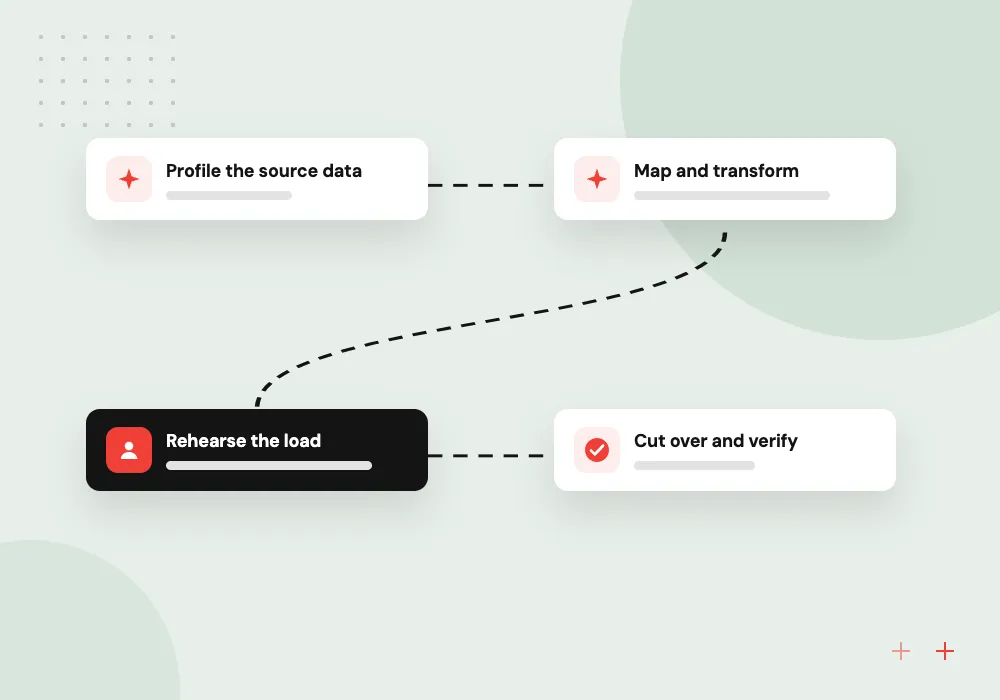
- 01 Profile the source data We measure duplicates, blanks, odd formats and orphaned records before mapping.
- 02 Map and transform Each old field gets a target, a rule and an owner who approves it.
- 03 Rehearse the load Full test loads run until counts, balances and samples match the source.
- 04 Cut over and verify Final load, reconciliation sign-off, then the old system goes read-only.
Migrations go wrong on surprises in the data, not in the tools. Profiling first finds them while there is still time to fix them.
System data migration projects we handle
Most migrations follow a system change that has already been decided. The data decides whether it goes well.
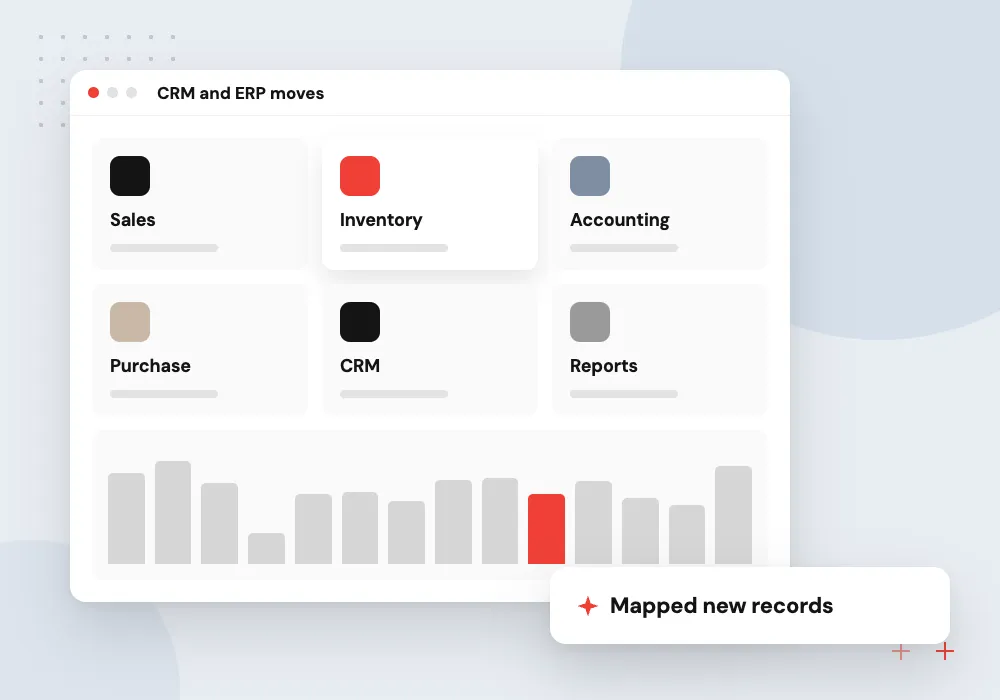
CRM and ERP moves
Customers, contacts, products, open orders and history moved between platforms, with picklists, owners and relationships remapped to the new system’s structure.
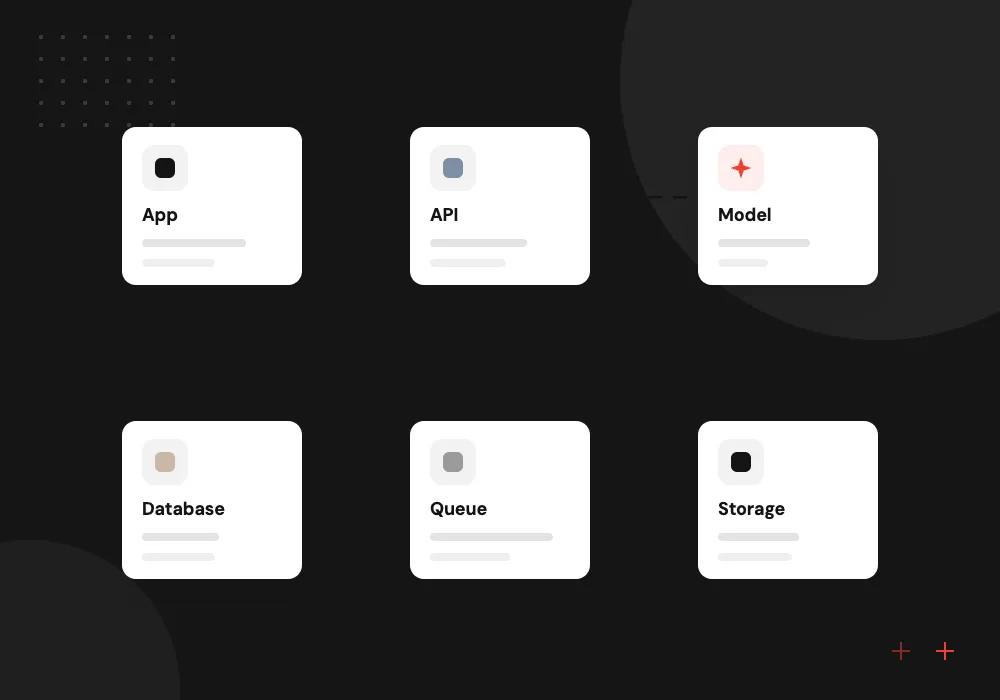
Database migration
SQL Server, MySQL, Oracle or Access databases moved to PostgreSQL or a newer version, with schema changes and stored procedures rewritten where needed.
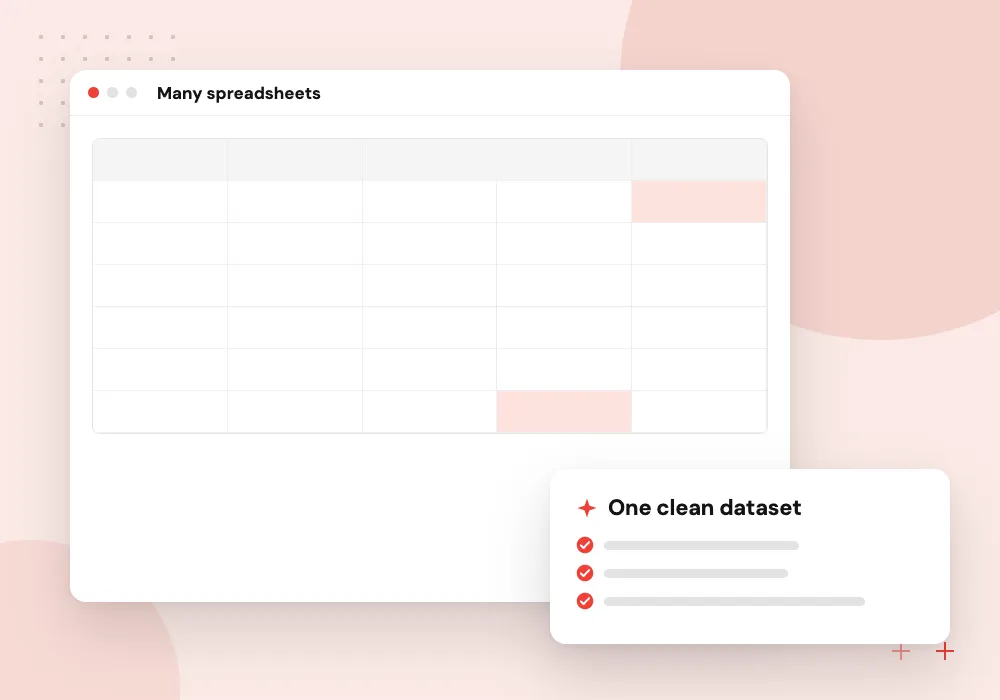
Spreadsheet consolidation
Years of spreadsheets and shared files turned into clean, de-duplicated tables in a proper database or business system, with rules for future entry.
AI-assisted mapping and cleansing
AI suggests field mappings, normalizes free-text values such as addresses and job titles, and spots likely duplicates, with every change shown for review before it loads.
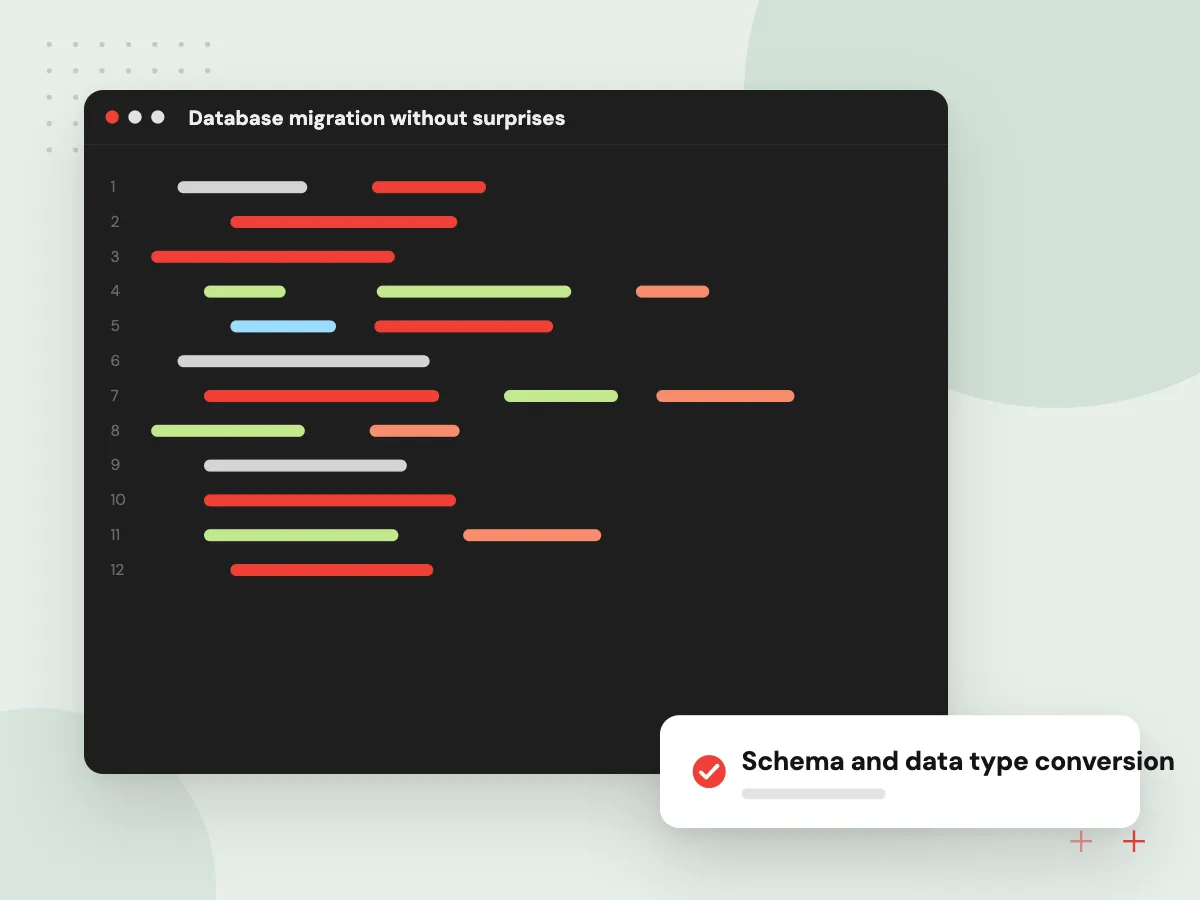
Database migration without surprises
Moving a database is more than copying tables. Data types differ between engines, stored procedures and triggers need rewriting, and reports or integrations depend on old column names. We inventory every object and every system that reads the database, move schema and data with scripts, and test the applications against the new copy before switching.
What we do
- Schema and data type conversion
- Stored procedure rewrites
- Inventory of dependent apps and reports
- Scripted, repeatable loads
- Performance checks on the new engine
AI-assisted cleansing and duplicate review
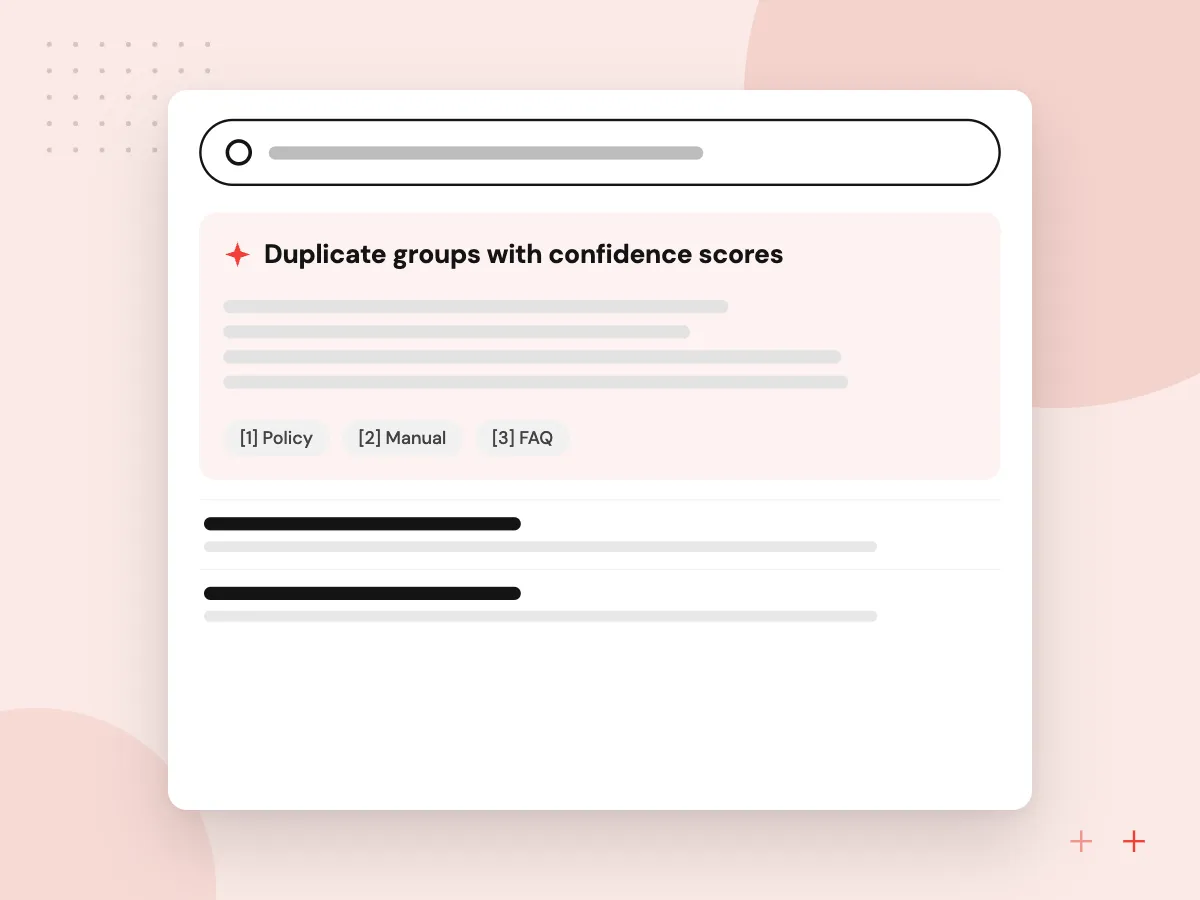
Old systems collect years of inconsistent entries: the same customer typed five ways, states in free text, missing industries. AI models propose standard values and likely duplicate groups, each with a confidence score. Your staff accept or reject proposals in a review screen, and accepted changes become rules the migration script applies every time.
What we do
- Duplicate groups with confidence scores
- Address and name standardization
- Free text mapped to picklists
- Review screen for data owners
- Approved changes saved as rules
How we approach a project
Business system moves need history that makes sense in the new tool. Open orders, balances and active subscriptions must match exactly, while older history can often move as read-only records or an archive. For Odoo projects, our Odoo migration services page covers version upgrades and moves from other ERPs.
AI speeds up the slow parts without deciding for you. Models suggest mappings, standardize messy text and score likely duplicates, and our AI data preparation work applies the same methods when the goal is a dataset for AI rather than a new system. A person approves every rule before it runs.
How we work
- Every field mapped and approved
- Rehearse until the numbers match
- Old system kept readable after cutover
Our Process
-

Profile and inventory
We connect to each source, count records by type and list quality problems with examples your team will recognize.
-

Approve the mapping
Field-by-field mapping, transform rules and decisions on old history are reviewed and signed off by the data owners.
-

Rehearse full loads
Complete test migrations run into a copy of the new system, followed by reconciliation reports and spot checks by users.
-

Cut over and support
The final load runs in a planned window, totals are signed off, and we stay close during the first weeks to fix stragglers.
Why Aranv for data migration
Rules written down
Every transform lives in a signed-off mapping document and a script, so anyone can see why a record looks the way it does in the new system.
Rehearsed, not hoped for
Full test loads run into a copy of the target until reconciliation passes, so cutover repeats something that has already worked.
Your staff check the result
Data owners spot-check records they know well in each rehearsal, which catches problems that counts and totals miss.
Old data stays reachable
The source stays read-only or archived after cutover, so staff can still look up history and auditors can trace a figure back.
Planning Data Migration?
Book a 30-minute conversation with the team that would build it.
Data migration questions
-
What affects the cost of a data migration?
The number of source systems and tables, data quality, how much history you keep, the transformations needed, the number of rehearsals and how short the cutover window must be. Profiling comes first, so the written estimate rests on real data. Rehearsals run from copies, so daily work continues until cutover.
-
How long does a data migration take?
A single, well-kept database can move in weeks. A multi-system ERP migration with years of history usually takes months because of mapping decisions and rehearsals. The cutover itself is planned for a short window, often a weekend, once rehearsals pass.
-
How do you make sure no data is lost?
Every rehearsal is reconciled: record counts by type, financial totals and balances, spot checks of individual records by your staff, and a list of anything rejected with the reason. Nothing is signed off until the reports match or each difference is explained.
-
Should we migrate all of our historical data?
Not always. Open transactions, active customers and balances must move. Older history often belongs in a read-only archive or reporting database, which keeps the new system clean and the migration shorter while staff can still look old records up.
-
How does AI help with data migration?
It suggests field mappings from names and sample values, standardizes free text such as addresses, units and job titles, and flags likely duplicates with a confidence score. Each suggestion is reviewed and turned into a written rule before the load, so results can be repeated.

Let’s talk about your next step
Contact Aranv to discuss your workflow, current tools, and goals. Meet with our team or send an inquiry.
Book a meeting with our team
Choose an available date and time for a 30-minute conversation about your project.
Tell us about your project
Share a few details so we can discuss a useful next step.
Prefer email? sales@aranv.com