


What a Vue project includes
Aranv is a Vue JS development company. Our Vue developers build web apps, dashboards and Nuxt sites in Vue 3 and TypeScript for small and midsize businesses, and move older Vue 2 apps to a supported version without a risky full rewrite.
Vue is a JavaScript framework for building user interfaces. We write new code in Vue 3 with the Composition API and TypeScript, use Vite for builds and Pinia for shared state, which the Vue team recommends for new apps, and add Vue Router for multi-screen apps. Nuxt adds server rendering, file-based routing and static generation when search visibility matters.
Most Vue projects include screen design, a shared component set, state and data handling, sign-in and roles, API work, accessibility checks and automated tests with Vitest and Playwright. Vue apps usually sit on a back end such as Laravel, Node.js or Python.
Moving a Vue 2 app to Vue 3
A step-by-step migration path
- 01 Audit the Vue 2 app List the components, plugins, Vuex stores and build tools that block the move.
- 02 Upgrade to Vue 2.7 first The final Vue 2 release supports the Composition API, so changes can start early.
- 03 Swap the build and store Webpack setups move to Vite, and Vuex stores move to Pinia.
- 04 Switch to Vue 3 Remaining breaking changes are fixed, tested and released in stages.
New projects start directly on Vue 3, Vite and Pinia.
What we build with Vue
Vue fits teams that want a gentle learning curve, clear single-file components and the option to add Vue to an existing page piece by piece.
Dashboards and admin panels
Data tables, charts and forms for operations teams, wired to your APIs and permission rules.
Nuxt development
Server-rendered Nuxt sites and storefronts that load quickly and can be indexed, with content from a headless CMS.
Vue 2 to 3 migrations
Older apps moved off an end-of-life version in planned stages, with tests at every step.
Interactive parts of PHP sites
Vue components added to Laravel or other server-rendered pages for search, filters and multi-step forms.
Component libraries for Vue teams
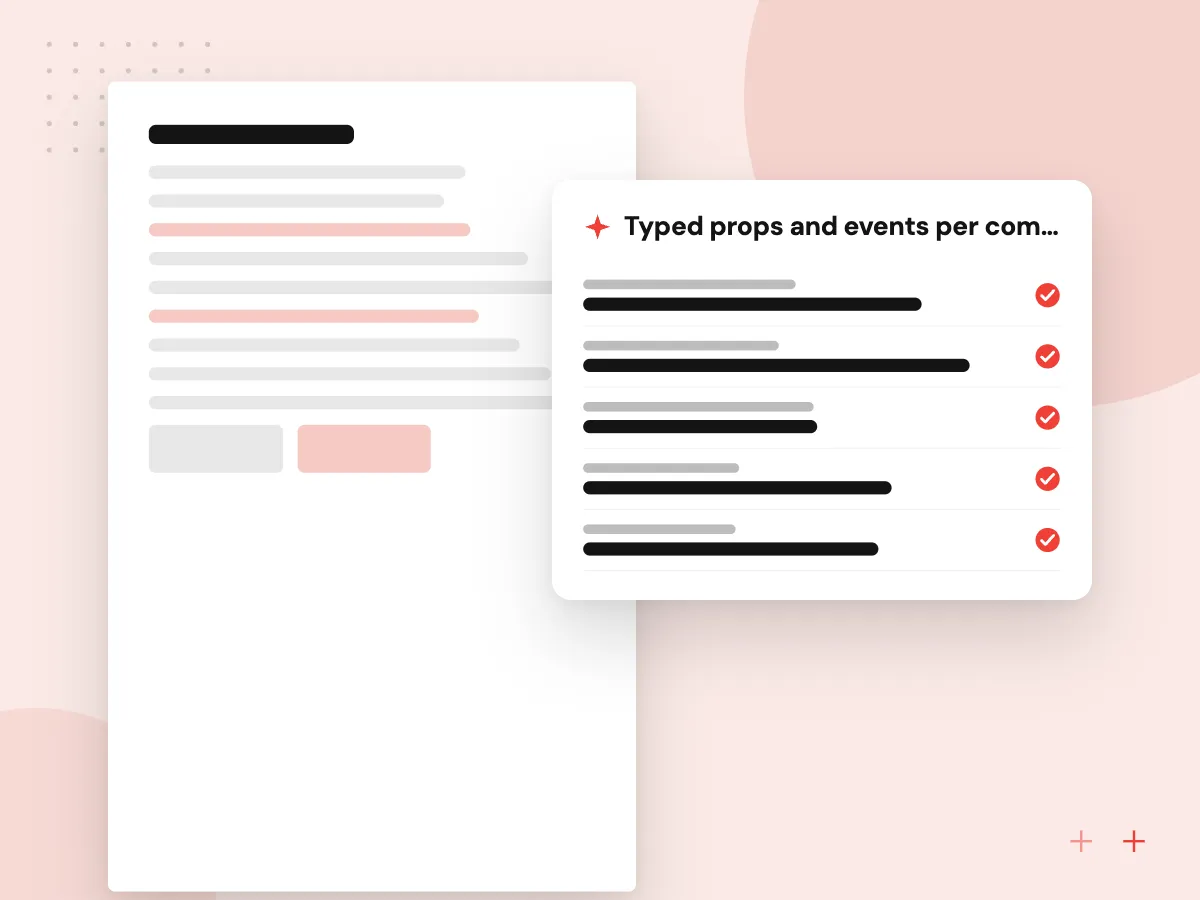
A shared component set keeps screens consistent and makes later features quicker to build. We write buttons, tables, forms and layouts as typed Vue components, document each one with live examples, and publish the set as a package your other apps can install.
What we do
- Typed props and events per component
- Live examples and usage notes
- Accessibility checks for each part
- Theme tokens for brand colors
- Versioned package for other apps
AI features in Vue interfaces
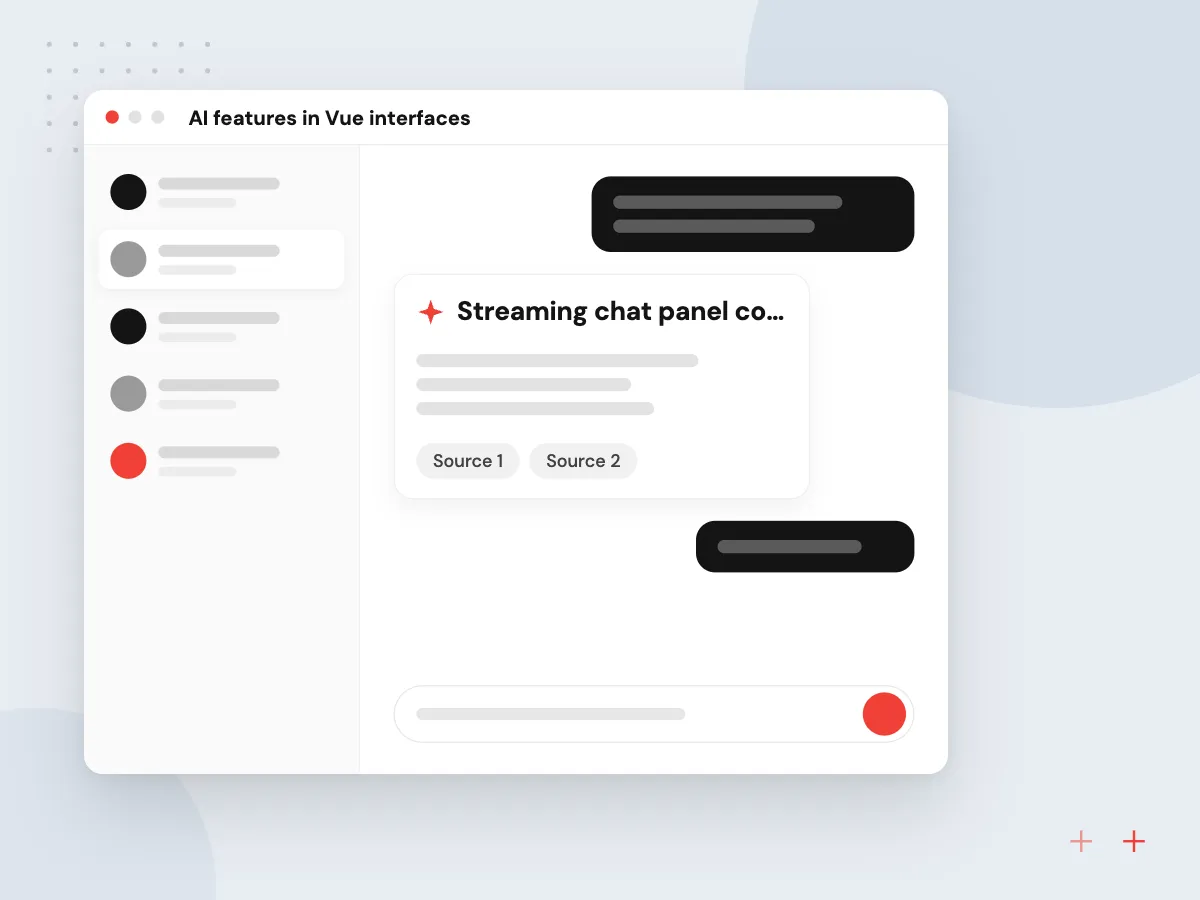
Vue suits the screen side of AI features, while model calls stay on the server through your API or Nuxt server routes. We build chat panels that stream replies as they arrive, forms a model pre-fills from an uploaded file for the user to check, and search that answers from your own content.
What we do
- Streaming chat panel component
- File upload with pre-filled fields
- Model calls kept in server routes
- Source links under each answer
- Clear states for slow replies

How we approach a project
Vue 2 apps. The official Vue 2 end-of-life page confirms that Vue 2 stopped receiving updates on December 31, 2023, security and browser fixes included. Vue 3 has breaking changes, but most APIs carry over, so a staged migration is usually safer than a rewrite.
Vue or React? Both handle serious business applications. Vue ships official tools for routing and state, and its templates feel familiar to developers with HTML and PHP backgrounds. React has a larger ecosystem and hiring pool. If you are still choosing, read about our React development work, compare options on the technologies page, or look at how we approach web application development.
How we work
- Composition API and TypeScript
- Small, readable components
- Migrate in steps, not rewrites
Our Process
-

Review code or requirements
For an existing app we check the Vue version, plugins and build setup; for a new one, the users and screens.
-

Component library first
Buttons, tables, forms and layouts are built and documented before any feature screens.
-

Feature sprints with preview links
Each sprint ends with a preview link your team can click through and comment on.
-

Release and upkeep
We release in stages and keep Vue, Nuxt and every package on a supported version.
Why Aranv for Vue development
Staged migrations, steady releases
Vue 2 apps move to Vue 3 in planned steps while your team keeps shipping, instead of freezing features during a long rewrite.
Types and tests from the start
TypeScript, Vitest unit tests and Playwright browser tests come with each feature, so later changes are checked automatically.
Front end and API together
We also build the Laravel, Node.js or Python APIs behind your screens, so data shapes and permissions are agreed in one place.
Code your team can pick up
We stick to official Vue tools and documented patterns, so any developer who knows Vue 3 can read and extend the codebase.
Planning Vue.js Development Services?
Book a 30-minute conversation with the team that would build it.
Vue.js FAQs
-
Is Vue a good choice for a business web app?
Yes. Vue 3 is mature, well documented and suits dashboards, portals and admin tools. New developers pick it up quickly, which helps when your own team takes over the code later.
-
Our app still runs on Vue 2. What should we do?
Plan a move to Vue 3. Since the end of 2023, Vue 2 gets no updates, so new security issues and browser changes go unfixed. We audit the app, upgrade it to Vue 2.7, replace incompatible plugins and then switch to Vue 3 in stages.
-
When do we need Nuxt instead of plain Vue?
Use Nuxt when pages must be indexed by search engines or load fast on the first visit, such as marketing sites, storefronts and content hubs. For internal tools behind a login, plain Vue with Vite is usually simpler.
-
Can your Vue developers join our existing developers on one project?
Yes. We can build features next to your staff, review their pull requests and set shared code standards, or hand over a documented codebase when the project ends.
-
What affects the cost of hiring a Vue JS development company?
The number of screens and user roles, back-end API work, design complexity, test coverage and, for migrations, how many plugins have no Vue 3 version. We estimate after reviewing the code or running a short discovery phase.
-
Who owns the Vue code when the project is finished?
You do. Work happens in your repository from the first day, and the components, styles and documentation belong to your company.

Let’s talk about your next step
Contact Aranv to discuss your workflow, current tools, and goals. Meet with our team or send an inquiry.
Book a meeting with our team
Choose an available date and time for a 30-minute conversation about your project.
Tell us about your project
Share a few details so we can discuss a useful next step.
Prefer email? sales@aranv.com