


What our software testing covers
Aranv provides software testing services to growing businesses and product teams: test plans, manual and automated tests, plus performance and accessibility checks for web, mobile and AI applications, so fewer defects reach customers and developers get bug reports they can reproduce.
Testing starts with a risk list, not a tool. We look at which journeys bring in revenue, which handle personal or payment data and which have failed before, then plan coverage around them. The test plan names what will be tested, on which browsers and devices, with what data, and what counts as a pass.
Manual testing covers new features, exploratory sessions and usability problems a script would miss. Automated testing covers unit and integration tests, API contracts and end-to-end browser flows. We keep automation in the same repository as the application, so developers run it locally and it never becomes a side project nobody updates.
How we test a release
From risk list to release sign-off
- 01 Map the risky journeys Checkout, sign-in, payments and data imports are tested first and most often.
- 02 Write cases and test data Plain-language test cases with realistic accounts, orders and records.
- 03 Automate the repeat checks Regression tests run in your pipeline on each pull request or overnight.
- 04 Report, fix, retest Every defect has steps, screenshots and severity, and is retested after the fix.
People test new features and usability; automation guards what must never break.
Where a QA testing company helps
Testing pays off most where a defect touches customers, money or stored records.
Release regression
A suite that checks existing features before each release, so a fix in one area does not break another.
Test automation services
Playwright, Cypress or Appium tests kept next to your application code and run on every build.
Performance and load
Load tests that show how APIs and pages behave at peak traffic, before a sale or a launch.
Accessibility review
Key screens and forms checked against WCAG 2.2, with manual keyboard and screen reader passes.
Test data and environments
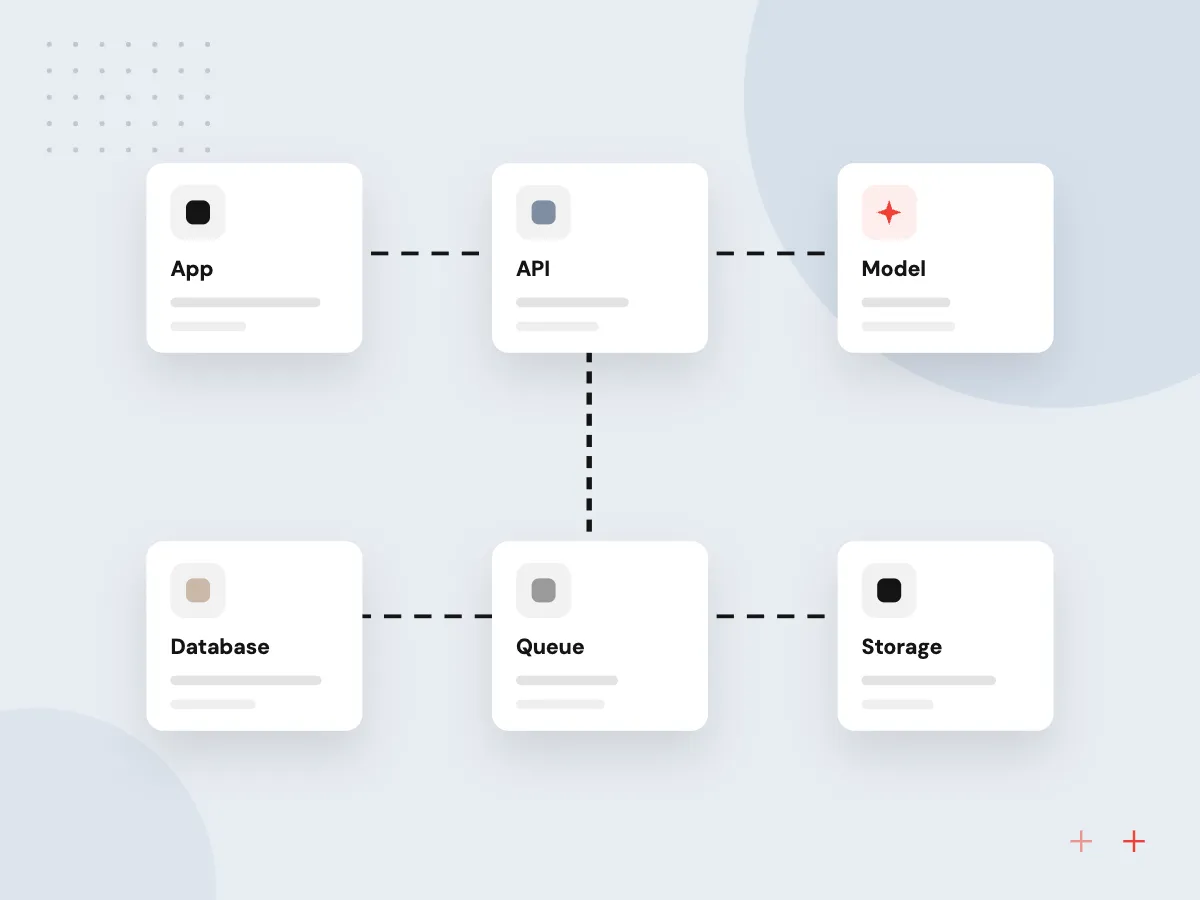
Good tests need predictable data. We build masked or synthetic data sets that cover awkward cases such as refunds, expired cards and accounts with many users, and set up a staging environment that resets to a known state before each run.
What we do
- Masked copies of production data
- Synthetic records for edge cases
- Staging reset before each run
- Test accounts for every user role
- Sandbox keys for payment providers
Evaluation data and review for AI features
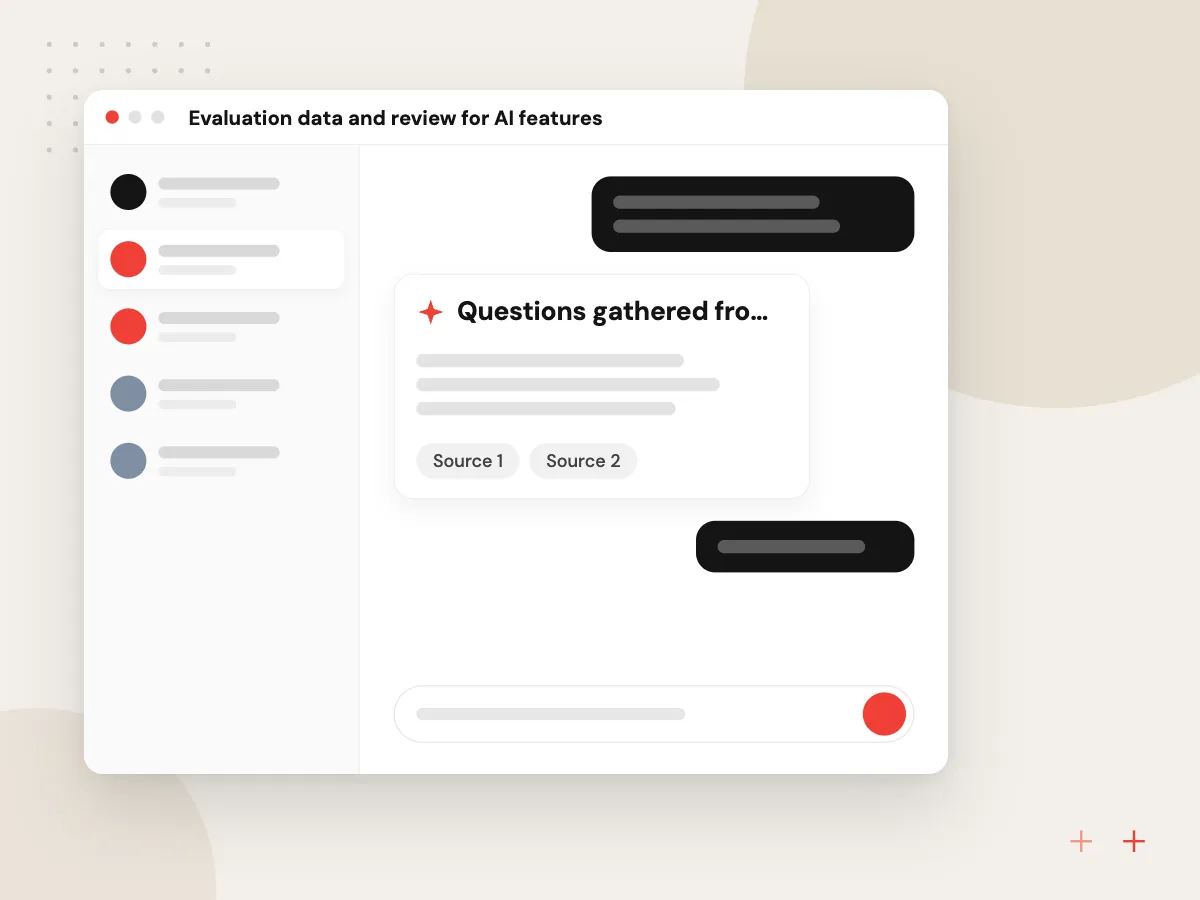
An AI feature needs a test set before it needs a launch date. We collect real questions from logs or staff, remove personal details, write the expected answer or rule for each one, and have a person review every failure. The set grows whenever users report a wrong answer.
What we do
- Questions gathered from real use
- Personal details removed first
- Expected answers agreed with owners
- Human review of each failure
- Pass threshold set before release

How we approach a project
Fast checks run on each pull request; slower browser and load suites run overnight or before a release. Wiring those suites into your build pipeline overlaps with our DevOps services, and long-term regression work fits inside software maintenance and support.
AI features need their own checks. For chatbots and agents we build evaluation sets of real questions with expected answers, and test for invented facts, unsafe replies and one user seeing another user’s data. Related work: AI agent development and AI governance and security.
Mobile apps are tested on real phones and simulators across the OS versions your users actually run, chosen from your analytics. QA can be a standalone engagement or a role inside a dedicated development team.
How we work
- Test what costs most when broken
- Bug reports anyone can reproduce
- Automation your developers can run
Our Process
-

Quality audit
Review existing tests, bug history and the release routine to find the gaps that matter.
-

Test plan and first suite
Agree coverage, environments and test data, then automate the top journeys first.
-

Pipeline hookup
Connect the suite to CI, set rules for failed runs and share a readable report.
-

Testing every sprint
New features tested as they land, the regression suite kept current and defect trends tracked.
Why Aranv for software testing
Reports developers can act on
Each defect comes with steps, expected and actual results, environment details and a screenshot or recording, so a developer can reproduce it at the first attempt.
Automation that stays maintained
Tests live in your repository and pass through the same review as product code, so they keep up when screens and APIs change.
Coverage ranked by risk
We test checkout, sign-in and data handling before cosmetic screens, so the hours you fund go to the failures that would hurt most.
Existing tests reused where sound
Selenium suites or unit tests your team already wrote are reviewed and kept where they still work, rather than replaced for the sake of a new tool.
Planning QA and Software Testing Services?
Book a 30-minute conversation with the team that would build it.
Software testing FAQs
-
Should we outsource QA or hire a tester in-house?
Outsourcing suits teams that need testing in bursts, a mix of skills such as automation and load testing, or an outside view of quality. An in-house tester suits steady work that needs deep product knowledge. Many companies combine an internal quality owner with outside help at release peaks.
-
What does software testing cost?
Cost depends on the size of the application, the number of platforms and devices, how much needs automating and how often you release. We estimate after a short audit, and the first phase can cover only the riskiest journeys to keep it small.
-
Which test automation tools do you use?
Mostly Playwright or Cypress for web, Appium or the native frameworks for mobile, and code-based tests for APIs. We also work with tools your team already has, such as Selenium, so existing tests are not thrown away.
-
Can you test an app another company built?
Yes. We need a test environment, any existing documentation and someone who can answer questions about expected behavior. Exploratory testing comes first to learn the product, then written cases for the parts that matter most.
-
How do you test AI chatbots and agents?
With evaluation sets: real questions paired with expected answers or rules, rerun whenever the prompt, model or data changes. We check accuracy, refusals, tone and data separation between users, and review failures by hand.
-
Do you test for accessibility?
Yes. Key screens are checked against WCAG 2.2 with automated scanners plus manual keyboard and screen reader passes, and issues are reported by severity with suggested fixes. Scanners alone miss many problems, so the manual pass matters.

Let’s talk about your next step
Contact Aranv to discuss your workflow, current tools, and goals. Meet with our team or send an inquiry.
Book a meeting with our team
Choose an available date and time for a 30-minute conversation about your project.
Tell us about your project
Share a few details so we can discuss a useful next step.
Prefer email? sales@aranv.com