


What a Shopify project includes
Aranv is a Shopify development company that builds and extends online stores for small and midsize retailers and wholesalers: custom themes, Shopify Plus setups, B2B ordering, custom apps and links to the ERP, inventory and accounting tools you already use.
A typical scope covers theme design and build, catalog and metafield setup, payments, shipping and tax settings, data migration, redirects from old URLs and staff training. We also list which apps you need and why.
For Shopify B2B, the plan matters. Shopify lists B2B on the Basic, Grow, Advanced and Plus plans, but some features, such as direct company catalogs, deposits and partial payments, are Plus only. We compare your trade terms with those limits before recommending a plan.
How a Shopify build fits together
Storefront, apps and back office
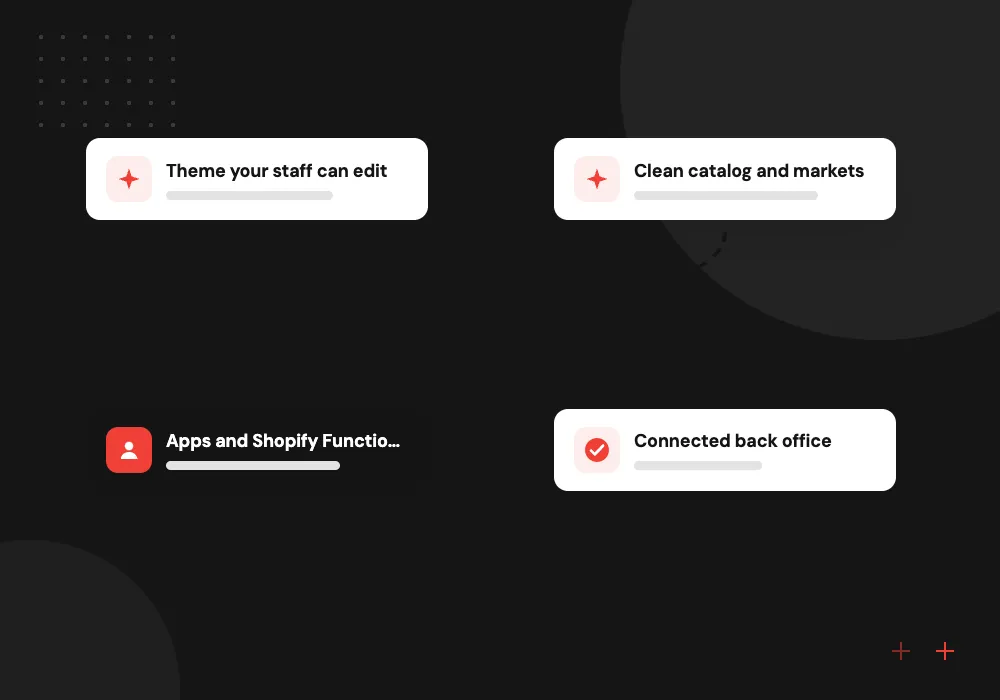
- 01 Theme your staff can edit Sections and templates built so merchandisers change pages without a developer.
- 02 Clean catalog and markets Products, variants, metafields, markets and trade price lists set up once, properly.
- 03 Apps and Shopify Functions Custom logic for discounts, delivery options and checkout validation where settings fall short.
- 04 Connected back office Orders, stock levels and customer records flow to your ERP, 3PL and books.
Theme, headless or a mix of both is decided after we see your catalog and team.
What we build on Shopify
Most Shopify work falls into one of four jobs, and larger projects often combine them.
New store builds
A custom theme, tidy product data and a short list of apps, launched with redirects from your previous platform.
Shopify Plus setups
Expansion stores, checkout extensions, Shopify Flow automations and launch planning for high order volumes.
Shopify B2B
Company accounts, net terms, quantity rules and price breaks, so trade buyers reorder online instead of calling your sales desk.
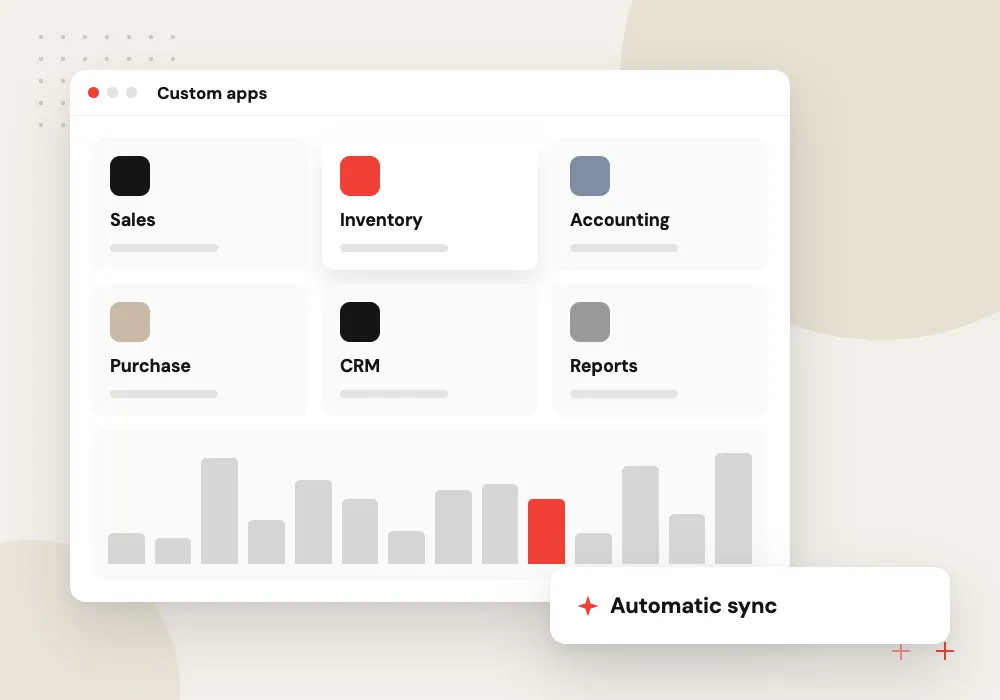
Custom apps
Small apps built on the GraphQL Admin API that move data between Shopify and your ERP, warehouse or CRM.
Catalog cleanup and metafield setup
Filters, size charts and product badges depend on structured product data. We define metafields and metaobjects for attributes such as material, fit and care notes, clean supplier data into them and connect them to theme sections your staff can edit.
What we do
- Metafield and metaobject definitions
- Supplier data cleaned and imported
- Storefront filters from product attributes
- Variant and option structure review
- Bulk edit guide for staff
AI features for Shopify stores
AI on a Shopify store works best on narrow jobs. We build product finders that ask a few questions and suggest matching items, draft product copy from supplier sheets for staff to approve, and answer order status questions using live order data from Shopify.
What we do
- Guided product finder
- Copy drafts with staff approval
- Order status answers from live data
- Search tuned to your catalog terms
- Logs of questions shoppers ask

How we approach a project
Custom apps and integrations are where many stores need the most help. Shopify publishes a new API version every quarter, as set out in its API versioning policy, so we pin each app to a version, follow the developer changelog and update well before a version is retired. Wider integration work is covered under API development and integration.
Headless Shopify suits brands that want a fully custom front end, content from a separate CMS or several storefronts on one catalog, while checkout stays on Shopify. Our headless commerce development page explains when the extra build cost is worth it.
This service sits within our eCommerce development work. Wholesale-first businesses should also read B2B eCommerce development, and stores that want product finders or a shopping assistant can see AI for eCommerce.
How we work
- Theme sections your team can edit
- Apps only where they earn a place
- Integrations tested with real orders
Our Process
-

Store audit and plan
We review your catalog, current apps, traffic sources and back-office systems, then agree the theme approach and launch window.
-

Theme and data build
Templates and sections are built on a development store and filled with your real products, collections and content.
-

Order testing
We place test orders for each payment, shipping and tax case and check that every one reaches your ERP or 3PL correctly.
-

Go-live and early weeks
Redirects, domains and app settings switch over in a planned window, and we watch orders, errors and search traffic closely.
Why Aranv for Shopify
Fewer apps, lighter pages
We check whether a theme section, a Shopify Function or a built-in feature can do the job before adding another app with its own fee and scripts.
A theme staff can edit
Sections and blocks are built so your team changes banners, collections and landing pages in the theme editor without waiting for a developer.
API versions kept current
Custom apps are pinned to a supported API version and updated on a schedule, so a retired version does not catch your integration by surprise.
Accounts in your name
Store ownership, the theme repository and app hosting sit under your company’s accounts, and your admin can remove any collaborator login.
Planning Shopify Development Services?
Book a 30-minute conversation with the team that would build it.
Shopify development FAQs
-
What drives the price of a Shopify build?
The number of custom templates, how much product data needs cleaning, which apps are involved and how many systems must connect. A theme-based store with light changes is a small project; a Plus store with ERP sync and B2B is far larger. We send a written estimate after a short discovery.
-
Do we need Shopify Plus to sell B2B?
Not always. Shopify B2B runs on the Basic, Grow and Advanced plans as well as Plus. Plus adds direct company catalogs, deposits, partial payments and unlimited catalog assignments, so the right plan depends on how your trade pricing and payment terms work.
-
Can you move our store from WooCommerce or Magento to Shopify?
Yes. We move products, customers and order history, rebuild the theme and set up 301 redirects so old links keep working. Customer passwords cannot be carried over, so we plan how returning buyers sign in: with a one-time email code on Shopify’s newer customer accounts, or through an invitation to set a new password.
-
Should we use a Shopify theme or go headless?
Most stores are better served by a well-built theme, which costs less to run and is easier for staff to edit. Headless makes sense when content lives in another CMS, the interface is unusual or you need several front ends on one catalog.
-
Who owns the theme and app code?
You do. Theme files and app source code are kept in a Git repository under your account, and admin access stays with your team, so another developer can take over later without starting again.
-
What happens after the store launches?
We stay on for fixes in the first weeks, then move to a monthly plan if you want one. It covers API version updates for your apps, campaign theme changes and integration checks when Shopify changes a feature you use.

Let’s talk about your next step
Contact Aranv to discuss your workflow, current tools, and goals. Meet with our team or send an inquiry.
Book a meeting with our team
Choose an available date and time for a 30-minute conversation about your project.
Tell us about your project
Share a few details so we can discuss a useful next step.
Prefer email? sales@aranv.com