


What a SaaS build covers
Aranv is a SaaS development company for founders and established firms turning their know-how into a subscription product. We design and build multi-tenant SaaS applications with sign-up, billing, onboarding and admin tools, so you can sell one product to many customers and keep every account’s data apart.
SaaS work differs from a single-company project in three ways. Many customers share the same code, so features need settings per account. Pricing lives inside the product as plans, seats and limits. And each upgrade reaches every customer at once, so testing and release discipline matter more.
Multi-tenant SaaS starts with the data model. We tag every record with its tenant, enforce that scope in the API layer and, where the database supports it, with row-level security, and we write tests that try to read across accounts. The OWASP Top 10:2025 still ranks broken access control first, which is why tenant checks get a review of their own.
The parts every SaaS product needs
From sign-up to renewal
- 01 Self-service sign-up Trial or invite flows create a workspace and its first admin without a sales call.
- 02 Tenant isolation Every query is scoped to one account, so one customer’s records stay out of another’s view.
- 03 Plans and billing Subscriptions, seats, usage limits and invoices run through a billing provider such as Stripe.
- 04 Admin and insights Your team manages accounts, support access and feature flags from one console.
Whether tenants share one database or get their own is decided early, from your data and compliance needs.
SaaS application development for different starting points
Some clients start from a blank page; others already sell software or a service they want to turn into a product.
New B2B product
A founder’s idea becomes a working multi-tenant product with sign-up, plans and a first set of features.
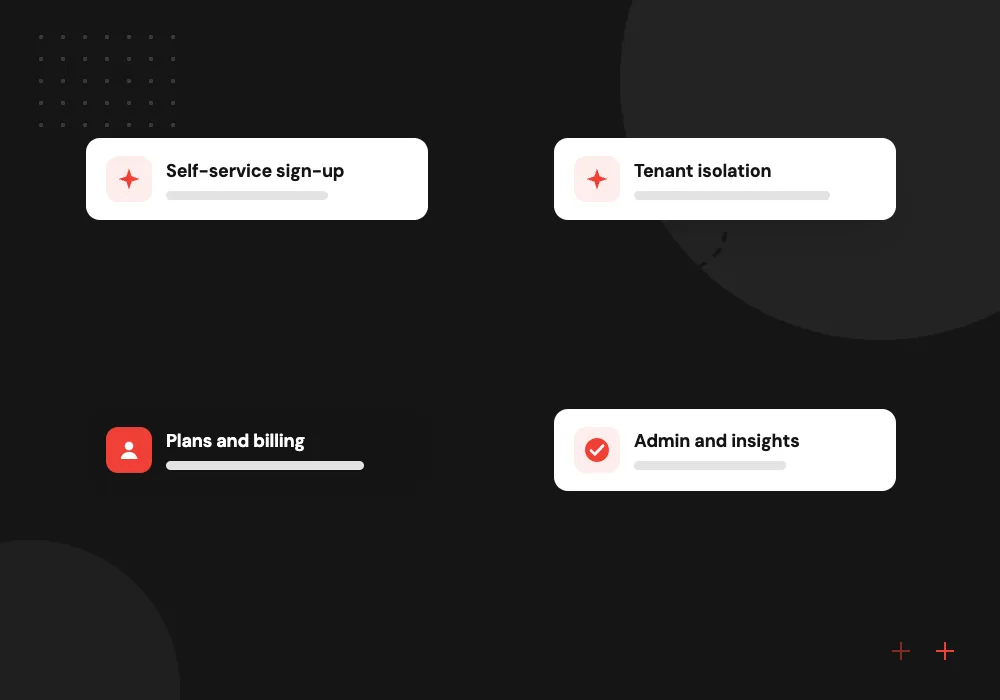
Service turned product
A firm that does work by hand for its clients packages the method as software those clients run themselves.
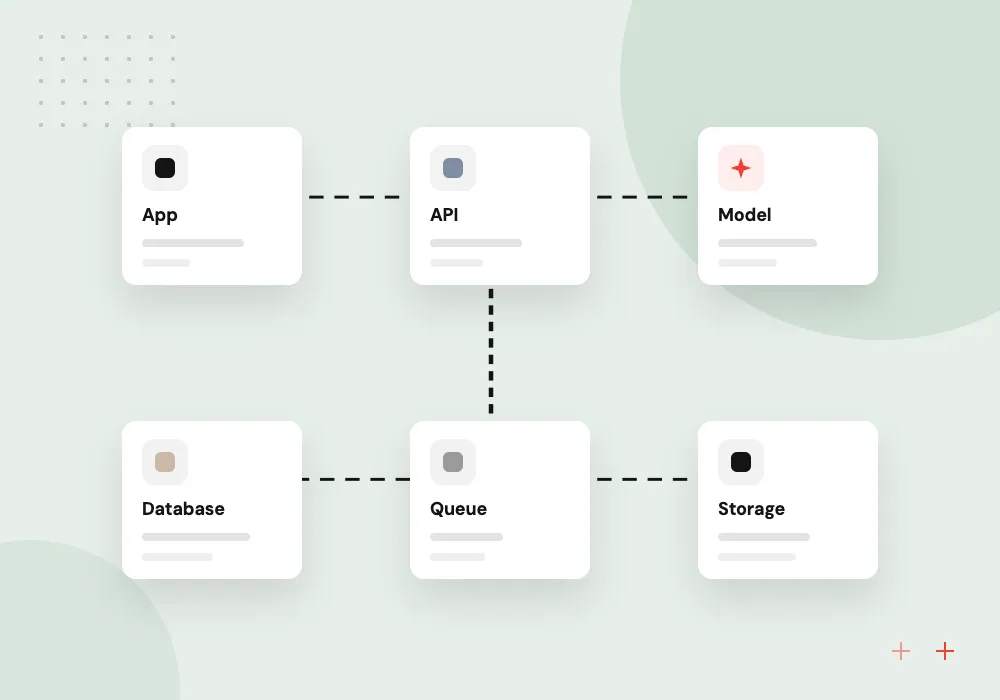
Single-tenant to multi-tenant
A tool built for one customer is restructured so many accounts share one code base and one deployment.
Add-ons and AI features
New modules, integrations or AI-assisted features added to a live SaaS without disrupting current accounts.
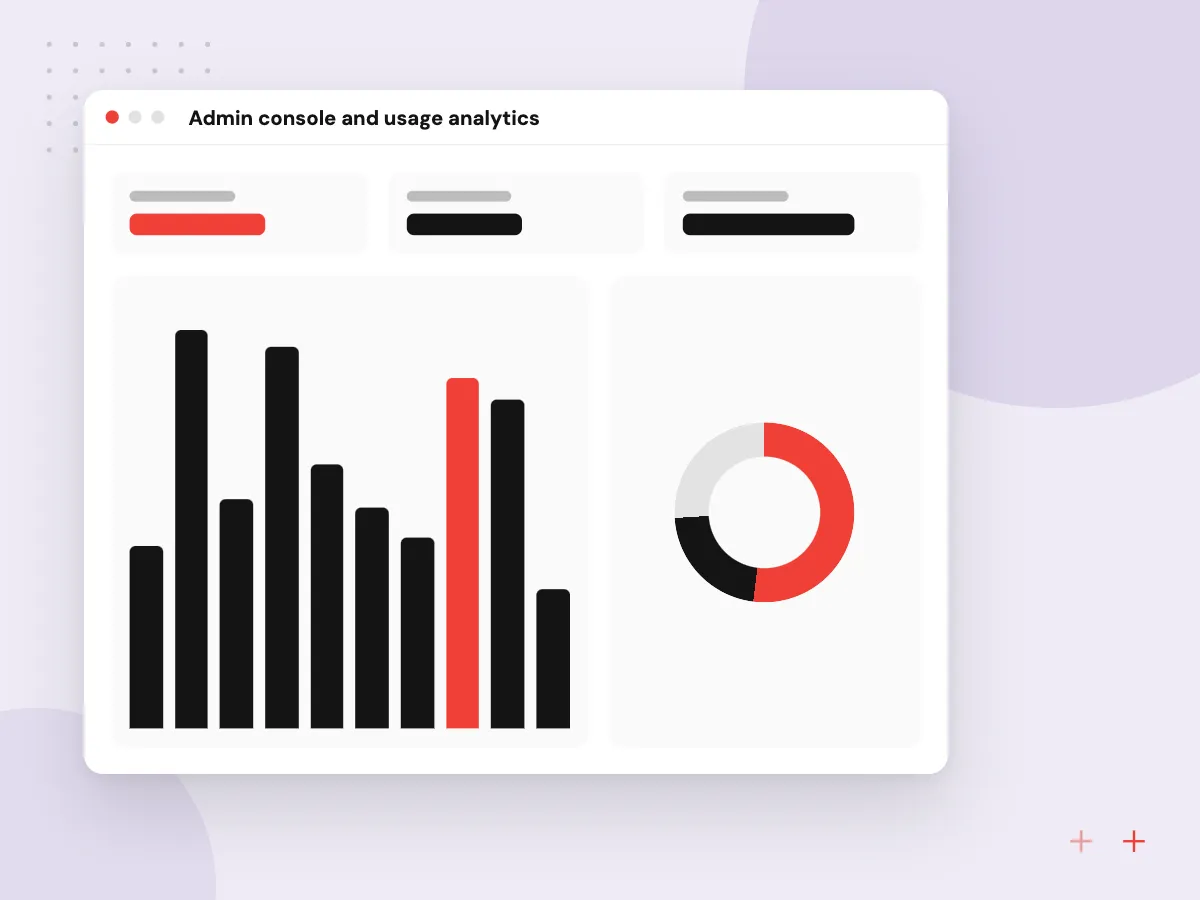
Admin console and usage analytics
Your support and sales staff need their own view of the product. We build an internal console to look up any account, see its plan and usage, sign in as a user with an audit trail and extend trials, plus reports on which features customers really use.
What we do
- Account lookup and plan details
- Support sign-in with audit trail
- Trial and limit adjustments
- Feature adoption reports
- Cancellation reasons collected
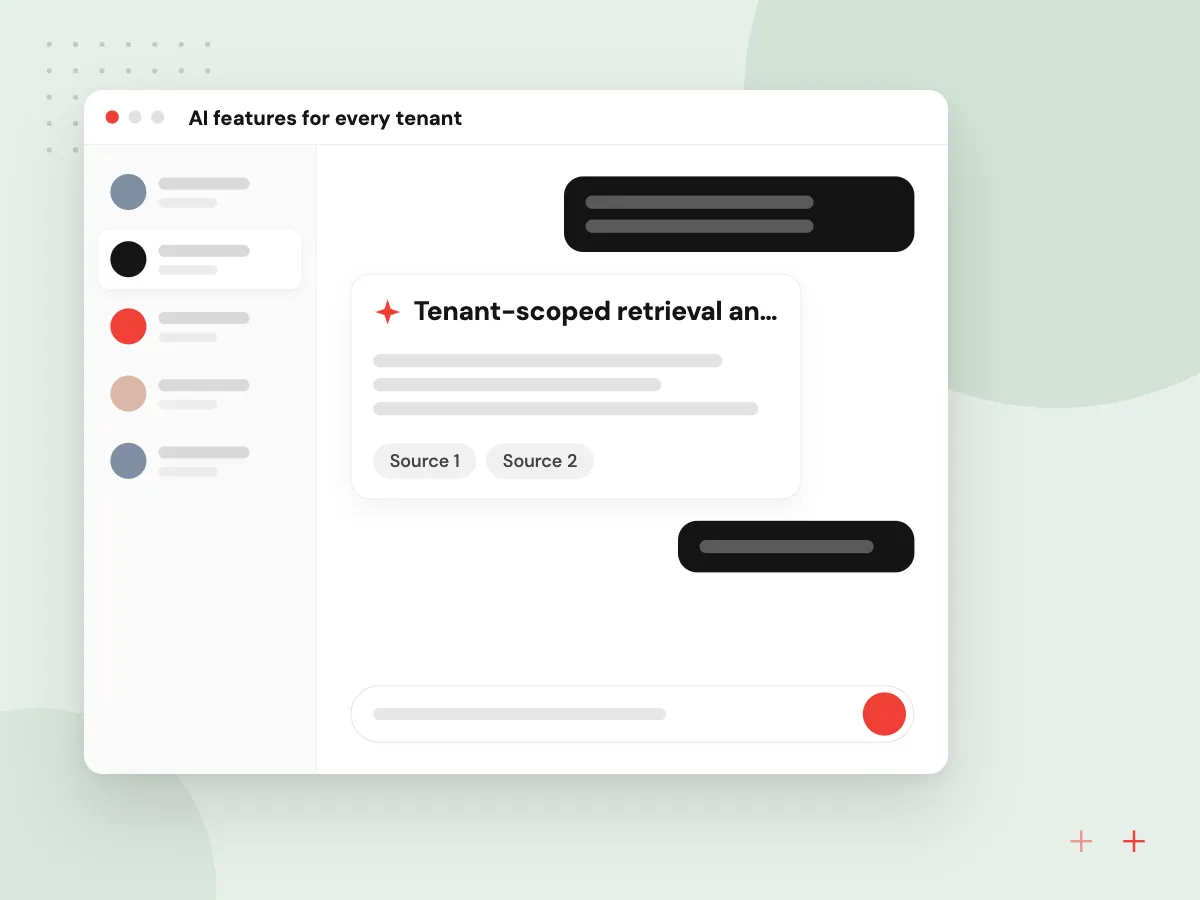
AI features for every tenant
AI inside a SaaS product has to respect the same account boundaries as everything else. We build drafting, summary and search features so each request reads only that tenant’s data, meter usage against plan limits and let account admins switch AI features off.
What we do
- Tenant-scoped retrieval and prompts
- Usage metering per plan
- On and off switch per account
- Model cost tracked by tenant
- Evaluation runs before each release
How we approach a project
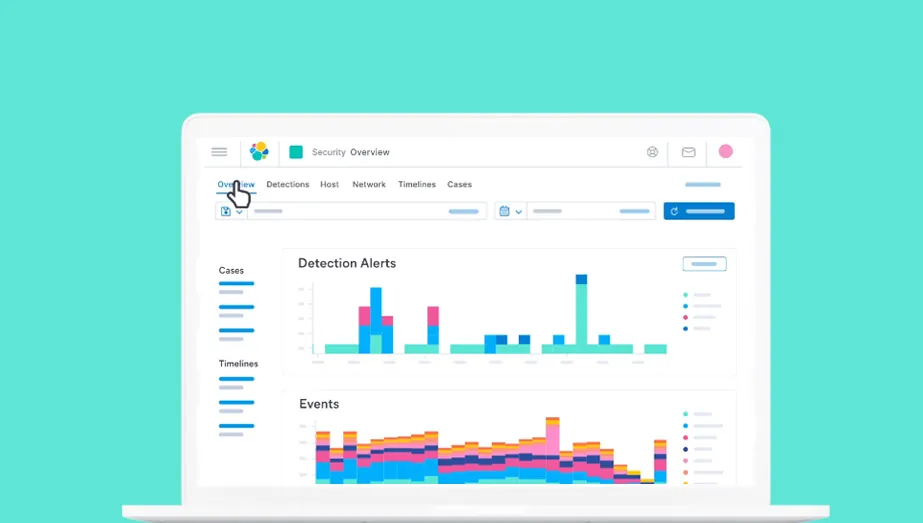
Around that core we build onboarding, roles and invitations, subscription billing, email notifications, audit logs, an internal admin console and usage analytics that show which features customers adopt. Connections to your customers’ own tools, such as their CRM or accounting package, come from our API and integration work.
If the idea is unproven, start smaller with a SaaS MVP: one plan and a narrow feature set, as described under MVP development. As the product grows, DevOps pipelines and cloud infrastructure keep releases frequent and hosting bills under control. SaaS is one branch of our custom software development practice.
Bring your product idea or current architecture to a 30-minute session with our engineers, scheduled from the contact page.
How we work
- Every account kept separate
- Billing tied to product limits
- Ship small, measure, repeat
Our Process
-

Product and pricing model
Agree the target customer, the core workflow, the plan tiers and the limits each plan enforces.
-

Tenant architecture
Choose shared or separate databases, design the tenant model and set up sign-in and roles.
-

Core features and billing
Build the main workflow with billing and onboarding, then invite a handful of pilot customers.
-

Launch and grow
Open public sign-up, track activation and cancellations, and plan releases from real usage data.
Why Aranv for SaaS products
Isolation tested, not assumed
We write tests that try to read one account’s records from another and run them on every build, so a cross-tenant leak shows up before release.
Pricing built into the code
Plans, seats and limits are modeled as product rules from the start, so a pricing change becomes a setting rather than a rewrite.
Releases that protect live accounts
Feature flags and staged rollouts let new work reach a few accounts first, so one release does not surprise every customer at once.
Costs visible per tenant
We track hosting and model spend by account, so you can see which plans cover their costs and adjust pricing with real figures.
Planning SaaS Development?
Book a 30-minute conversation with the team that would build it.
SaaS development FAQs
-
What is multi-tenant SaaS?
It means one running application serves many customer accounts, and the software keeps each account’s data separate. Hosting and upgrades stay simpler than running a copy per customer. Some products give each tenant its own database when buyers need stricter isolation.
-
How long does it take to launch a SaaS product?
A tightly scoped first paid version, with one core workflow, one or two plans and basic admin tools, is usually a matter of months rather than weeks. Heavy integrations or compliance needs add time. We agree a release plan early and revisit it as pilot feedback arrives.
-
Which billing provider should a SaaS product use?
Stripe Billing suits most card-based subscriptions and covers plans, trials, proration and invoices. Paddle acts as merchant of record and deals with sales tax for you. Whichever you pick, we wire billing events into the product so upgrades, downgrades and failed payments change access automatically.
-
Can you take over an existing SaaS code base?
Yes. We begin with a review of tenant isolation, test coverage, dependencies and deployment, then agree a plan that keeps current customers running while the highest risks are fixed first.
-
How do you handle security for a SaaS platform?
We build in role-based access, encryption in transit and at rest, audit logs and tested backups, and we test tenant isolation directly. When your buyers send security questionnaires, we help you answer them accurately. Formal audits are run by your company with an auditor; we build the technical controls they examine.
-
What should a SaaS MVP include?
One core workflow done well, sign-up, a single paid plan, basic roles and enough admin tooling to support early customers. Custom reporting, white-labeling and complex pricing can wait until paying users ask for them.

Let’s talk about your next step
Contact Aranv to discuss your workflow, current tools, and goals. Meet with our team or send an inquiry.
Book a meeting with our team
Choose an available date and time for a 30-minute conversation about your project.
Tell us about your project
Share a few details so we can discuss a useful next step.
Prefer email? sales@aranv.com