


What a Laravel project includes
Aranv is a Laravel development company working with small and midsize businesses. We build new web applications in Laravel and bring older PHP systems up to date, moving them onto supported PHP and Laravel versions without stopping the business that runs on them.
Laravel is a PHP framework with routing, the Eloquent ORM, queues, scheduled tasks, mail, authentication and testing built in. Laravel 13 needs PHP 8.3 or later and adds a first-party AI SDK for features built on language models. The Laravel release notes list the support dates for each version.
A new Laravel build typically includes the data model, screens in Livewire or an Inertia front end with Vue or React, sign-in and roles, queues monitored with Horizon, APIs, automated tests and deployment. We keep business rules in plain PHP classes so they are easy to test and change.
Upgrading an older PHP application
From unsupported PHP to current Laravel
- 01 Inventory the old code Record the PHP version, framework, libraries, cron jobs and server setup.
- 02 Wrap it in tests Feature tests capture current behavior before anything is changed.
- 03 Move in small steps Upgrade PHP and Laravel one version at a time, or migrate module by module.
- 04 Deploy without downtime Automated deploys, queue workers and a rollback plan for every release.
New Laravel projects skip the first two steps and have tests from day one.
Laravel and PHP work we take on
Most PHP work falls into two groups: new products built on Laravel, and older PHP systems that still run the business but are hard to change.
New Laravel applications
Portals, booking systems and SaaS products with Eloquent models, queues, and Livewire or Inertia screens.
Laravel upgrades
Apps on Laravel 10 or 11 moved to Laravel 13 in steps, with packages replaced where needed.
Legacy PHP rescue
Custom PHP 5 or 7 code moved onto PHP 8 and, where it pays off, rebuilt module by module in Laravel.
APIs and integrations
REST or JSON:API endpoints that connect your PHP app to CRMs, payment providers and mobile apps.
AI features in a Laravel app
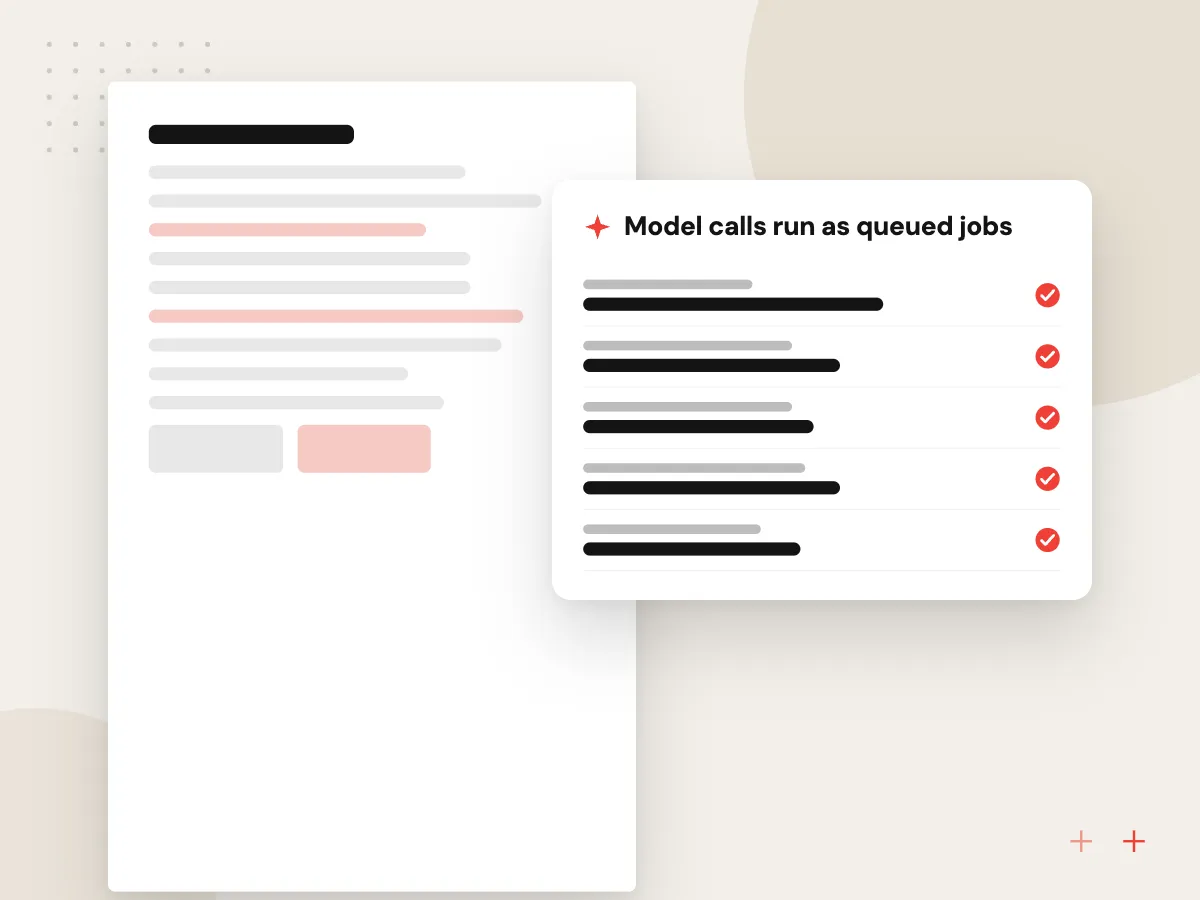
Laravel’s queues suit AI work, because model calls can be slow and should never hold up a page. We add features such as reading uploaded PDFs into form fields, summarizing support tickets, or a search box that answers from your own records, with every model call logged and rate-limited.
What we do
- Model calls run as queued jobs
- PDF and email reading into fields
- Ticket and note summaries
- Search that answers from your records
- Logged prompts, replies and costs
- Rate limits per user or team
Hosting and deploys for Laravel
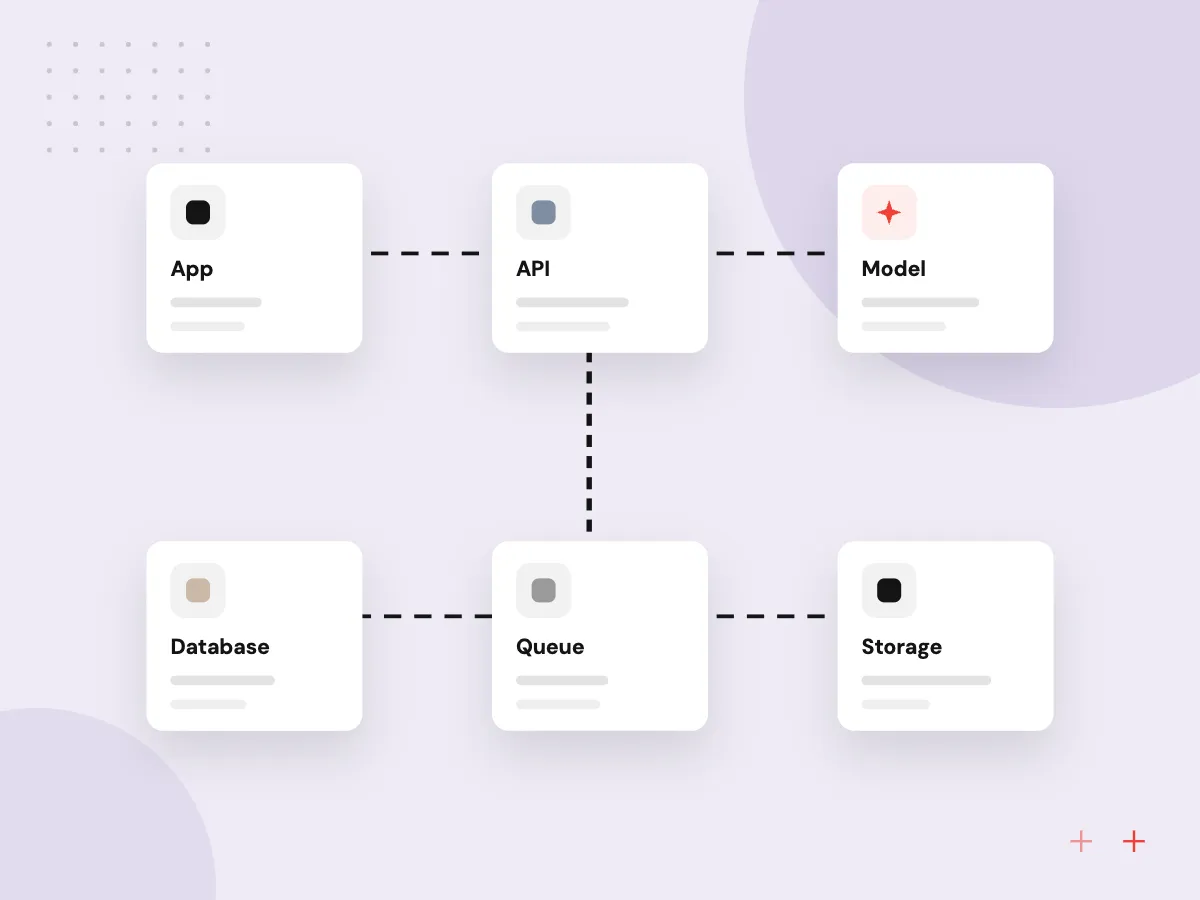
A Laravel app needs more than a web server: queue workers, a scheduler, a cache, file storage and a database you can restore. We set these up on your cloud account or a managed platform, with automated deploys and a tested rollback for each release.
What we do
- Automated deploys from your repository
- Release switching without downtime
- Queue workers watched with Horizon
- Database backups with restore tests
- Error and log monitoring
- Staging copy of production

How we approach a project
Upgrading older PHP. Plenty of business systems still run on PHP versions that no longer get security patches. According to php.net, PHP 7.4 reached end of life in November 2022 and PHP 8.1 on December 31, 2025. We add tests first, then move PHP and Laravel forward one version at a time. Custom PHP without a framework can move into Laravel module by module.
Bigger changes may call for legacy application modernization. Laravel apps often connect to other systems through API integration, and the wider build options are on our web application development and technologies pages.
How we work
- Supported versions only
- Tests before refactoring
- Plain, readable PHP
Our Process
-

Audit and risk list
We check PHP and Laravel versions, Composer packages, server setup and security gaps, then rank the risks.
-

Agree an upgrade or build path
You choose between an in-place upgrade, a phased rebuild or a new app, with the trade-offs written down.
-

Short cycles with staging releases
Each cycle ends with a staging release that your team checks against real daily tasks.
-

Release, monitor and patch
We deploy with rollbacks ready, monitor errors and queues, and apply Laravel and PHP security releases.
Why Aranv for Laravel and PHP
Behavior recorded before upgrades
Before old code is touched, we write feature tests around the screens and reports staff depend on, so each upgrade step is checked against what the system does today.
Few packages, well chosen
We favor Laravel’s own features and actively maintained packages, which keeps future upgrades short and lets another PHP developer pick the code up easily.
Customer data masked in copies
Database copies used for development have names, emails and payment details masked, so upgrade work does not expose your customers’ information.
Straight advice on rebuilds
If an in-place upgrade costs less than a rebuild and leaves you on supported versions, we recommend it, even when a rebuild would be the larger project for us.
Planning Laravel and PHP Development Services?
Book a 30-minute conversation with the team that would build it.
Laravel and PHP FAQs
-
Is Laravel a good choice for a new business application?
Yes, for most web applications with accounts, forms, workflows and reports. Laravel includes most of what these apps need, runs on standard PHP hosting or in containers, and has a large pool of PHP developers who can maintain it later.
-
How do we know if our Laravel app needs an upgrade?
Compare the version in your composer.json with the Laravel support table. Each release gets 18 months of bug fixes and 2 years of security fixes, so as of late 2026 anything older than Laravel 12 no longer receives security patches.
-
Can you upgrade an old custom PHP site without a rebuild?
Often, yes. We first get the code running on a supported PHP 8 version, fixing deprecated functions and unsafe database calls. You can then decide whether to keep improving it in place or move parts into Laravel.
-
What does a Laravel development company need from us to start?
Access to the code repository, a copy of the database with personal data masked, server or hosting access, and a person who knows how the system is used day to day.
-
Should we choose Laravel or a JavaScript back end like Node.js?
Laravel suits teams that already have PHP code or developers, and apps built around forms, data and workflows. Node.js suits real-time features and teams writing JavaScript on both sides. Both are mature options for business software.
-
Do you offer PHP development services after the upgrade or launch?
Yes. Ongoing maintenance covers security releases, dependency updates, monitoring and small changes, so the app does not fall behind again.

Let’s talk about your next step
Contact Aranv to discuss your workflow, current tools, and goals. Meet with our team or send an inquiry.
Book a meeting with our team
Choose an available date and time for a 30-minute conversation about your project.
Tell us about your project
Share a few details so we can discuss a useful next step.
Prefer email? sales@aranv.com