


What a headless commerce build includes
Aranv builds headless ecommerce storefronts for brands that have outgrown their theme. We put a custom front end, usually React or Next.js, on the commerce engine you choose, so pages load fast, content comes from your CMS and one catalog serves every channel.
A headless commerce platform splits the shop into parts that talk through APIs: the commerce engine for products, carts and orders, a CMS for content, and the front end customers see. Composable commerce goes further and picks a separate service for search, reviews or promotions. We keep the number of parts as small as the business allows, because each extra service adds a bill and more upkeep.
Headless Shopify is a common starting point for small and midsize brands. The Storefront API supplies catalog data, search results and cart actions to your own front end, and Hydrogen, Shopify’s headless toolkit, can sit inside a Next.js or React Router app. Checkout still runs on Shopify. Store setup itself is covered under Shopify development.
How a headless store is put together
Front end, APIs and commerce engine
- 01 Commerce engine Shopify, Adobe Commerce or another engine keeps products, carts, orders and checkout.
- 02 Content from a CMS Editors manage landing pages, guides and stories in a headless CMS.
- 03 Custom front end A Next.js or Hydrogen storefront pulls both sources together and renders pages quickly.
- 04 Cached near shoppers Pages are served from edge locations, with a preview link for every change.
Headless adds moving parts, so we recommend it only when a theme cannot do the job.
When headless commerce makes sense
Headless is a bigger build than a theme. These are the cases where we think it earns its cost.
Content-led brands
Editorial pages, lookbooks and buying guides managed in a CMS, with shoppable products placed wherever they fit.
Several storefronts
Separate brands, regions or trade and retail fronts that share one product catalog and one order system.
Product configurators
Builders for print-on-demand or made-to-order products that need an interface no theme can offer.
Apps and new channels
The same commerce APIs feed a mobile app, in-store screens or a logged-in customer portal.
Configurators for made-to-order products
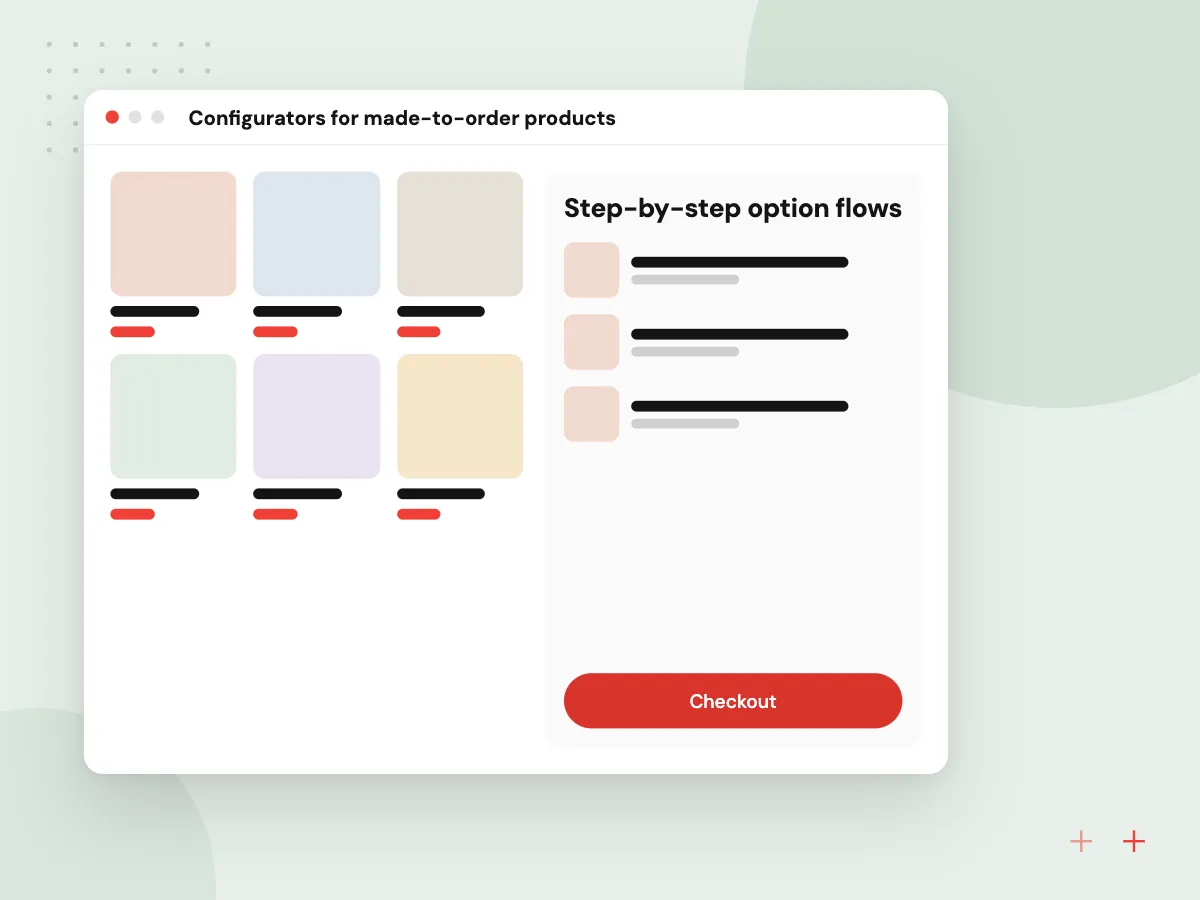
When shoppers pick sizes, materials, artwork or print positions, a standard product page runs out of room. We build step-by-step builders with a live preview and prices that update as options change, then pass every choice to the commerce engine on the order line so production receives a complete order.
What we do
- Step-by-step option flows
- Live preview of the design
- Prices that follow each option
- Artwork upload with file checks
- Choices saved on the order line
AI search and suggestions on headless
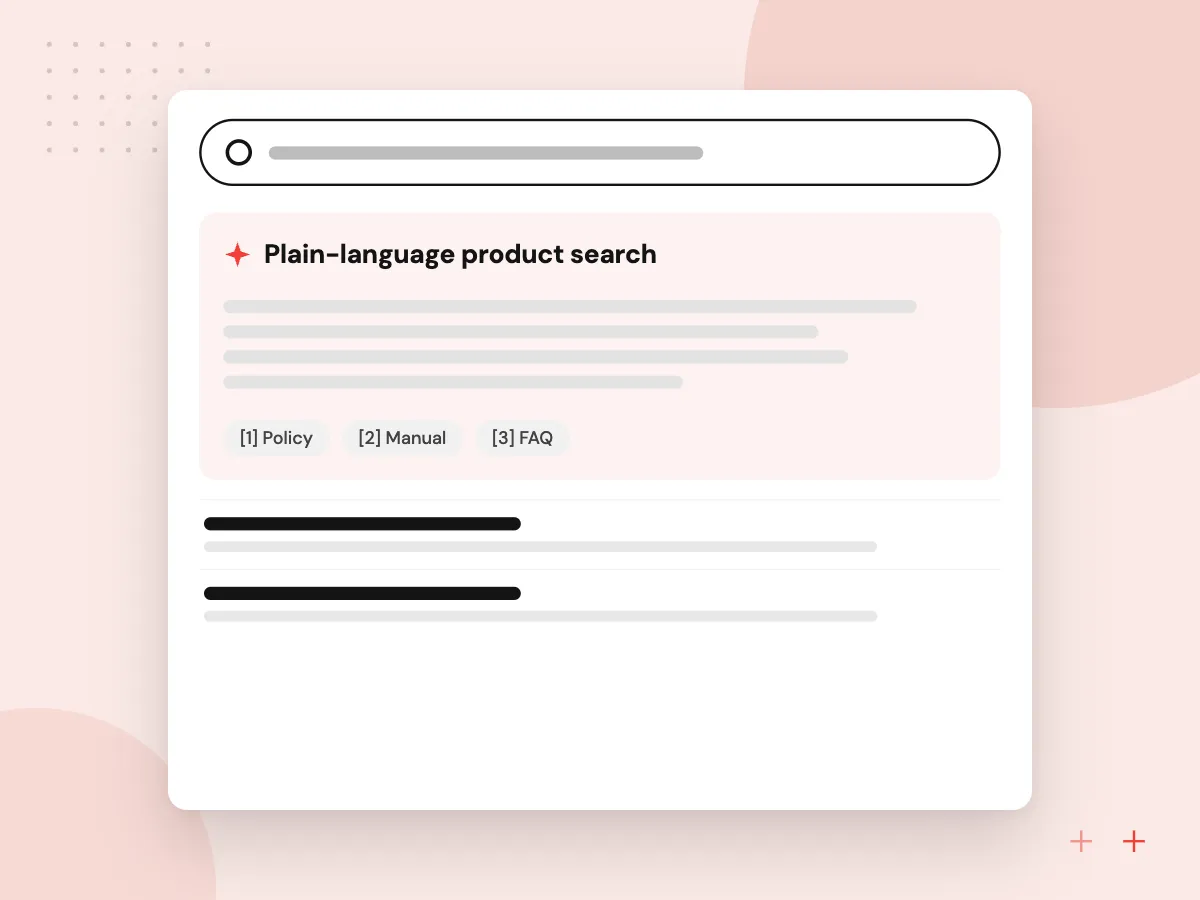
A custom front end makes it easier to place AI where shoppers need help. We connect search that understands plain-language queries, suggestions drawn from browsing and order history, and a product assistant that answers from your catalog and policies, each tested against your real search terms before launch.
What we do
- Plain-language product search
- Suggestions from order history
- Assistant answering from catalog data
- Report of searches with no results
- Tests on your real queries

How we approach a project
Speed is often the reason to go headless, so we measure it rather than assume it. Google’s Core Web Vitals give targets for loading, responsiveness and layout stability, judged at the 75th percentile of real visits. We agree those targets at the start and test them on mid-range phones before launch.
Front ends draw on the same skills as our Next.js development and React development work. Our wider team built a headless print-on-demand store for a custom packaging business in New Zealand, listed as Project 06 on our case studies page. Headless builds sit within our eCommerce development services.
How we work
- Headless only when it pays back
- Checkout stays with the platform
- Speed measured on real phones
Our Process
-

Prove the case
We check whether a theme could meet your goals first, and plan headless only if it clearly cannot.
-

Choose the stack
Commerce engine, CMS, front-end framework and hosting are agreed, along with the monthly cost of running each part.
-

Build page by page
Product, collection, cart and content pages are built against live APIs, with speed checked on every release.
-

Launch with a fallback
Redirects, analytics and checkout are tested end to end, and the old storefront stays ready until traffic settles.
Why Aranv for headless commerce
We say when a theme wins
If a well-built theme meets your goals, we quote that instead, because headless adds hosting, CMS and upkeep costs that a theme avoids.
Checkout left to the platform
Payments and checkout stay on the commerce engine, so card handling, tax and fraud tools remain with a provider built for them while we own the browsing experience.
Editors keep control
Content blocks are designed with your marketing team, so they can assemble and preview landing pages in the CMS without asking a developer for each change.
Search traffic planned for
Redirect maps, metadata and structured data are prepared before launch, giving the old storefront’s search visitors a clear path to the new URLs.
Planning Headless Commerce Development?
Book a 30-minute conversation with the team that would build it.
Headless commerce FAQs
-
What is headless ecommerce?
It is a setup where the storefront customers see is built separately from the commerce engine that handles products, carts and orders. The two connect through APIs, so you can change the front end freely without touching checkout or order data.
-
Is headless Shopify worth it for a small brand?
Often not. A good Shopify theme is cheaper to build and run, and staff can edit it without developers. Headless pays off when content, speed targets or a custom product builder go beyond what a theme can handle.
-
What is the difference between headless and composable commerce?
Headless separates the front end from the commerce engine. Composable goes further and assembles the whole stack from separate services, such as search, CMS, promotions and payments. It gives more choice, but also more contracts and integrations to manage.
-
Will a headless store rank well in Google?
It can, if pages are rendered on the server, links and metadata are handled properly and redirects are planned. We build with server rendering and check structured data, sitemaps and page speed before launch.
-
Can our marketing team still edit pages?
Yes. Content lives in a headless CMS with previews, so editors assemble landing pages from approved blocks. Product data stays in the commerce platform where your merchandisers already work.
-
What does a headless store cost to run each month?
Expect several bills instead of one: the commerce platform, the CMS, front-end hosting and any extra services, plus developer time for updates. We list every running cost in the proposal so nothing comes as a surprise.

Let’s talk about your next step
Contact Aranv to discuss your workflow, current tools, and goals. Meet with our team or send an inquiry.
Book a meeting with our team
Choose an available date and time for a 30-minute conversation about your project.
Tell us about your project
Share a few details so we can discuss a useful next step.
Prefer email? sales@aranv.com