


What DevOps consulting includes
Aranv offers DevOps consulting services for small and midsize software teams: CI/CD pipelines, infrastructure as code, monitoring and release automation on AWS, Azure, Google Cloud or your own servers, so changes reach production more often, fail less and are quick to roll back.
We begin by tracing how code travels from a developer’s laptop to production today: branching, build steps, environments, secrets, backups and who is allowed to deploy. The result is a short written plan that ranks fixes by risk and effort, so you can act on the first items without signing up for a large program.
Typical work covers CI/CD pipelines, infrastructure as code, container builds, secrets management, database migrations inside the release, monitoring, central logging and cost tagging. We work on AWS, Microsoft Azure and Google Cloud, and on a plain virtual server when a full cloud platform would be more than the application needs.
What a delivery pipeline does
From commit to production
- 01 A commit starts the build Each push builds the application and runs the unit tests.
- 02 Checks before merge Linting, dependency scans and tests must pass before code reaches main.
- 03 One build, three environments The same artifact moves from test to staging to production, with approvals.
- 04 Watch and roll back Alerts flag problems, and the previous release can be restored in one step.
We use the CI tool you already pay for where it fits: GitHub Actions, GitLab CI or Azure Pipelines.
DevOps automation we set up
Most teams arrive with one painful step: manual releases, fragile servers or no alerting at all.
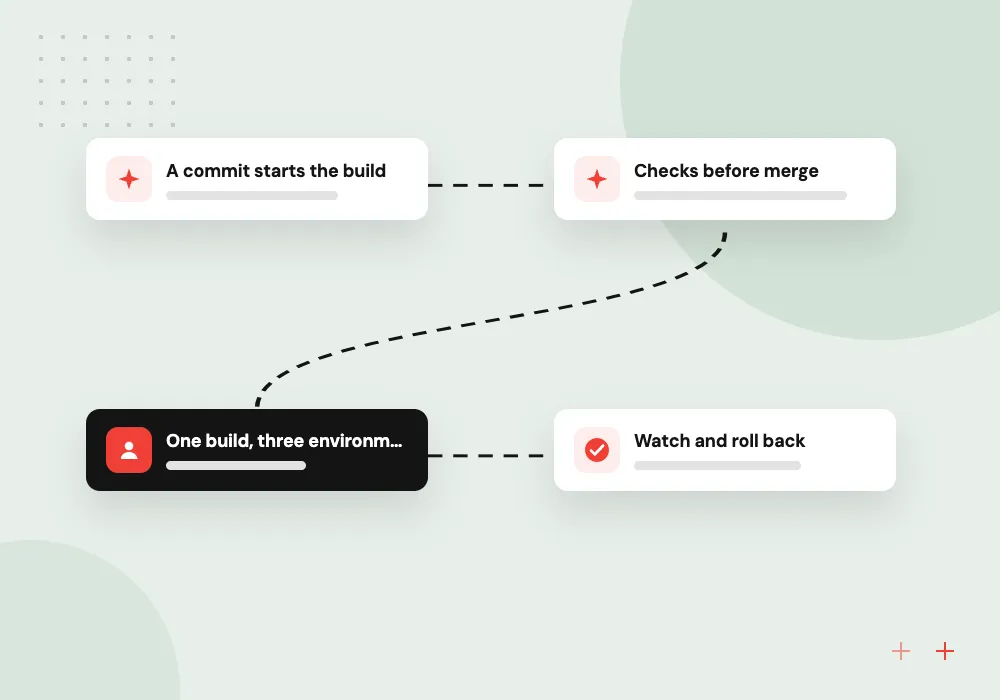
CI/CD pipeline setup
Builds, tests and deployments triggered by each merge, replacing the checklist someone runs by hand late on a Friday.
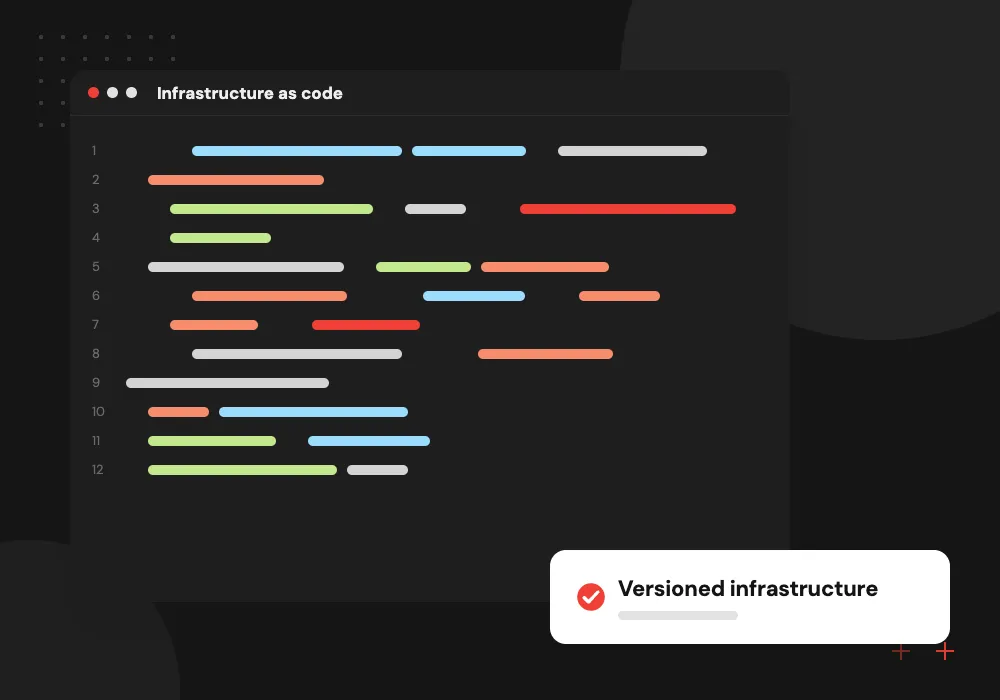
Infrastructure as code
Servers, databases and networks defined in Terraform or OpenTofu and reviewed like any other code change.
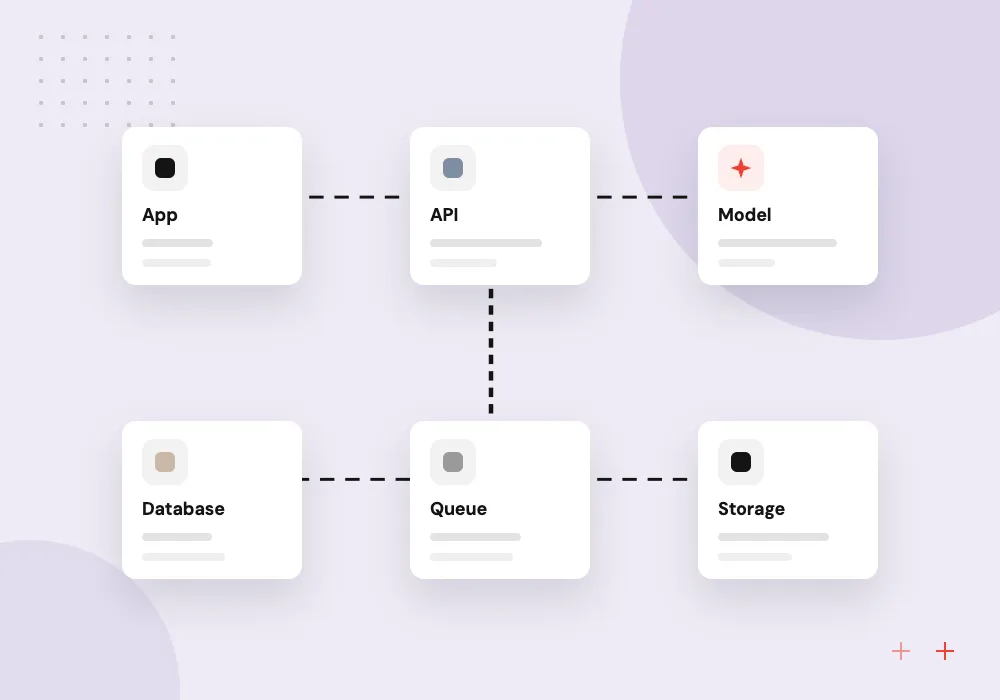
Containers and preview environments
Docker images and short-lived environments, so each branch can be checked before it merges.
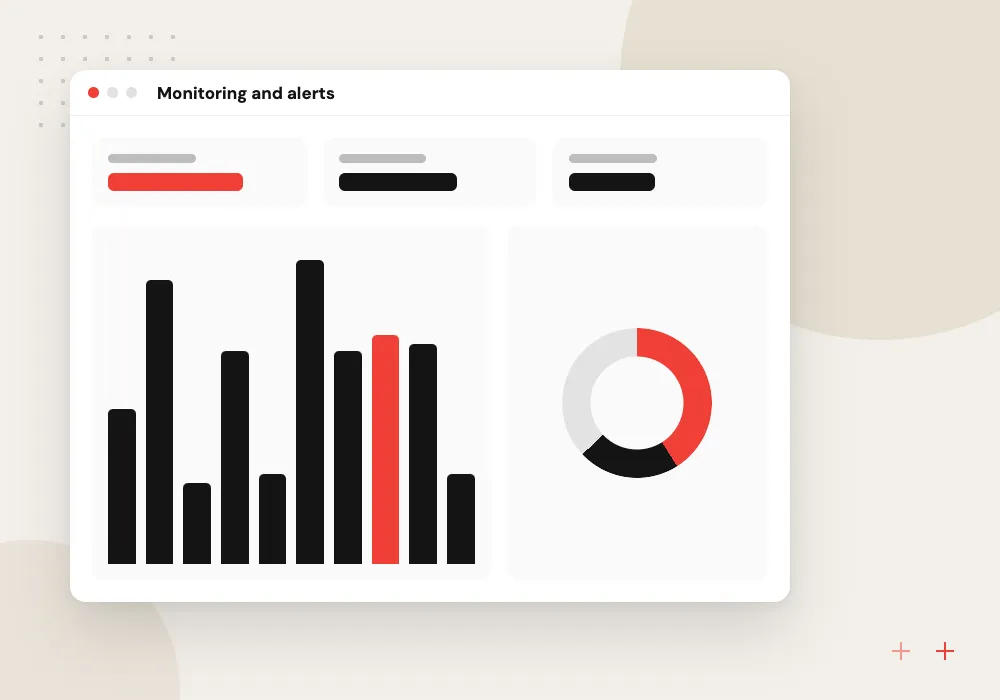
Monitoring and alerts
Logs, metrics, uptime checks and on-call alerts that point straight to the failing service.
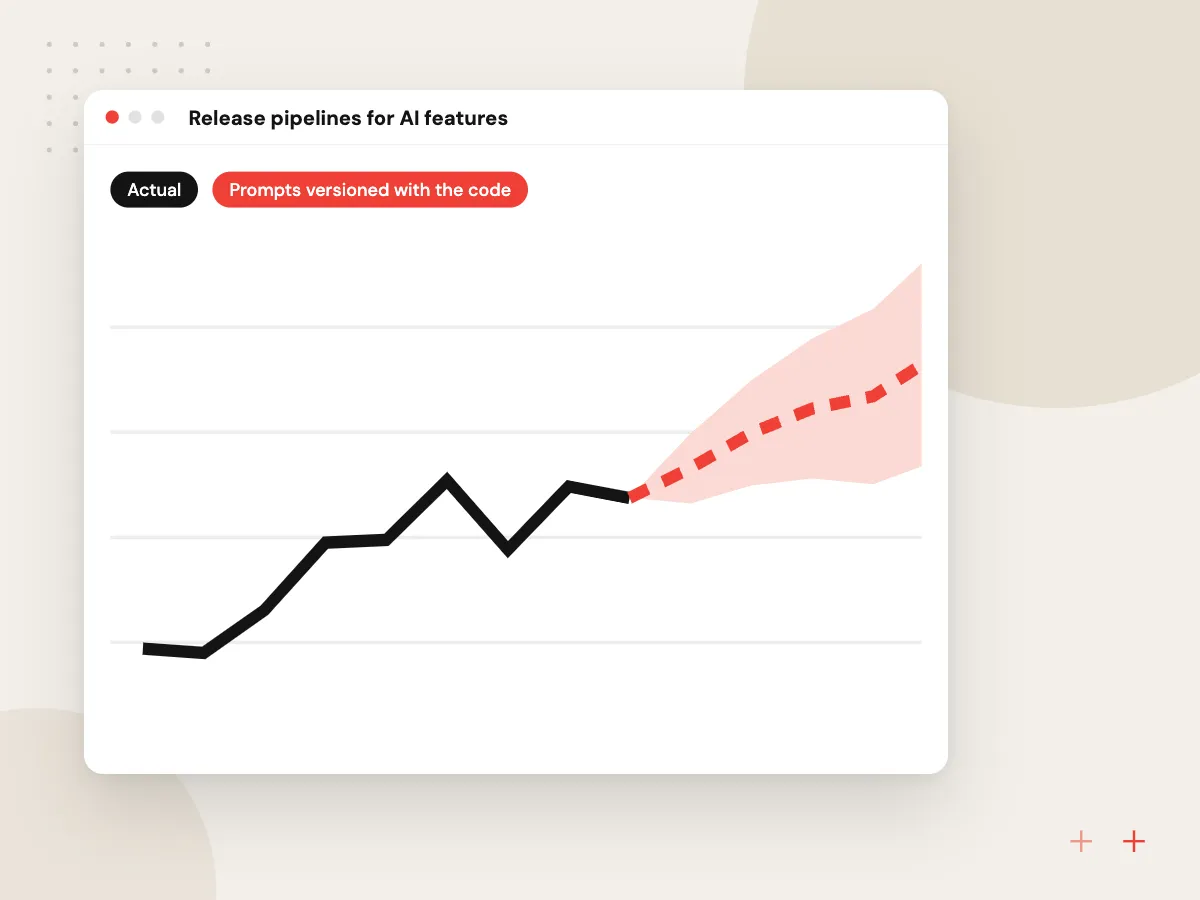
Release pipelines for AI features
Applications that call language models need a few extra steps in the release path. Prompts and model settings are versioned with the code, an evaluation set runs on every change and blocks the merge when answer quality drops, and alerts fire when token spend or response time moves outside the range you set.
What we do
- Prompts versioned with the code
- Evaluation run before each merge
- Model version pinned per environment
- Token spend and latency alerts
- Rollback to the last good prompt
Backups you have actually restored
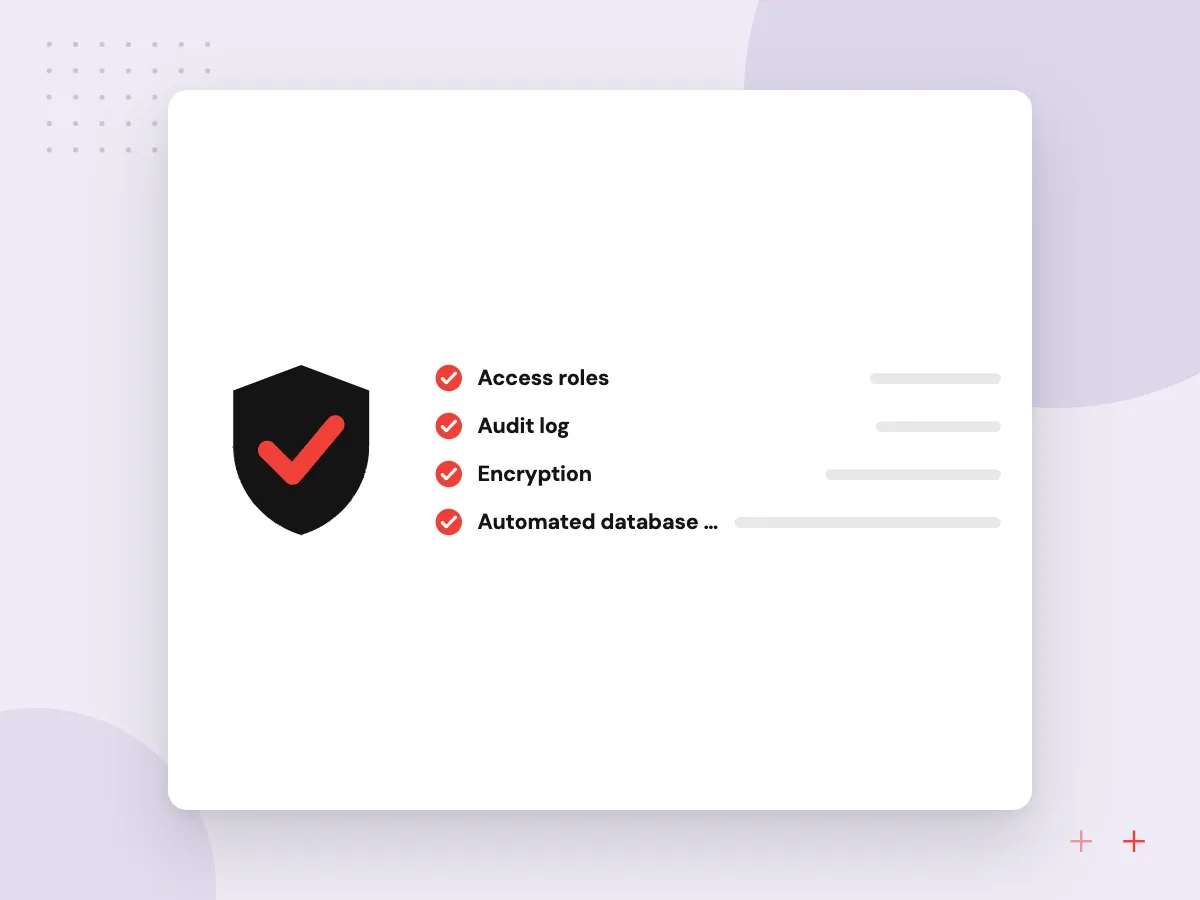
A backup only counts once it has been restored. We set up automated backups for databases and file storage, keep copies in a separate account or region, and run restore drills on a schedule so you know how long recovery takes and how much recent data could be lost.
What we do
- Automated database and file backups
- Copies in a separate account
- Scheduled restore drills
- Recovery time written down
- Alerts when a backup fails
How we approach a project
Progress is tracked with the delivery metrics from Google Cloud’s DORA research program: how long a change takes to reach users, how often you deploy, how often a deployment fails or needs rework, and how fast service comes back. We record a baseline in the first weeks so later gains are visible.
DevOps sits inside our cloud computing services. If you are leaving on-premises hardware first, start with cloud migration; if releases break because tests are thin, pair the pipeline with automated testing. Model connections for AI features are covered under LLM integration.
We recommend that cloud and tooling accounts belong to your organization, so you keep control if suppliers change. After handover we can stay on for monitoring and updates, or step back.
How we work
- Every change goes through the pipeline
- Infrastructure written as code
- Measure delivery, not effort
Our Process
-

Pipeline and infrastructure audit
Map the release path, environments, secrets and backups, and record baseline delivery metrics.
-

Fix the riskiest step
Automate the most error-prone manual task first, often deployment or backups.
-

Codify and standardize
Move infrastructure into code, add staging and preview environments, and tighten access.
-

Hand over or keep running
Runbooks and training for your developers, or ongoing monitoring and updates from us.
Why Aranv for DevOps
Tooling sized to your team
A small development team should not end up maintaining a platform built for hundreds of engineers. We pick managed services and simple setups whenever they cover your uptime needs.
Access tightened along the way
Deploy rights, production access and cloud roles are reviewed as part of the work, and accounts belonging to people who have left are closed.
Infrastructure changes previewed
Every infrastructure change goes through a pull request with the planned changes attached, so your team sees exactly what will be created or removed before it happens.
Runbooks for the bad night
Recurring tasks, from restoring a database to rotating a secret, get short runbooks in plain terms that a developer can follow at night without calling us.
Planning DevOps Consulting Services?
Book a 30-minute conversation with the team that would build it.
DevOps FAQs
-
What do DevOps consulting services include?
An audit of how you build, test and release software, followed by pipelines, infrastructure as code, monitoring and access controls. The goal is releases that feel routine and can be reversed, run by your own developers or by us.
-
How long does a CI/CD pipeline setup take?
For one application that already has tests, a basic pipeline is a fairly small job. Several services, missing tests, database changes or strict approval rules add time. We estimate after the audit, once we have seen the repository and environments.
-
Do we need Kubernetes?
Often not. Kubernetes suits companies running many services with people to operate the cluster. Many applications run well on managed options such as Amazon ECS with Fargate, Azure App Service or Google Cloud Run. We recommend the simplest setup that meets your uptime needs.
-
Can you work with our existing developers?
Yes. Most of the work happens alongside your team: we pair on pipeline changes, review their infrastructure pull requests and write runbooks in plain terms. The aim is that your developers can run and change the setup without us.
-
Which cloud provider should we use?
Usually the one you already use, unless there is a clear reason to move. AWS, Azure and Google Cloud all support the practices on this page. Existing Microsoft licensing, team skills and the managed services you need matter more than small price differences.
-
How do you keep secrets safe in a pipeline?
Secrets live in a managed store such as AWS Secrets Manager, Azure Key Vault or your CI provider’s encrypted settings, never in the repository. Deploy rights follow roles, production changes need approval, and access is reviewed when people join or leave.

Let’s talk about your next step
Contact Aranv to discuss your workflow, current tools, and goals. Meet with our team or send an inquiry.
Book a meeting with our team
Choose an available date and time for a 30-minute conversation about your project.
Tell us about your project
Share a few details so we can discuss a useful next step.
Prefer email? sales@aranv.com