


What an AI voice agent project includes
Aranv builds an AI voice agent for your business phone line that answers calls, books appointments, takes messages and transfers callers to the right person. It suits clinics, home service companies and offices in the US that miss calls after hours or at busy times.
A voice agent has three parts: the phone connection, the speech and language models, and the links to your business systems. Calls arrive over a SIP trunk or a cloud telephony provider’s programmable voice API, and audio streams to the agent in real time.
We write the call logic as goals and rules rather than a fixed tree: what the agent may answer, what it must never say, when to transfer and how to read back names, dates and addresses. Answers about hours, services and policies come from a knowledge base your staff can edit, built as in our RAG and knowledge search work.
How a call moves through the voice agent
From first ring to logged call
- 01 Call reaches the agent Your number forwards to the agent, or rings staff first and overflows to it.
- 02 Speech becomes a request The agent transcribes the caller, works out the need and asks short follow-up questions.
- 03 Action in your systems It checks open times, books the slot or logs a message in your CRM.
- 04 Handoff or summary Complex calls transfer to a person, and every call ends with a written summary.
Transfer rules, after-hours handling and recording notices are agreed with your team before launch.
Where an AI receptionist helps
Most calls to a small business are a handful of repeat requests. Those are the calls an AI phone receptionist handles well.
After-hours answering
Night and weekend calls get answered. Urgent ones page the on-call person and the rest become callbacks.
Appointment booking
The agent offers open times from your scheduling system, books the visit and handles reschedules and cancellations.
Spoken call routing
Instead of a keypad menu, callers say what they need and reach sales, billing or service directly.
Overflow at peak times
When every line is busy, the agent picks up, collects details and queues a callback for your staff.
Recordings, transcripts and who sees them
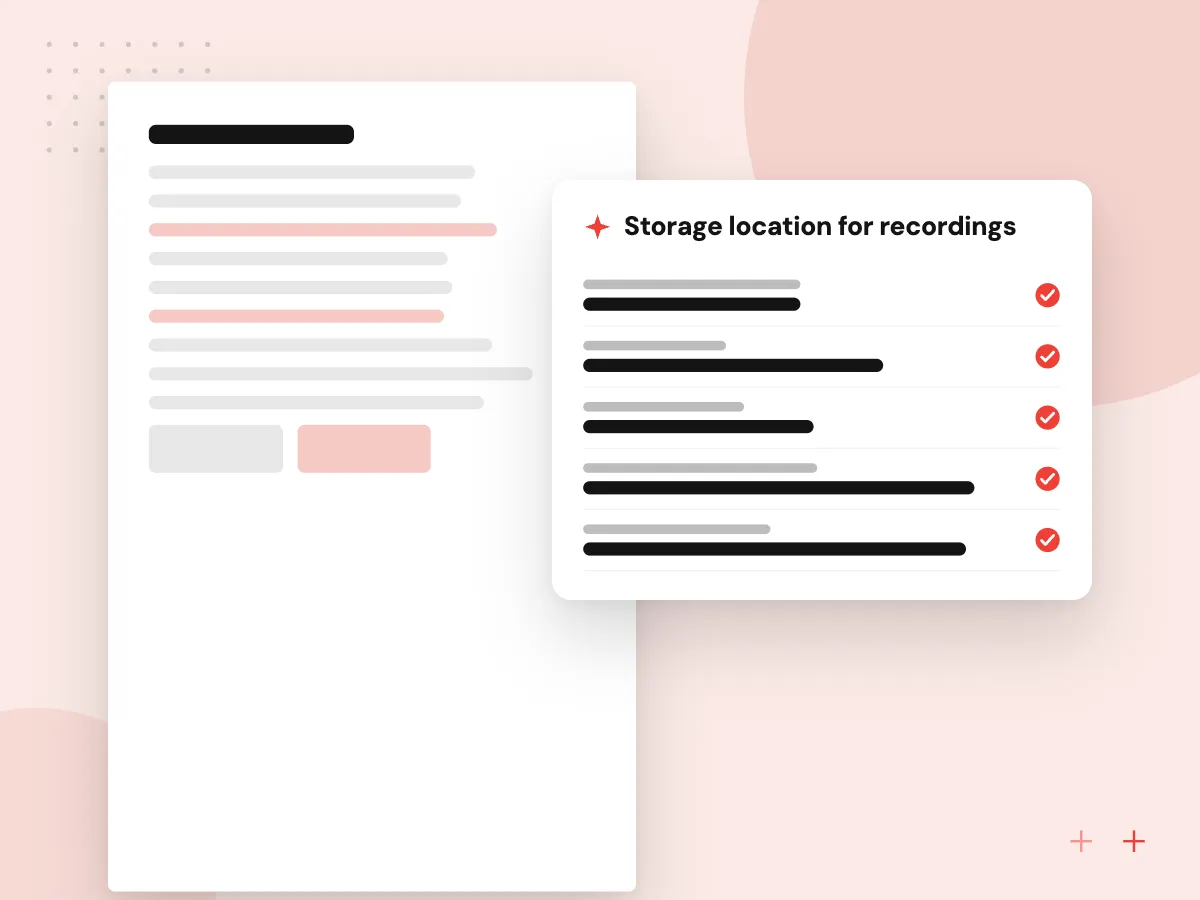
Each call produces audio, a transcript and a summary, and each needs a home and a retention period. We agree with you where recordings are stored, how long they are kept, which staff can play them and whether card numbers or health details are masked before a transcript is saved.
What we do
- Storage location for recordings
- Retention period you set
- Role-based access to transcripts
- Masking of card and health details
- Summary saved to CRM or helpdesk
Warm transfers with a handoff note
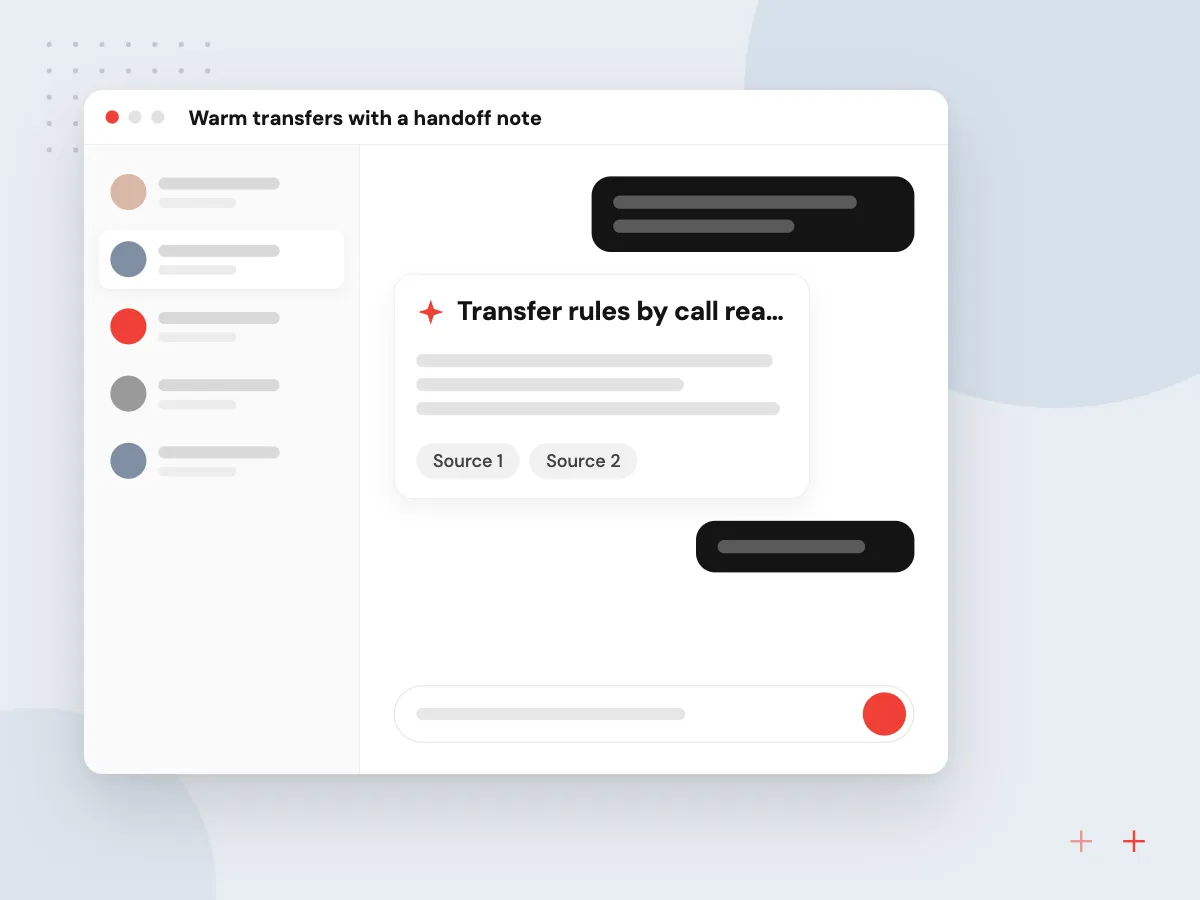
When a caller needs a person, the agent says who it is connecting them to and gives that staff member a short note first: the caller’s name, the reason for calling and the details already collected. If nobody answers, the caller picks a callback or a message.
What we do
- Transfer rules by call reason
- Handoff note spoken or on screen
- Ring groups and on-call numbers
- Callback list when lines are busy
- Messages sent to the right inbox

How we approach a project
Integrations do the useful work. The agent can read and write appointments in your scheduling tool, create a lead or ticket in your CRM and send a text confirmation. Business texting from a US local number needs carrier registration, known as 10DLC, which we complete with you. For back-office steps after the call, see AI workflow automation.
Phone rules apply. The FCC treats AI-generated voices as artificial under the TCPA, so outbound calls need the same consent as prerecorded calls. If you need a website or internal chat assistant instead, our AI chatbot development service covers it.
How we work
- Callers can always reach a person
- Short, natural spoken answers
- Every call logged and reviewable
Our Process
-

Call review
We listen to sample recordings or read call logs, then list the most common request types and the calls that must reach a person.
-

Logic and integrations
We write the agent’s goals, rules and transfer paths, and connect it to your calendar, CRM and phone system on a test line.
-

Staff test calls
Your team calls the test number with real scenarios, accents, background noise and interruptions until answers and handoffs sound right.
-

Live in stages
We start with after-hours or overflow calls, review transcripts weekly, then widen the agent’s role as results hold up.
Why Aranv for voice agents
Built from your real calls
Call logic is written from recordings or logs of your own calls, so the agent is ready for the questions, names and addresses your callers actually give.
A person is always reachable
Callers can ask for staff at any point, and calls about emergencies, complaints or payments transfer straight away under rules you approve.
Phone rules set before launch
Recording notices, AI disclosure and consent for outbound calls are agreed with you before go-live, following FCC guidance and the recording laws of the states involved.
Results land in your tools
Bookings, leads and messages go into the calendar and CRM your team already checks, so a call handled at midnight is waiting in the morning queue.
Planning AI Voice Agent Development?
Book a 30-minute conversation with the team that would build it.
AI voice agent FAQs
-
How much does an AI phone answering service cost to build?
Cost depends on the number of call types, the systems the agent connects to and your call volume, since speech and model usage are billed by the minute or by the token. We give a scoped estimate after reviewing a sample of your calls.
-
Will callers know they are talking to an AI?
They should. We recommend the agent says early in the call that it is an automated assistant and offers a person on request. Being clear up front keeps callers patient and avoids complaints later.
-
Can an AI receptionist transfer calls to my staff?
Yes. It can do a warm transfer, passing a short summary to the person before connecting the caller, or send the call to a queue. If nobody picks up, it takes a message for the right person.
-
What happens if the agent does not understand the caller?
It asks once more in different words, then offers a transfer or a callback. We read the transcripts of failed calls each week and add the missing answers or rules.
-
Can we keep our existing phone number?
Yes. Most businesses forward calls from their current number, all the time, after hours or when lines are busy. Porting the number is possible but rarely needed.
-
Is an AI voice agent the same as an IVR?
No. A traditional IVR plays a menu and waits for keypresses. A voice agent understands spoken requests, asks follow-up questions and completes tasks such as booking, so callers do not have to fit their need into a menu.

Let’s talk about your next step
Contact Aranv to discuss your workflow, current tools, and goals. Meet with our team or send an inquiry.
Book a meeting with our team
Choose an available date and time for a 30-minute conversation about your project.
Tell us about your project
Share a few details so we can discuss a useful next step.
Prefer email? sales@aranv.com