


More AI terms, defined
Aranv’s AI glossary gives business owners and managers plain definitions of the terms they meet when buying AI software, from AI agents, LLMs and RAG to tokens, guardrails and the Model Context Protocol, each tied to the service where it applies.
Prompt, tokens and context window. A prompt is everything sent to a model: instructions, the question and any documents. Models read and write in tokens, chunks of text often smaller than a word, and providers bill by the token. The context window is the most tokens a model can handle in one request, reply included, and filling it well is part of LLM integration.
Embeddings and vector databases. An embedding is a list of numbers that captures the meaning of a passage, so texts on the same topic sit close together even with different wording. A vector database stores these lists and finds the ones nearest to a question. Together they are the search layer behind RAG and knowledge search, a term that comes from a 2020 research paper.
How the main terms fit together
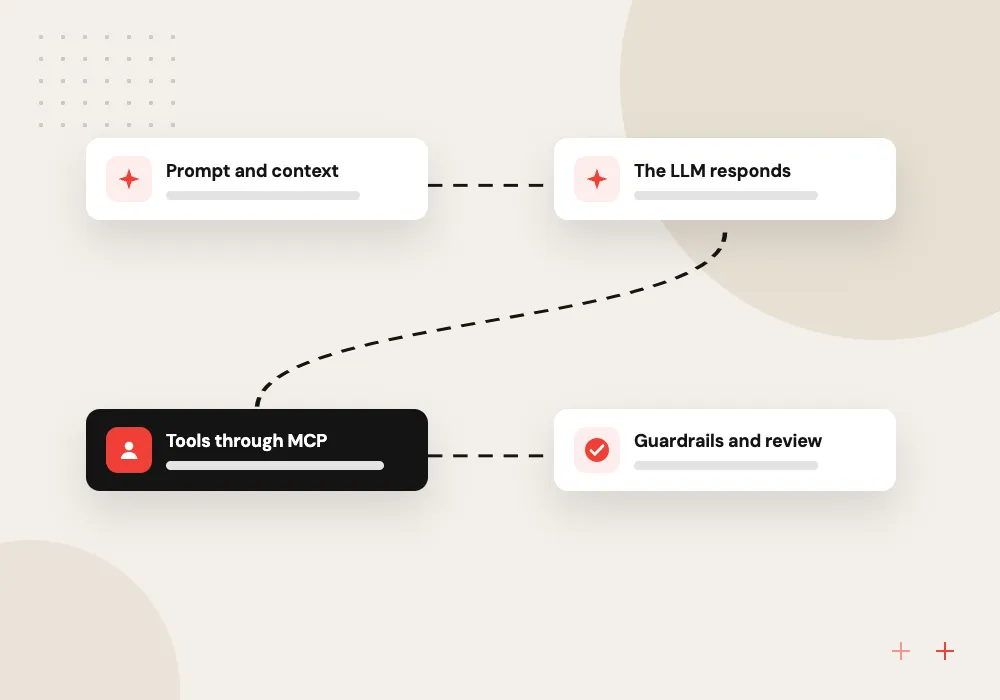
From a question to a checked answer
- 01 Prompt and context Instructions, the question and retrieved documents go to the model.
- 02 The LLM responds The model reads the tokens in its context window and replies.
- 03 Tools through MCP An agent may call connected tools, such as a CRM search.
- 04 Guardrails and review Checks screen the output; a person approves risky actions.
A simple chatbot may stop at the second step.
Four core terms to know first
These four come up in nearly every AI project, and the other terms build on them.
What is an AI agent?
Software that uses a language model to reach a goal. It picks each step, calls tools such as a CRM, checks results and continues until done or passed to a person.
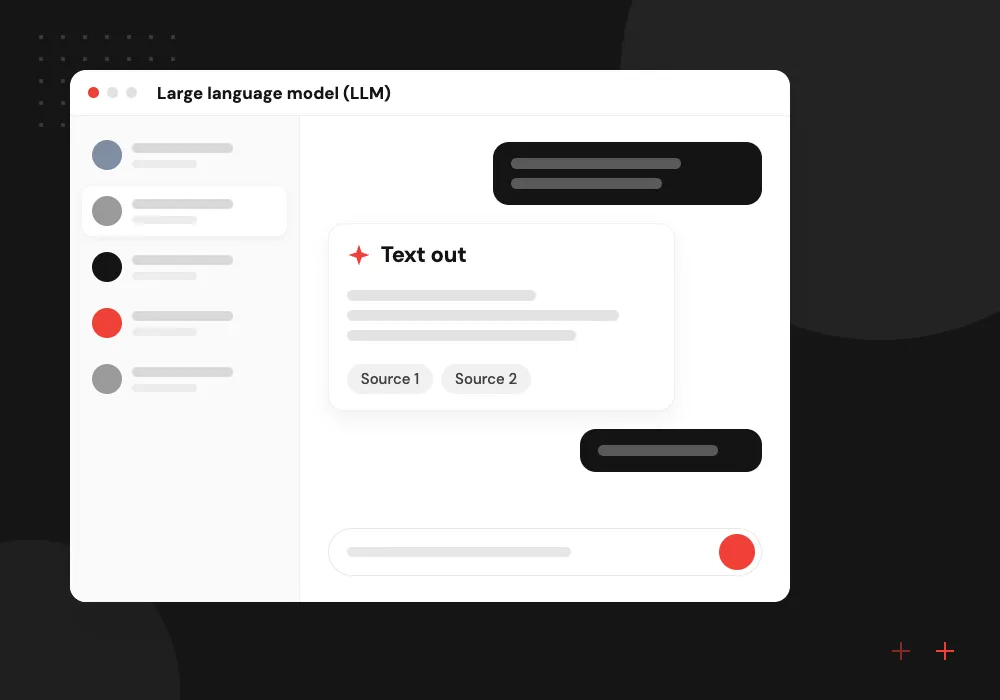
Large language model (LLM)
A model trained on huge amounts of text to predict what comes next. It writes, summarizes and extracts, but on its own it cannot act in other systems.
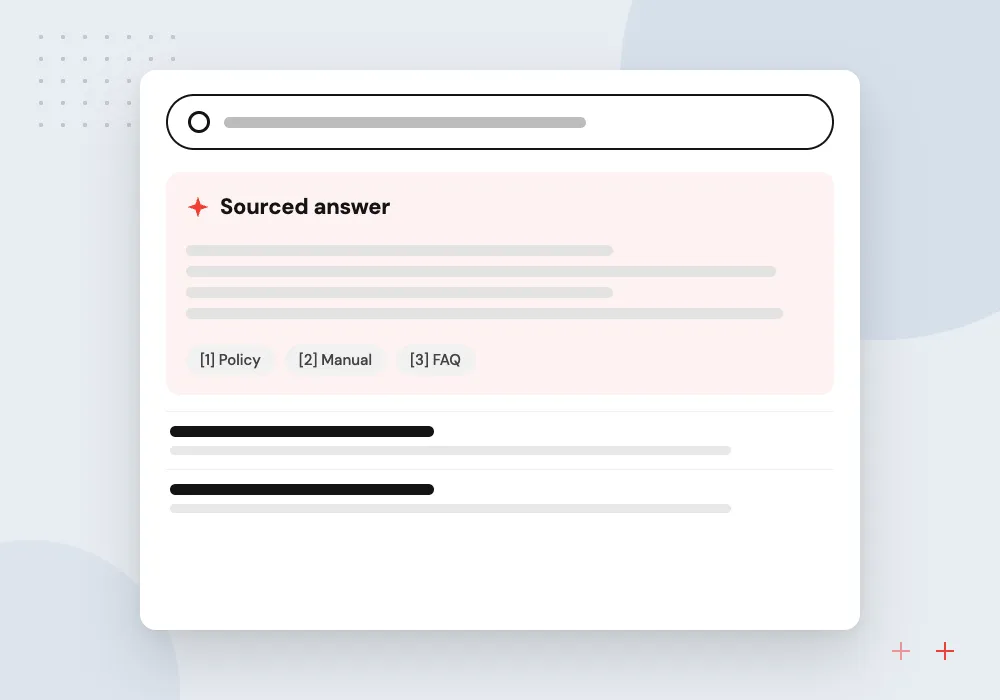
RAG (retrieval-augmented generation)
Searches your own documents for passages related to a question and adds them to the prompt, so answers come from your material and can cite it.
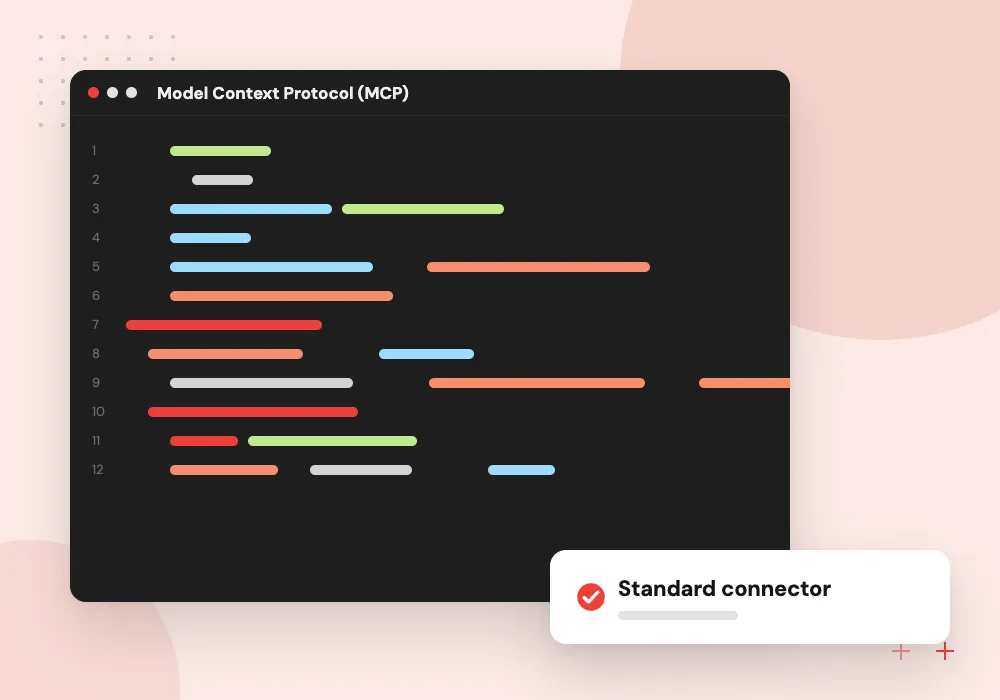
Model Context Protocol (MCP)
An open standard for connecting AI applications to tools and data. A system exposes one MCP server, and any compatible AI client can use it.
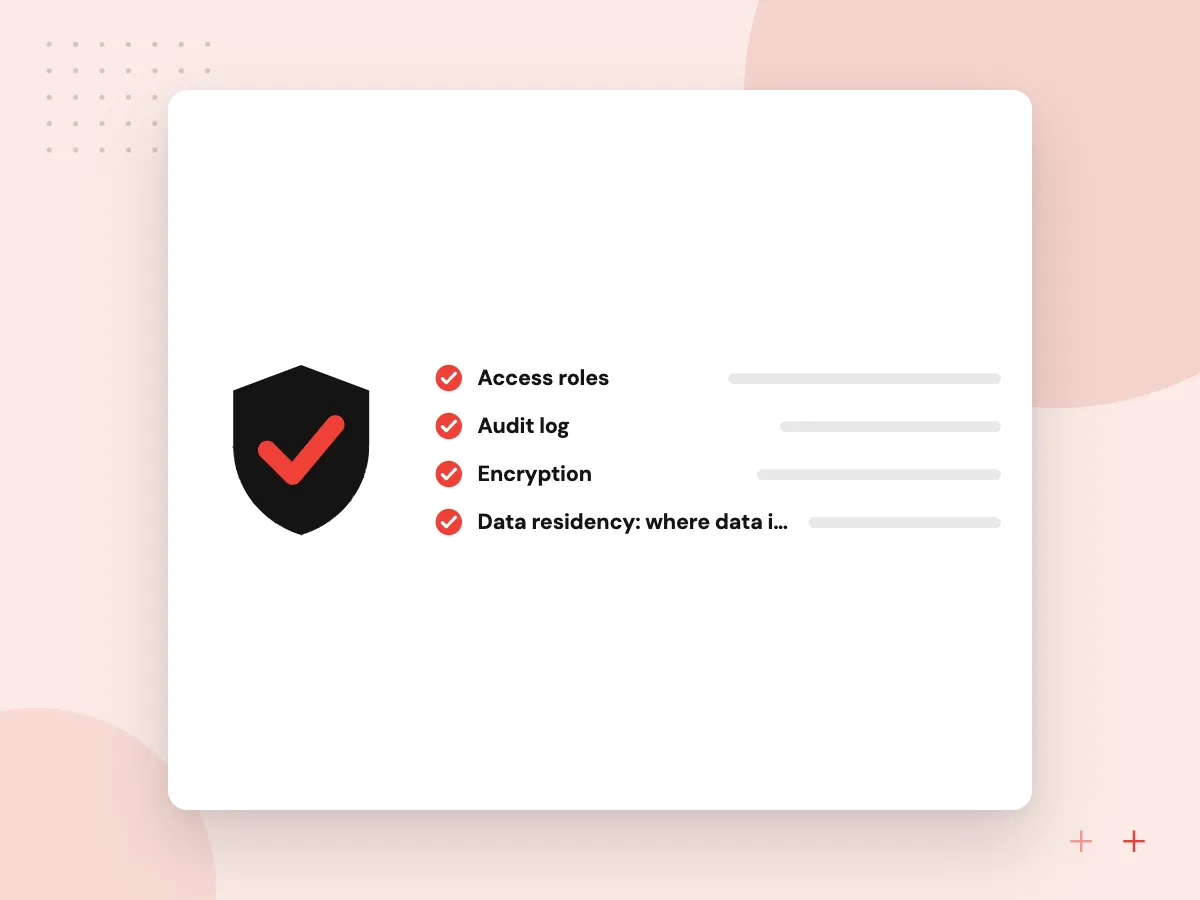
Data terms that appear in AI contracts
A few terms in an AI contract or provider settings decide where your information goes and who can see it. Ask any vendor to state each one in writing for your project, because defaults differ between providers and plans.
What we do
- Data residency: where data is processed
- Retention: how long logs are kept
- Training opt-out: excluded from training
- Redaction: personal details removed first
- Audit log: who saw or changed what
Terms for testing and running AI
Once a system is live, the questions turn to how it behaves day to day. These terms appear in monitoring reports and support agreements, and each one needs an owner, on your side or ours.
What we do
- Trace: the record of each step
- Latency: time until the reply
- Drift: quality slipping over time
- Fallback: the safe path on failure
- Deprecation: a model being retired

How we approach a project
Fine-tuning. Fine-tuning trains an existing model further on your own examples to change its style, format or behavior on a narrow task. It is a poor way to add facts that change often, so most business knowledge is better served by RAG. It fits machine learning tasks that need consistent output.
Agentic AI. Systems in which one or more agents plan and carry out multi-step work with some independence, such as an intake agent passing a case to a research agent and then to a person. See AI agent development and multi-agent systems.
Hallucination and guardrails. A hallucination is an answer that sounds certain but is wrong or made up; NIST’s generative AI profile calls it confabulation. Guardrails are the limits around a model: blocked topics, allowed tools, output checks and approval steps. They are central to AI governance consulting.
How we work
- Plain words, short definitions
- Each term tied to a real use
- Written for buyers, not researchers
Our Process
-

Map the terms to your case
Note which parts you need, such as retrieval without actions.
-

Ask how each part is built
Which model, data source and guardrails, and why.
-

Ask how quality is measured
A serious proposal names its evaluation set and sign-off.
-

Check what you will own
Prompts, evaluation data, indexes and code, listed as yours.
How Aranv explains AI work
Proposals in plain language
Our scopes name the model, data sources and checks a system uses, with each term explained, so a manager can approve the work.
Terms tied to deliverables
When a proposal mentions an evaluation set, a vector index or guardrails, it also says who builds each one, who owns it and how it is handed over.
The smallest approach that fits
If looking up answers in your documents solves the problem, we propose RAG rather than an agent and explain the reason in writing.
Questions from other proposals
Bring a term from any AI quote to a 30-minute conversation and we will explain what it would mean for your project and your data.
Let’s talk about your next step.
Tell us about your workflow, current tools and goals.
AI glossary FAQs
-
LLM vs AI agent: what is the difference?
An LLM produces a response to the input it receives. An AI agent is software built around an LLM that can also act: it chooses tools, calls them, reads the results and decides the next step. The LLM supplies the reasoning; the agent adds tools, permissions and a goal.
-
What is RAG in simple terms?
RAG means looking things up before answering. The system searches an approved set of documents, picks the most relevant passages and hands them to the model with the question. It suits manuals, catalogs and help articles that change often, because updating the documents updates the answers.
-
What does human in the loop mean?
A person checks or approves certain AI outputs or actions before they take effect, for example refunds above a set amount or edits to customer records. It keeps people in charge of decisions with real cost or risk.
-
What is an AI evaluation?
An evaluation, or eval, is a repeatable test of an AI system. You collect real questions, write down what a good answer looks like and score the output against them. Rerunning it after each prompt, model or data change shows whether quality moved.
-
What is the Model Context Protocol used for?
MCP gives AI applications one common way to reach tools and data, such as a database or business app. A team builds one MCP server instead of a separate connector for every AI product, and access stays within the permissions the server allows.

Let’s talk about your next step
Contact Aranv to discuss your workflow, current tools, and goals. Meet with our team or send an inquiry.
Book a meeting with our team
Choose an available date and time for a 30-minute conversation about your project.
Tell us about your project
Share a few details so we can discuss a useful next step.
Prefer email? sales@aranv.com